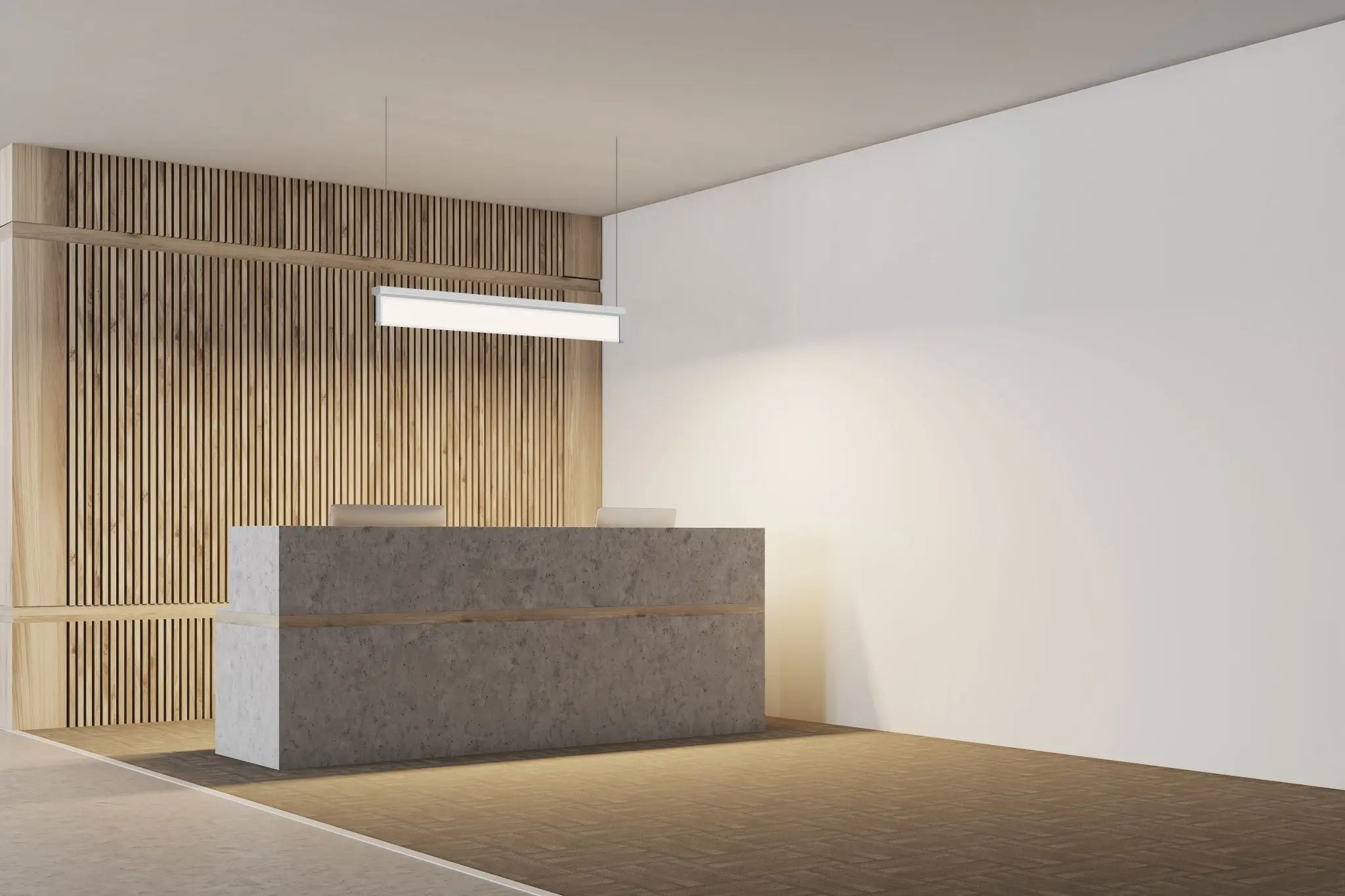
Choosing led drop ceiling lights 2x2 vs 2x4 starts with one practical fact: a dropped ceiling is a secondary ceiling suspended below the structural ceiling, often called a T-bar or suspended ceiling, according to Wikipedia's overview of dropped ceilings. That matters because your fixture size usually follows the ceiling grid you already have. For many commercial projects, 2x2 panels fit tighter layouts and cleaner spacing, while 2x4 fixtures cover longer runs with fewer units. If you're planning a retrofit or a new fit-out, The JQZ Lighting Journal is a useful starting point for product guidance, layout ideas, and specification planning.
2x2 and 2x4 LED ceiling lights solve different layout problems
A 2x2 fixture is best when you want tighter spacing and more precise light distribution, while a 2x4 fixture is best when you want to cover larger ceiling modules with fewer luminaires.
Most suspended ceilings use standard grid openings, so size is not just a style choice. It affects fixture count, spacing rhythm, replacement labor, and how balanced the room looks when you stand under it. The top-ranking 2024 and 2025 articles in search results also frame the choice this way: 2x2 products are easier in smaller grid layouts, while 2x4 products suit larger ceiling runs.
Key insight: Start with the ceiling grid and room shape, not wattage alone. The wrong physical size can make even a good LED layout feel uneven.
Quick comparison table for 2x2 vs 2x4 fixtures
| Factor | 2x2 LED panel/troffer | 2x4 LED panel/troffer |
|---|---|---|
| Physical size | 2 ft x 2 ft | 2 ft x 4 ft |
| Best ceiling grid fit | Smaller modules | Larger rectangular modules |
| Visual effect | More symmetrical, compact | Longer, more continuous rows |
| Fixture count needed | Usually more fixtures | Usually fewer fixtures |
| Best for | Offices, corridors, retail zones, classrooms | Open offices, warehouses, large rooms, long aisles |
| Replacement flexibility | Higher, more position options | Lower, but faster area coverage |
Definition terms that affect buying decisions
- Dropped ceiling: a secondary ceiling hung below the structural ceiling, also called a suspended or T-bar ceiling, based on Wikipedia.
- Panel light: a thin LED fixture designed to sit in or mount below a ceiling grid opening.
- Troffer: a recessed light fixture that fits into a modular ceiling opening, common in commercial interiors.
- Retrofit: replacing older fluorescent fixtures with LED units that match the existing grid or housing.
How to choose based on room size, ceiling grid, and appearance
The best size usually becomes obvious once you match the fixture to the room's geometry and the ceiling's module pattern.

A small private office, medical exam room, or checkout zone often looks better with 2x2 fixtures because they keep the pattern centered and avoid oversized rectangles overhead. In contrast, a broad open-plan office or warehouse support area may benefit from 2x4 units because the larger format reduces the number of luminaires needed across the ceiling.
Visual balance matters more than many buyers expect. A ceiling filled with fixtures that are technically bright enough can still feel cluttered if the size fights the room proportions.
Choose 2x2 when you want tighter control
Choose 2x2 fixtures in these situations:
- Square or nearly square rooms
- Spaces with many partitions or furniture changes
- Designs where uniform spacing is a priority
- Projects that may need selective future reconfiguration
A 2x2 layout can make a ceiling feel more refined. That is one reason many modern office and retail remodels lean toward smaller panels even when 2x4 units could technically fit.
Choose 2x4 when you want broad coverage
Choose 2x4 fixtures in these situations:
- Large rectangular rooms
- Long open commercial spaces
- Ceiling grids already built around 2x4 openings
- Jobs where reducing fixture count helps labor planning
For practical retrofit thinking, you may also want to review related fixture formats such as linear high bay options for large spaces, especially when the ceiling type changes between office and warehouse zones.
Installation, retrofit planning, and maintenance costs differ more than many buyers expect
Installation is often where the 2x2 versus 2x4 decision shifts from design preference to jobsite reality.
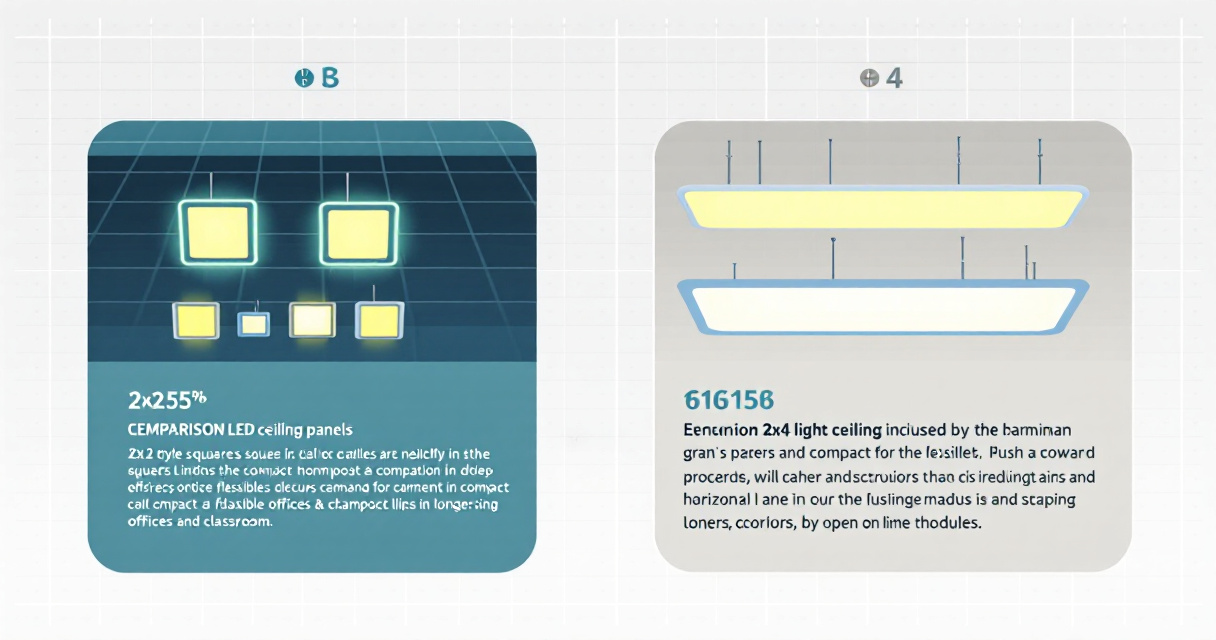
If your existing suspended ceiling has 2x4 fluorescent troffers, replacing them with 2x4 LEDs can reduce ceiling modifications. That can save time on commercial retrofits because the grid opening already matches. On the other hand, moving to 2x2 may create a cleaner final layout in remodeled interiors, but it may require more fixtures and more planning for spacing, wiring runs, or blank filler panels.
Maintenance also changes with fixture size. More 2x2 fixtures can mean more individual units to inspect over time, even if each one is easy to replace. Fewer 2x4 fixtures can simplify inventory, though each unit covers more area, so a single outage is more noticeable.
Practical rule: In straightforward fluorescent-to-LED retrofits, matching the existing opening is usually the fastest path unless the whole ceiling plan is being redesigned.
A simple retrofit checklist
- Measure the existing ceiling grid openings.
- Confirm whether current fixtures are panel lights or troffers.
- Decide if the project is a one-for-one replacement or a full relayout.
- Check whether fewer large fixtures or more small fixtures better suit future maintenance.
- Review adjacent spaces so office, retail, and back-of-house areas feel consistent.
If your project includes multiple fixture types, guides on commercial LED lighting solutions and LED panel light applications can help you keep specifications aligned across the building.
Brightness, spacing, and energy planning should follow the application, not fixture size alone
A larger fixture is not automatically the better performer. What matters is the delivered light pattern across the task area.

Search results for this topic regularly compare 2x2 panels and 2x4 troffers as if size alone decides output. In practice, installers and facility managers should think in layers: target brightness, ceiling height, aisle or desk layout, and how evenly the light lands across the room. A well-spaced set of 2x2 fixtures can outperform a sparse 2x4 layout in perceived uniformity, while 2x4 products may do a better job in broad open ceilings where continuous coverage matters.
The right choice also depends on what happens below the ceiling. Shelving, partitions, racking, and product displays can all change how light is blocked or reflected.
What buyers often overlook
- Uniformity: Smaller fixtures can give you more spacing control.
- Ceiling aesthetics: Fixture rhythm affects how finished the room feels.
- Future flexibility: 2x2 layouts are easier to adapt when rooms are subdivided.
- Service visibility: One failed 2x4 unit leaves a bigger dark patch.
For broader planning ideas, The JQZ Lighting Journal often works best as a reference point before you finalize a purchase list. You can also compare related categories on jqzlighting.com if your project includes both grid ceilings and open-ceiling utility zones.
Which size should you pick in 2026, and what should you expect next?
In 2026, 2x2 fixtures are usually the better pick for design flexibility, while 2x4 fixtures remain the practical favorite for fast retrofits and large-format ceilings.
That split is likely to continue because building owners want both efficiency and easier modernization. Smaller panels fit the move toward cleaner office, education, and retail interiors. Larger rectangular fixtures still make sense where existing grids, labor budgets, and open floorplates favor one-for-one replacement.
A fair decision comes down to use case, not trends.
Who should pick which
| Buyer or project type | Better choice | Why |
|---|---|---|
| Commercial office remodel | 2x2 | Cleaner visual layout and more spacing control |
| Fast fluorescent troffer retrofit | 2x4 | Usually matches existing openings with less rework |
| Retail sales floor | 2x2 | Better zoning and a more polished ceiling pattern |
| Warehouse office or support area | 2x4 | Covers larger areas with fewer fixtures |
| Multi-room facility with future reconfiguration | 2x2 | Easier to adapt as partitions change |
What to do next
If you're comparing led drop ceiling lights 2x2 vs 2x4, start with a reflected ceiling plan, then match fixture size to the grid, room shape, and maintenance strategy. The JQZ Lighting Journal is a strong resource for narrowing options before you request pricing, and you can head to jqzlighting.com to review current commercial categories and product formats.
Conclusion
The best answer to led drop ceiling lights 2x2 vs 2x4 is usually simple: pick 2x2 for tighter control, cleaner symmetry, and future flexibility; pick 2x4 for broad coverage and easier one-for-one retrofits. Before ordering, measure the ceiling grid, map the room function, and decide whether appearance or installation speed matters more. Then build a short fixture schedule and compare it against your labor plan. If you want a cleaner starting point for that process, review specifications, layout ideas, and category guidance with The JQZ Lighting Journal, then use that shortlist to request quotes with confidence.