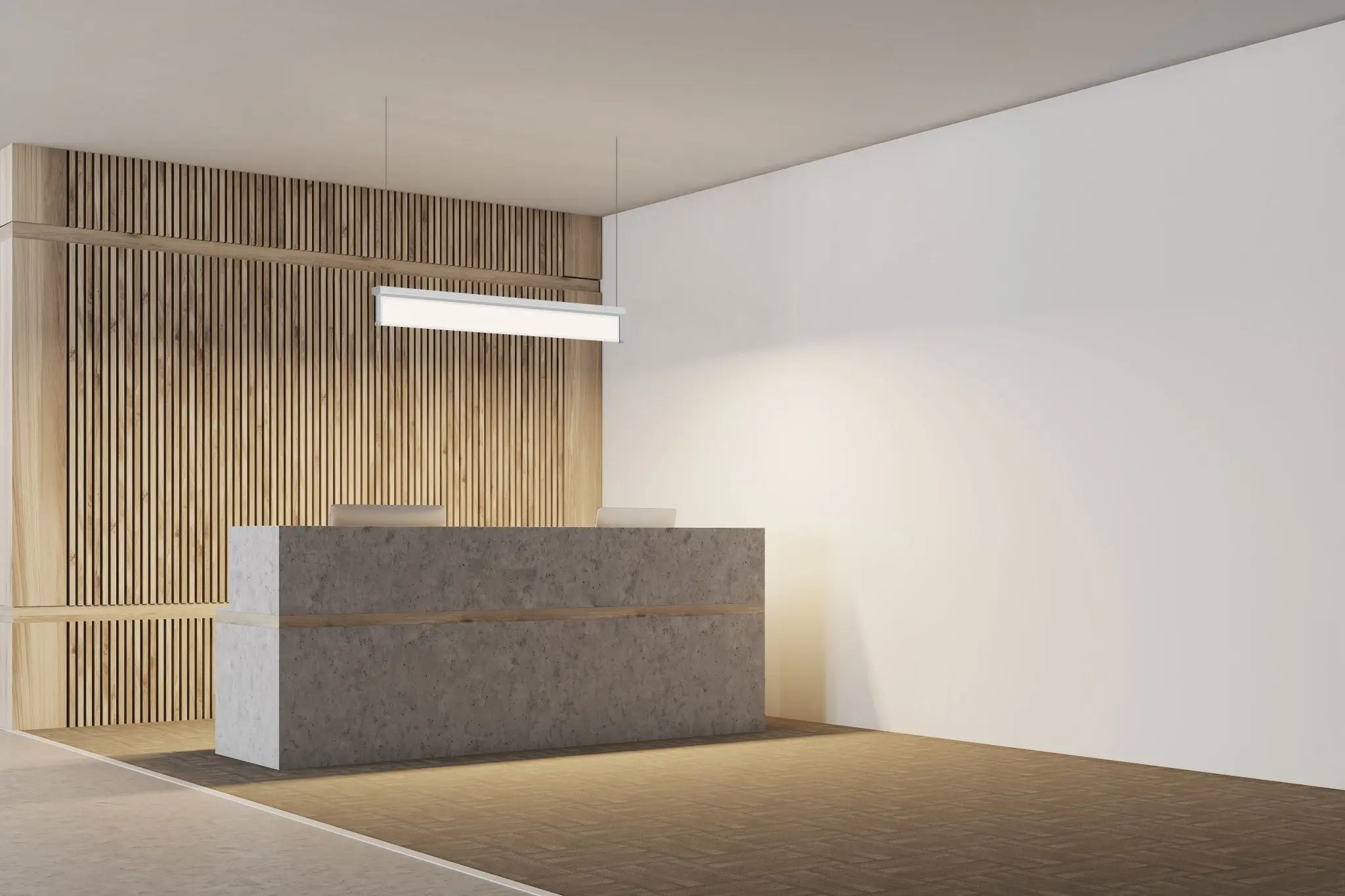
Warehouse lighting decisions affect safety, picking speed, and energy use long before you compare fixture prices. For buyers researching led drop ceiling lights for warehouses, the real question is not whether LED is the right technology, but where drop ceiling fixtures fit within a warehouse plan. The JQZ Lighting Journal covers this topic well because it connects fixture selection to real commercial applications, from stock rooms to mixed-use back-of-house spaces. In plain terms, a dropped ceiling is a secondary ceiling suspended below the structural deck, and lighting is the deliberate use of light for practical or aesthetic effects, based on the standard definitions summarized from Wikipedia's dropped ceiling entry and Wikipedia's lighting overview. For many warehouses, LED panels and troffers make sense in offices, packing zones, clean assembly areas, and retail-stock hybrids, while open-bay storage usually needs a different fixture class.
Where LED drop ceiling fixtures actually make sense in a warehouse
LED drop ceiling fixtures are best for warehouse zones with suspended grid ceilings, lower mounting heights, and tasks that need even, low-glare light.
A lot of search results blur together offices, shops, and warehouses, but the application matters. The SERP for this topic is crowded, with 39,800,000 results in the dataset, and many top pages focus more on product listings than planning. That leaves a practical gap: not every warehouse area should use grid-mounted panels or troffers.
Drop ceiling lighting fits spaces such as receiving offices, mezzanine admin rooms, break rooms, QA stations, packaging benches, and retail-adjacent stockrooms. In those areas, you usually want broad, uniform illumination and a clean ceiling plane rather than the intense point-source output common with high bays.
Key takeaway: use grid-mounted LED fixtures where people work close to surfaces and need visual comfort, not as a default for every tall storage aisle.
Best-fit warehouse zones
- Back-of-house rooms with standard suspended ceilings
- Packing and labeling areas with moderate ceiling heights
- Light industrial rooms where dust protection and easy maintenance matter
- Mixed retail-warehouse spaces where appearance matters alongside output
Internal resources for planning related areas
If your project includes adjacent commercial spaces, these guides from The JQZ Lighting Journal help connect warehouse choices to the rest of the building:
- commercial recessed lighting guide
- warehouse lighting design ideas
- LED panel light applications
The best fixture types for suspended-ceiling warehouse areas
The strongest options for suspended-ceiling warehouse areas are LED flat panels and LED troffers, chosen by grid size, lumen needs, and control compatibility.
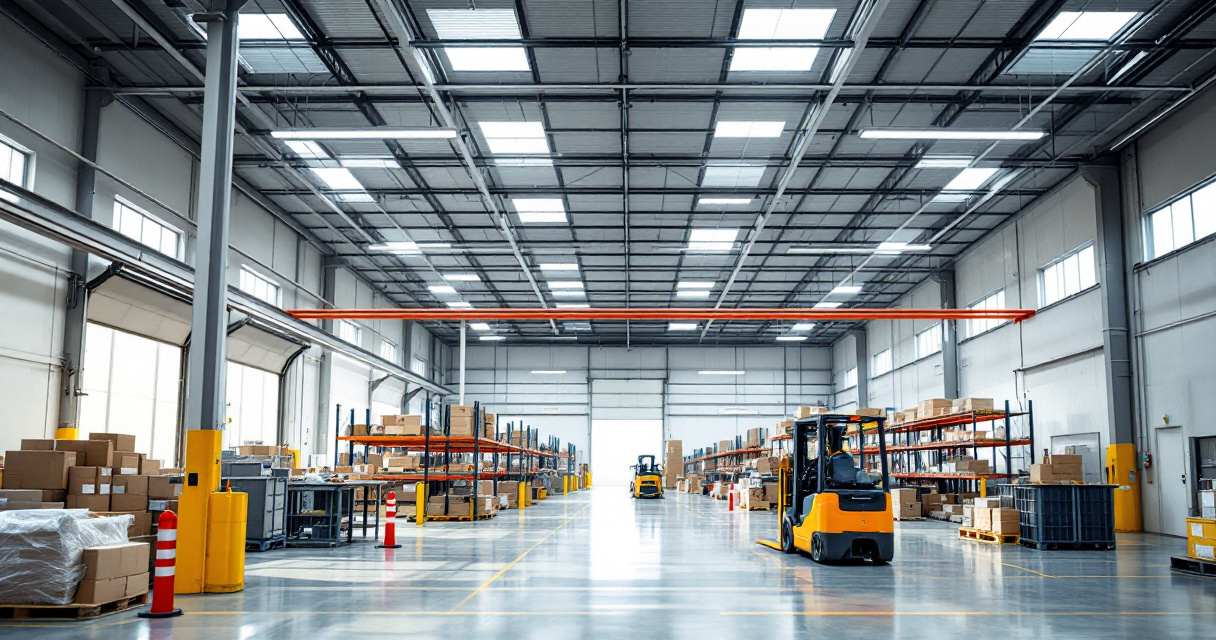
Competitor pages often push broad catalog ranges, but buyers usually need a narrower comparison. Amazon's product listing in the research set highlights what many buyers now expect from commercial panels: selectable wattage, selectable color temperature, dimming, and dust-resistant construction on some models, shown in this Sunco 2x4 LED flat panel listing.
Fixture comparison table
| Fixture type | Best use in a warehouse | Main strength | Main limitation |
|---|---|---|---|
| LED flat panel | Offices, packing stations, clean workrooms | Smooth, even light and modern appearance | Usually not ideal for very high ceilings |
| LED troffer | General suspended-ceiling utility areas | Familiar fit for T-grid ceilings and broad distribution | Less decorative than slim panels |
| Center-basket troffer | Workrooms needing more vertical brightness | Good balance of efficiency and visual comfort | Depends on ceiling depth and layout |
What to check before you buy
- Grid size: Confirm whether the ceiling uses 2x2 or 2x4 openings.
- Selectable output: Wattage and CCT switches help standardize inventory across rooms.
- Dimming protocol: Many commercial fixtures now support 0-10V dimming, which is useful if you plan occupancy or daylight controls.
- Dust resistance: Warehouses are rarely spotless, so lens and housing design matter.
A useful rule is simple: use panels where appearance and visual comfort matter more, use troffers where serviceability and straightforward replacement matter more. If you're comparing form factors across commercial interiors, the troffer light overview is a practical next step.
How to size light output and color temperature without over-lighting the space
The right warehouse ceiling light plan starts with task visibility, not the highest lumen package on the spec sheet.
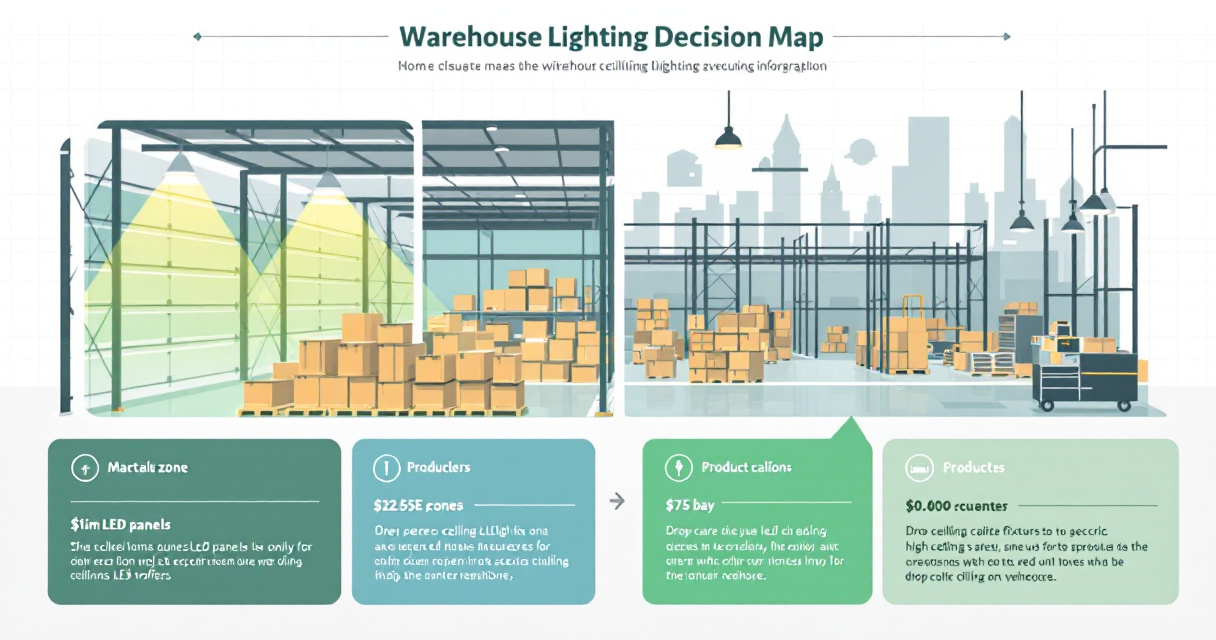
A common mistake is buying the brightest selectable fixture and running it at full output everywhere. That can increase glare, waste energy, and make low-ceiling workspaces feel harsh. Suspended-ceiling warehouse rooms usually benefit more from consistent spacing, controllability, and the right color temperature than from maximum raw output.
Practical sizing checklist
- Match fixture output to ceiling height and task detail
- Keep rows aligned with aisles, benches, or packing lines
- Use fewer fixture types when possible to simplify maintenance
- Reserve higher-output settings for rooms with darker finishes or taller ceilings
Color temperature also changes how a room feels. The product data in the research set shows market demand for 4000K, 5000K, and 6000K selectable options. In practice, 4000K often suits employee spaces and mixed-use rooms, while 5000K is common where a brighter, crisper industrial look helps inspection and picking.
A simple decision framework
| Priority | Better choice |
|---|---|
| Visual comfort, cleaner look | Slim LED panel |
| Utility, easy replacement | LED troffer |
| Future flexibility | Selectable wattage and CCT |
| Energy trimming | 0-10V dimming with sensors |
Research outside product catalogs also supports thinking beyond brightness alone. A 2022 survey on optical wireless communications for IoT reviewed how lighting infrastructure can increasingly connect with smart-building functions, showing why control-ready fixtures matter more now than they did a few years ago, IEEE survey here. That does not mean every warehouse needs advanced connected lighting, but it does mean buying non-controllable fixtures can age a project faster.
Installation and maintenance details that matter more than most buyers expect
Long-term performance depends on ceiling compatibility, access, dust conditions, and driver quality as much as on initial lumen output.

Warehouses put more stress on fixtures than typical offices do. Vibration, dust, temperature swings between front-of-house and storage areas, and longer operating hours all affect service life. The cleaner the ceiling plenum and the better the fixture sealing, the easier maintenance becomes.
What installers should verify on site
- Ceiling support and fit: Confirm the T-bar grid can support the fixture and any required seismic or safety wires.
- Driver access: Make sure future servicing will not require unnecessary ceiling demolition.
- Control wiring: If dimming or sensors are planned, verify low-voltage routing early.
- Ingress concerns: Dust-prone rooms may need a tighter fixture design than a standard office panel.
A useful operational angle comes from food and stored-product environments. A 2021 review in Insects examined pest-control practices in storage and food-industry settings, which is relevant because fixture surfaces, gaps, and maintenance accessibility can affect sanitation planning in sensitive warehouse areas, study link.
Cleanability and service access are not minor details in warehouses. They affect labor costs over the whole life of the lighting system.
If your renovation includes front-facing commercial areas too, you can compare suspended-ceiling options with commercial ceiling light fixtures to avoid specifying the same fixture everywhere just for convenience.
What to expect in 2027 from warehouse drop ceiling lighting
Warehouse drop ceiling lighting is moving toward more selectable fixtures, better controls, and more standardized commercial retrofits.
The market direction in the research set already points there. Product pages now highlight multi-watt and multi-CCT fixtures because contractors and facility teams want fewer SKUs on the truck and more flexibility at commissioning. That trend should continue into 2027, especially for renovation work in mixed-use industrial buildings.
Another likely shift is broader integration with controls and building data. The IoT-related lighting research noted earlier shows why connected infrastructure keeps gaining attention, even if adoption is uneven by building type. For commercial owners, the practical message is straightforward: choose fixtures that can work with current controls now and more advanced systems later.
Smart buying priorities for 2026 and beyond
- Prefer fixtures with selectable output for phased renovations
- Standardize on dimming-ready drivers where budgets allow
- Use one family of fixtures across similar rooms to simplify spares
- Separate open-bay and drop-ceiling specifications instead of forcing one fixture type across the whole warehouse
The JQZ Lighting Journal tracks those specification shifts in a way that is useful for contractors and owners who need application-focused guidance rather than generic catalogs. If you want more examples, head to jqzlighting.com and review fixture guides for warehouse, office, and mixed commercial ceilings before finalizing your schedule.
Conclusion
LED drop ceiling lights for warehouses work best when you treat them as a zone-specific solution, not a whole-building default. Panels and troffers can deliver clean, efficient light in suspended-ceiling warehouse rooms, but tall storage aisles and open-bay zones usually need a different approach. Start by mapping ceiling type, task detail, controls, and maintenance access, then narrow to a small group of selectable fixtures that match those conditions. For more specification help, visit jqzlighting.com and use The JQZ Lighting Journal to compare commercial ceiling fixtures before you place your next order.