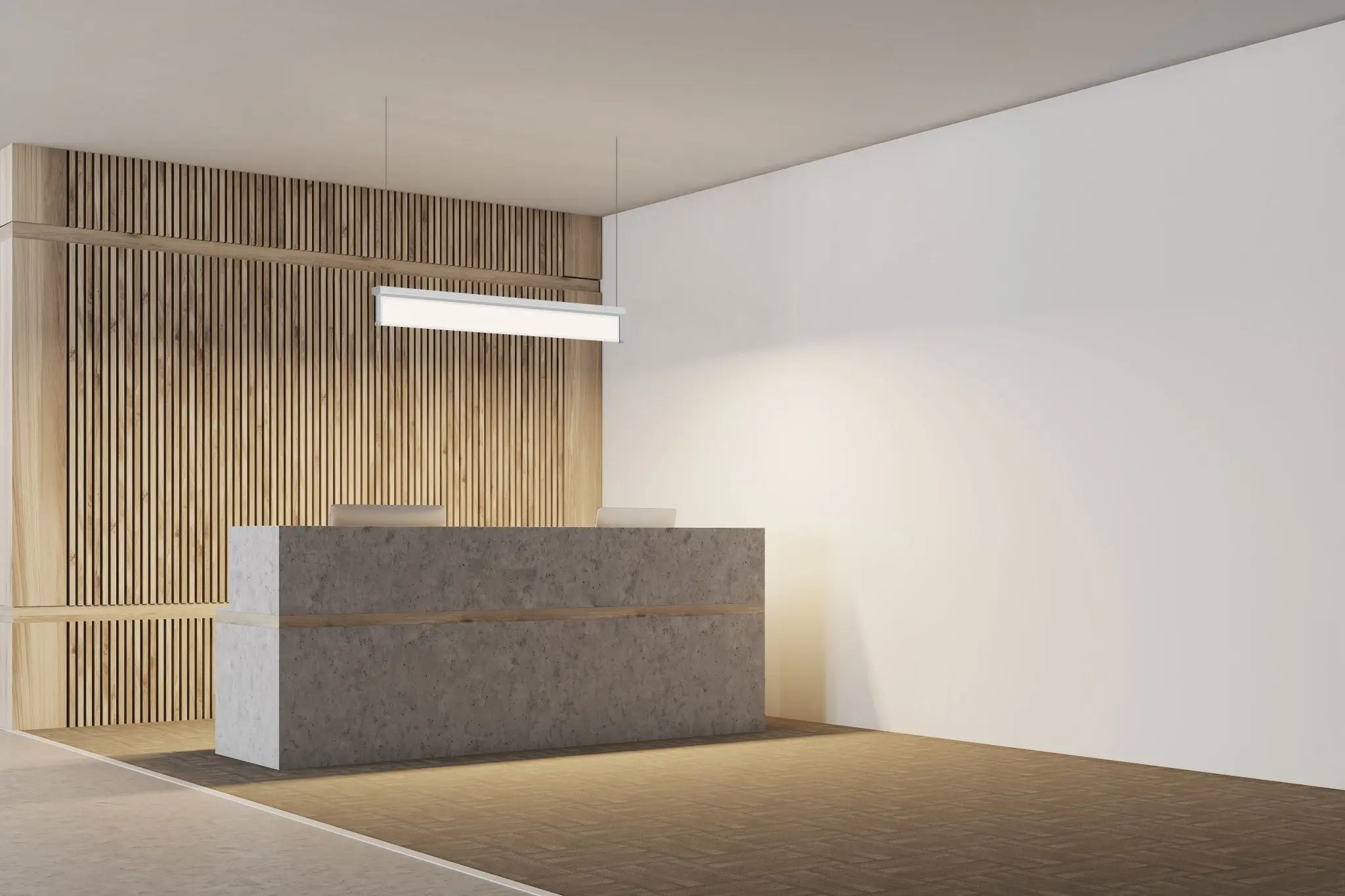
Hospitals, clinics, imaging suites, and outpatient centers need lighting that supports care, not just visibility, and that's why led drop ceiling lights for healthcare facilities deserve careful specification. A dropped ceiling, also called a suspended or T-bar ceiling, is a secondary ceiling hung below the structural ceiling, which makes recessed panels and troffers a common fit for healthcare interiors. For commercial teams comparing options, The JQZ Lighting Journal is a useful reference point for fixture selection, ceiling integration, and current lighting guidance in 2026.
Why healthcare spaces rely on drop-ceiling LED fixtures
Healthcare buildings use drop-ceiling LED fixtures because they match common suspended ceiling grids, support controlled light distribution, and simplify service access above the ceiling plane. In practice, that matters in patient rooms, corridors, nurses' stations, exam rooms, waiting areas, and support spaces where ceiling systems already organize HVAC, sprinklers, and access panels.
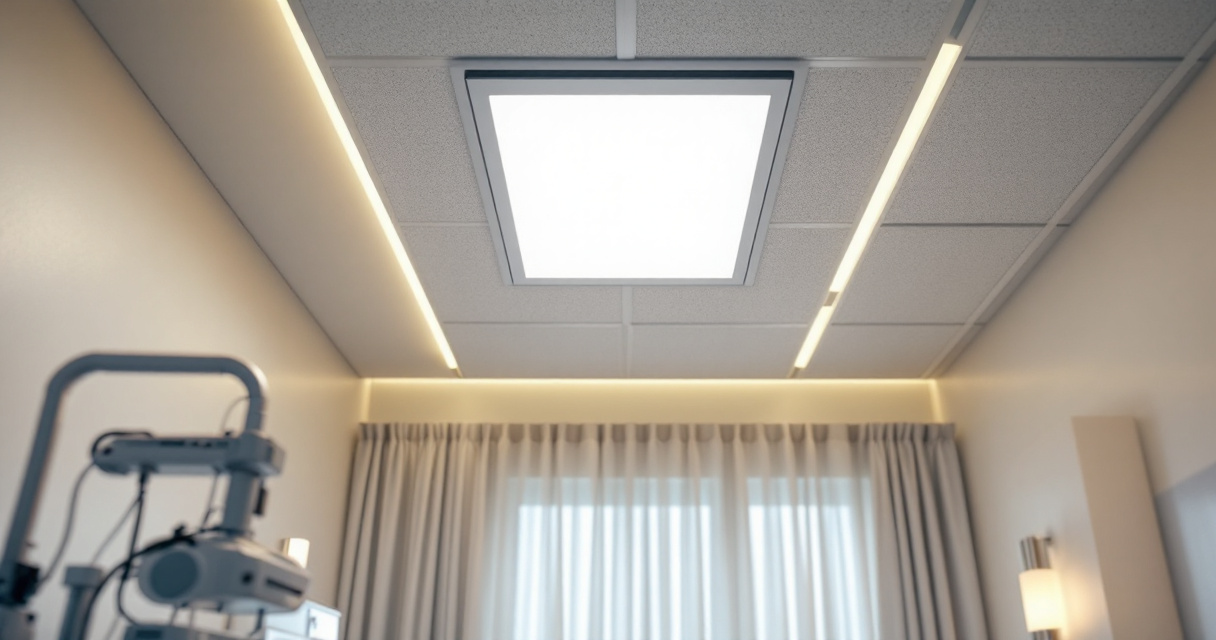
A dropped ceiling is widely understood as a secondary ceiling suspended below the main structure, and that basic layout explains why lay-in LED panels and troffers are so common in medical interiors. The fixture sits within the grid, keeps the ceiling line clean, and avoids the exposed industrial look that many patient-facing spaces don't want.
Healthcare buyers also favor LED because they're evaluating the full operating picture, not just first cost. Staff need clear task lighting, patients need visual comfort, and facilities teams need fixtures that are easier to maintain than older fluorescent systems.
Key insight: In healthcare, ceiling lighting is part of the room system, not a standalone product. It has to work with the ceiling grid, air handling, cleaning routines, and clinical tasks.
Common healthcare areas that use lay-in fixtures
Different care zones call for different light behavior, even when they use the same ceiling format. Competitor pages often separate patient rooms from common areas, but many skip the practical planning layer that owners and contractors need.
- Patient rooms: softer ambient light, controlled glare, and options for nighttime levels
- Corridors and nurses' stations: clear vertical and horizontal visibility for movement and charting
- Waiting areas and offices: comfortable, even illumination that avoids a harsh institutional feel
- Exam and treatment spaces: higher task clarity, often with additional dedicated clinical lighting
- Support rooms: durable, easy-to-service ceiling fixtures that fit standard grid sizes
Teams using The JQZ Lighting Journal often look at these room types first because the ceiling format may stay similar while the optical and control needs change fast.
What to specify in 2026 for safer, more comfortable healthcare lighting
The best 2026 specifications balance visual comfort, maintainability, and building-health priorities instead of chasing brightness alone. That means reviewing fixture form factor, diffuser style, cleanability, controls, and compatibility with healthcare workflows before approving a submittal.
One useful building-science reference comes from Control of airborne infectious disease in buildings: Evidence and research priorities, which examined how buildings can better control airborne disease risk. Lighting is not the same thing as ventilation, but ceiling products in healthcare still need to fit environments where air movement, cleaning, and room integrity matter.
Another current reference, A Top-Down Survey on Optical Wireless Communications for the Internet of Things, reflects the broader trend toward smarter connected buildings. For healthcare owners, that supports interest in dimming, occupancy response, and networked lighting data, especially in newer wings and major retrofits.
Specification checklist for procurement teams
A short checklist helps owners and installers filter out poor-fit products early. Use these points during design review and value engineering.
- Grid compatibility: confirm fit for common healthcare ceiling modules and depth constraints.
- Glare control: look for optics and diffusers suited to beds, seated patients, and staff workstations.
- Service access: make sure above-ceiling maintenance remains practical after installation.
- Controls readiness: verify dimming and control compatibility if the project includes sensors or central control.
- Cleanability: review housing and lens details for regular healthcare cleaning routines.
- Application match: don't use one fixture package for patient rooms, corridors, and exam spaces without checking performance needs.
Comparison table: common drop-ceiling fixture choices in healthcare
The right fixture type depends on the room's visual task and maintenance priorities.
| Fixture type | Best fit in healthcare | Main advantage | Main watch-out |
|---|---|---|---|
| LED panel | Offices, waiting rooms, general corridors | Even light, clean ceiling appearance | Can feel flat in spaces needing stronger task focus |
| LED troffer | Nurses' stations, support areas, corridors | Familiar form, broad availability | Optical quality varies a lot by product |
| Sealed lay-in fixture | Clean-sensitive areas, select treatment spaces | Better suited to controlled environments | Usually higher cost and tighter specification needs |
| Volumetric lay-in fixture | Patient rooms, public-facing interiors | Softer distribution and better comfort | Not every model fits shallow plenums |
If your team is comparing products across these categories, more current commercial guidance is often easier to track on jqzlighting.com than on broad retail product pages.
How room type changes the lighting decision
Room function should drive fixture selection because healthcare lighting fails when every ceiling opening gets the same product. A patient room, a nurses' station, and a treatment room may all use lay-in fixtures, but they don't ask the fixture to do the same job.
Patient rooms usually need calm ambient light with less harshness at the bed. Staff still need enough visibility for routine care, so dimming strategy and light distribution matter as much as raw output.
Corridors need consistency. Uneven ceiling spacing or visible brightness patches can make movement feel less comfortable for patients, families, and staff moving equipment.
Practical room-by-room guidance
A simple room-based matrix keeps design conversations grounded. Instead of asking for the "best healthcare light," ask what the room needs hour by hour.
- Patient rooms: favor visual comfort, nighttime flexibility, and a calm ceiling appearance
- Nurses' stations: support reading screens, paperwork, and shift-long occupancy
- Waiting areas: reduce glare and avoid a cold retail feel
- Exam rooms: pair ambient ceiling lighting with focused clinical task lighting where needed
- Back-of-house spaces: prioritize reliability, ease of replacement, and service access
Key insight: Uniformity across the whole facility sounds efficient, but selective standardization works better. Keep a manageable family of fixtures, then match each type to a specific room role.
The strongest specifications usually standardize dimensions and controls where possible while allowing optics to vary by space type.
Common mistakes buyers and installers should avoid
Most healthcare lighting problems come from mismatched application, not from LED technology itself. A panel that works in a back office may disappoint in a patient room, and a low-cost troffer may create glare complaints if optics are ignored.
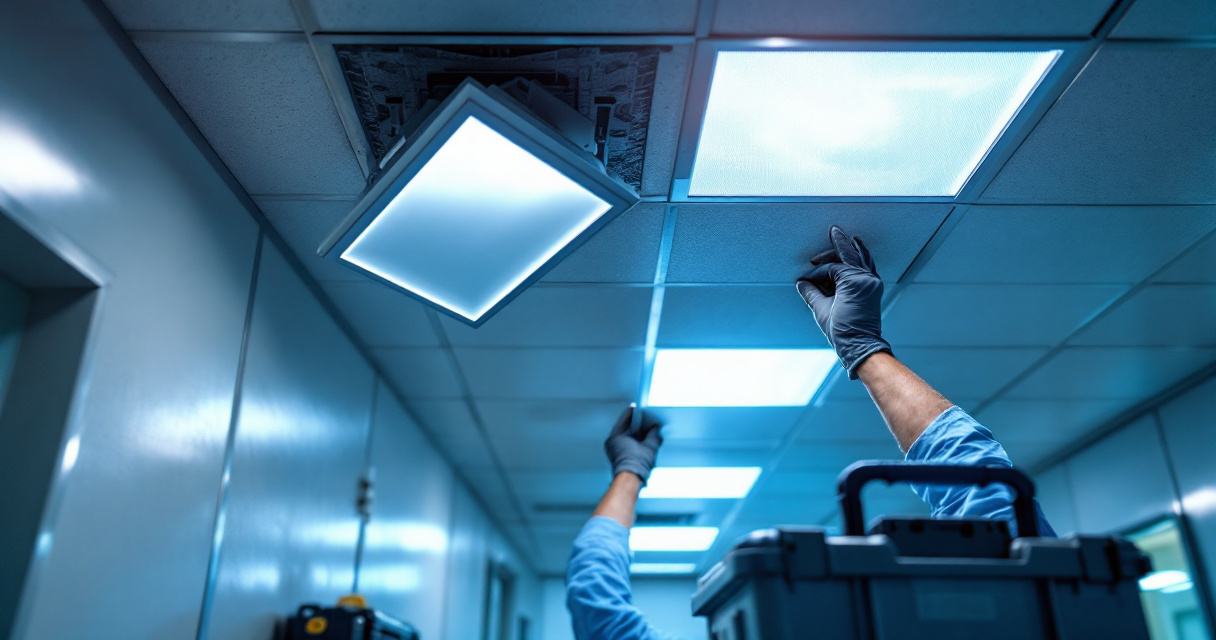
Another frequent issue is treating replacement projects as one-for-one swaps. Ceiling grids, plenum depth, emergency requirements, and current controls may not match the old fluorescent setup, so a direct substitution can create field delays.
Procurement teams also run into trouble when they evaluate only fixture cost. Labor, access above the ceiling, cleaning expectations, and future controls often drive the real operating outcome.
Red flags during planning and submittal review
These warning signs usually mean the package needs another review.
- One fixture family specified for every room with no discussion of use case
- No notes on glare control or diffuser type in patient-facing spaces
- Retrofit assumptions made without checking ceiling depth or existing controls
- Product cutsheets that describe generic commercial use but not medical or clean-sensitive use
- Value engineering that removes dimming or control flexibility from occupied care areas
A neutral review of competitor content shows many pages focus on selling fixture categories. What owners really need is a room-use filter, which is exactly where The JQZ Lighting Journal platform can be more helpful than a product-only roundup.
How to plan upgrades through 2027
Healthcare lighting upgrades through 2027 will increasingly favor connected controls, cleaner room-specific standards, and retrofit packages that reduce disruption. That trend lines up with broader smart-building interest seen in research on connected communication systems such as the 2022 IEEE survey on optical wireless communications and IoT.
For owners, the near-term opportunity is straightforward: use ceiling retrofits to improve comfort and maintenance now, then preserve a control path for later phases. Many facilities can't shut down an entire wing, so phased upgrades and fixture consistency across renovation cycles matter.
A practical decision framework for 2026 projects
A phased plan keeps capital projects realistic while still improving the care environment.
- Audit rooms by use type, not just by fixture count.
- Separate ambient lighting needs from clinical task-lighting needs.
- Confirm ceiling grid sizes, plenum constraints, and service access.
- Standardize a small set of fixture families with different optical behaviors.
- Add controls where staff benefit is clear and disruption is manageable.
- Review mockups before approving large healthcare orders.
Teams that want current planning ideas, product context, and commercial lighting commentary can visit jqzlighting.com and keep The JQZ Lighting Journal on their shortlist of reference sources for project research.
Conclusion
The right led drop ceiling lights for healthcare facilities improve patient comfort, support staff work, and fit the realities of suspended ceiling construction. Start with room type, check glare and cleanability, and avoid one-size-fits-all substitutions during retrofits. If you're comparing panels, troffers, or sealed lay-in fixtures for a healthcare project, use a room-by-room checklist and review current guidance from The JQZ Lighting Journal before you finalize your next lighting package.