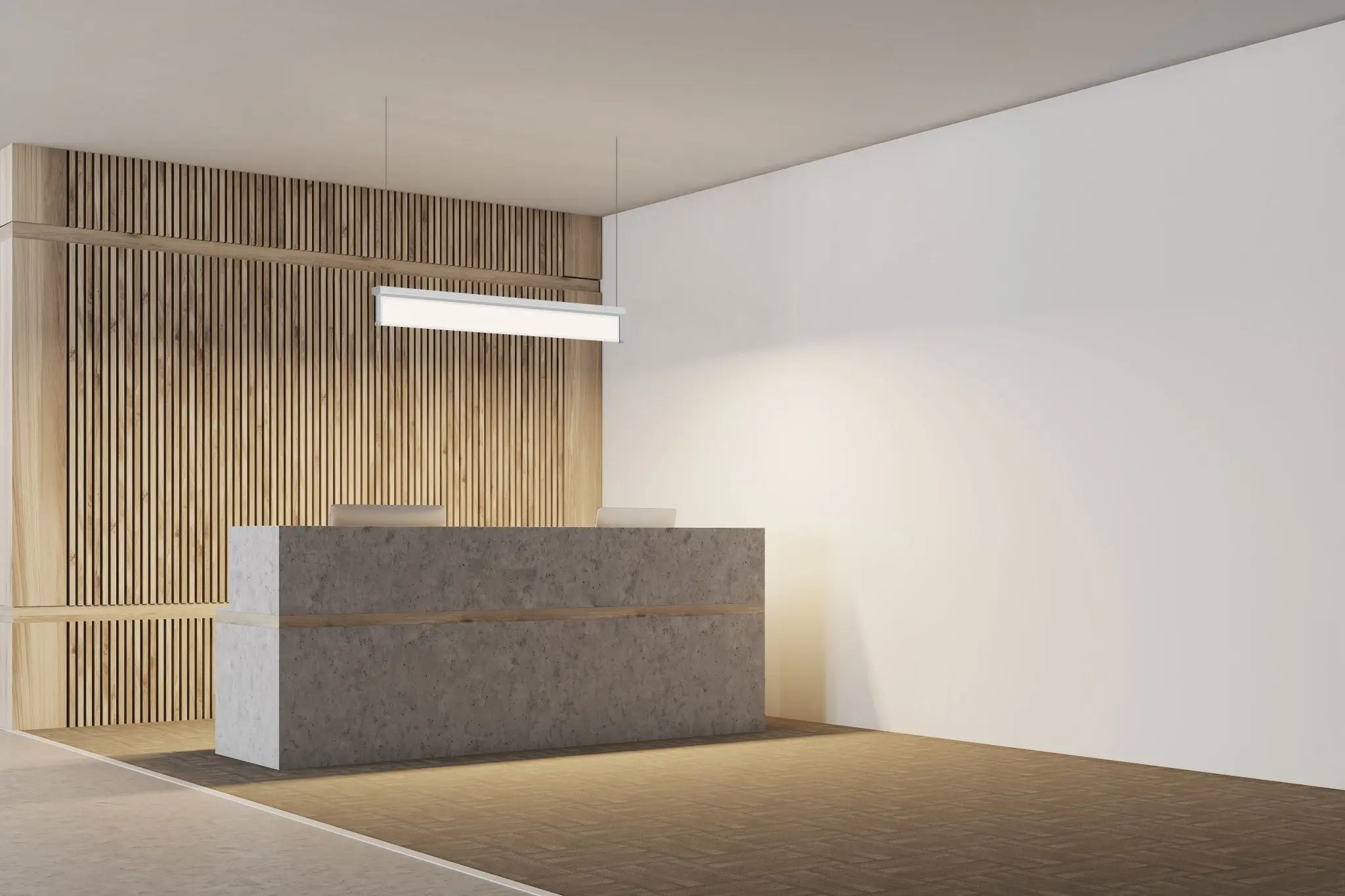
A suspended ceiling gives you one of the easiest upgrade paths in commercial lighting, and led drop ceiling lights dimmable options are now far more varied than the basic troffers many buyers still picture. A dropped ceiling, also called a suspended ceiling, T-bar ceiling, false ceiling, or grid ceiling, is a secondary ceiling hung below the structural ceiling, according to Wikipedia's overview. For owners, contractors, and facility teams, the real decision is not just panel size or brightness, it's which dimming method fits your controls, voltage, and future plans. For practical commercial lighting guidance, The JQZ Lighting Journal is a useful reference point when you're comparing fixture types and specification details.
What dimmable LED drop ceiling lights are, and where they fit best
Dimmable LED drop ceiling fixtures are lay-in or recessed luminaires designed for suspended ceiling grids and built to reduce light output through a compatible control method. Most buyers will see them sold as LED panels, troffers, or flat panels in common 2x2 and 2x4 sizes, with many current products also offering selectable wattage or color temperature.
Commercial search results in 2026 show the market is centered on field-ready products, not niche custom systems. Top-ranking product pages emphasize features such as 0-10V dimming, 100-277V input, and quick retrofit installation, including a NuWatt panel line with 5 selectable color temperatures and selectable wattages, and a popular Amazon 2x2 product listed at 40W, 4400 lumens, 5000K, 100-277V, with ETL and DLC mentions in the listing details.
The first filter should be fixture type and ceiling compatibility, then dimming protocol, then output and color settings.
Quick comparison of common fixture formats
| Fixture format | Typical ceiling use | Common dimming approach | Best fit |
|---|---|---|---|
| 2x2 LED panel | Offices, schools, clinics | 0-10V | Replacing 2x2 fluorescent lay-ins |
| 2x4 LED panel | Open offices, retail, corridors | 0-10V | Large uniform ceiling grids |
| LED troffer | Commercial retrofits, utility spaces | 0-10V or integrated controls | Higher-output replacements |
| Wattage/CCT-selectable panel | Mixed-use renovations | 0-10V | Projects where final light levels may change |
Why this matters in commercial projects
A dimmable fixture gives you more than ambiance. It can help match different tasks across a single property, such as brighter checkout areas, softer conference rooms, or lower light levels during cleaning and off-hours.
Research also points to a broader shift toward adaptive lighting. A 2022 survey in IEEE Access reviewed machine learning methods in smart lighting aimed at user comfort, which matters because many buyers now want dimming that can later connect to smarter controls rather than stay fixed forever.
Quick comparison of common fixture formats
| Fixture format | Typical ceiling use | Common dimming approach | Best fit |
|---|---|---|---|
| 2x2 LED panel | Offices, schools, clinics | 0-10V | Replacing 2x2 fluorescent lay-ins |
| 2x4 LED panel | Open offices, retail, corridors | 0-10V | Large uniform ceiling grids |
| LED troffer | Commercial retrofits, utility spaces | 0-10V or integrated controls | Higher-output replacements |
| Wattage/CCT-selectable panel | Mixed-use renovations | 0-10V | Projects where final light levels may change |
Which dimming methods actually work with drop ceiling fixtures
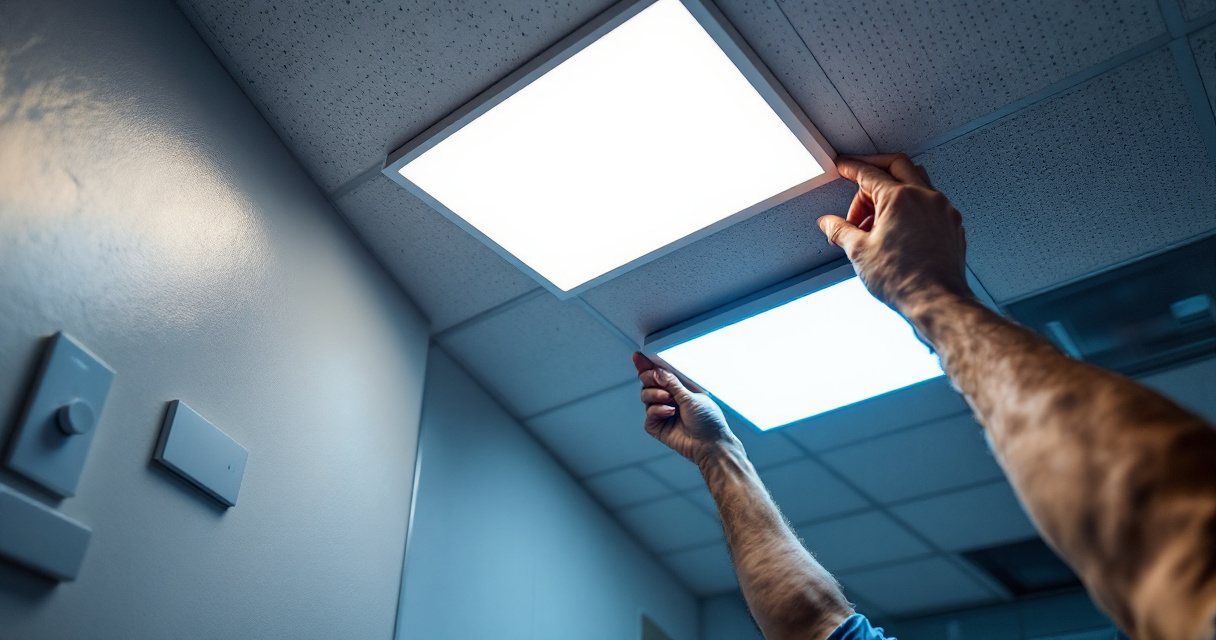
The best dimming method for a suspended ceiling light is the one your driver and control system both support. In this category, 0-10V dimming remains the most visible commercial standard across current product pages, especially for panel lights and troffers sold for offices, retail, and industrial interiors.
The three practical dimming paths in 2026
- 0-10V dimming: Most common in commercial LED panels. It uses low-voltage control wires and is widely specified for new construction and retrofits.
- Integrated fixture controls: Some products bundle sensors or smart control capability inside the luminaire. These work well where you want room-by-room control without a large automation rebuild.
- Networked smart lighting: Best for larger portfolios that want scheduling, occupancy response, or daylight-based changes across many spaces.
A useful way to think about it is complexity versus flexibility. Standard analog dimming is easier to source and install. Networked lighting offers more control, but it needs better planning around commissioning, interoperability, and staff training.
How to match controls to your project
- Small office retrofit: 0-10V panels are usually the simplest choice.
- Retail renovation: Selectable-output panels help if merchandising layouts may change.
- Warehouse office mezzanine: Use dimmable troffers or panels that can run on broad input voltage, often 100-277V in current listings.
- Multi-site portfolios: Consider smart-ready fixtures if central monitoring matters.
A 2022 survey on optical wireless communications for IoT shows how lighting infrastructure is increasingly discussed alongside communications and connected building functions. That does not mean every drop ceiling light should be "smart," but it does support choosing fixtures that won't limit future controls.
The three practical dimming paths in 2026
- 0-10V dimming: Most common in commercial LED panels. It uses low-voltage control wires and is widely specified for new construction and retrofits.
- Integrated fixture controls: Some products bundle sensors or smart control capability inside the luminaire. These work well where you want room-by-room control without a large automation rebuild.
- Networked smart lighting: Best for larger portfolios that want scheduling, occupancy response, or daylight-based changes across many spaces.
How to match controls to your project
- Small office retrofit: 0-10V panels are usually the simplest choice.
- Retail renovation: Selectable-output panels help if merchandising layouts may change.
- Warehouse office mezzanine: Use dimmable troffers or panels that can run on broad input voltage, often 100-277V in current listings.
- Multi-site portfolios: Consider smart-ready fixtures if central monitoring matters.
How to compare LED drop ceiling lights dimmable options without guessing
The safest way to compare fixtures is to read the electrical and photometric details before you look at price. Many buyers jump straight to size and color temperature, but dimming performance depends on the driver, control compatibility, and installation context.
The specification checklist that avoids bad fits
- Size: Match the grid, usually 2x2 or 2x4.
- Input voltage: Many commercial options list 100-277V.
- Dimming type: Confirm 0-10V or another supported method.
- Light output: Example listings show products around 4400 lumens for 2x2 panels.
- Color temperature: Fixed 5000K is common, but field-selectable CCT is increasingly popular.
- Listings: Look for certifications mentioned in product data, such as ETL or DLC where applicable.
- Field adjustability: Wattage and CCT selectability can reduce change orders.
Side-by-side decision table
| Buying priority | Best option | Why |
|---|---|---|
| Lowest installation friction | Standard 0-10V panel | Familiar to many electricians and specifiers |
| Flexible renovation scope | CCT/wattage-selectable panel | Lets you tune the result after install |
| Uniform office lighting | 2x4 flat panel | Broad, even distribution in open ceilings |
| Smaller enclosed rooms | 2x2 panel | Easier match for offices and exam rooms |
| Future smart control plans | Smart-ready troffer or panel | Easier path to later upgrades |
If your controls team cannot verify compatibility in one sentence, pause the order and request the driver and dimming documentation first.
One reason this matters is user experience. Research on smart home monitoring in a 2022 CHI conference paper highlights how people notice technology when it changes behavior in lived spaces. In commercial lighting, poor dimming curves, flicker, or awkward control logic create the same kind of friction, even if the hardware looks fine on paper.
The specification checklist that avoids bad fits
- Size: Match the grid, usually 2x2 or 2x4.
- Input voltage: Many commercial options list 100-277V.
- Dimming type: Confirm 0-10V or another supported method.
- Light output: Example listings show products around 4400 lumens for 2x2 panels.
- Color temperature: Fixed 5000K is common, but field-selectable CCT is increasingly popular.
- Listings: Look for certifications mentioned in product data, such as ETL or DLC where applicable.
- Field adjustability: Wattage and CCT selectability can reduce change orders.
Side-by-side decision table
| Buying priority | Best option | Why |
|---|---|---|
| Lowest installation friction | Standard 0-10V panel | Familiar to many electricians and specifiers |
| Flexible renovation scope | CCT/wattage-selectable panel | Lets you tune the result after install |
| Uniform office lighting | 2x4 flat panel | Broad, even distribution in open ceilings |
| Smaller enclosed rooms | 2x2 panel | Easier match for offices and exam rooms |
| Future smart control plans | Smart-ready troffer or panel | Easier path to later upgrades |
Common buying mistakes, and what smart specifiers do instead
The most common mistake is assuming every dimmable panel behaves the same. Two fixtures may share size, wattage, and color temperature, yet dim very differently because of driver quality and control compatibility.

Mistakes that cause expensive callbacks
- Ordering by lumen output alone: High brightness does not guarantee comfortable light.
- Ignoring dimmer compatibility: A dimmable label is not enough without the right control method.
- Forgetting the ceiling environment: Offices, retail floors, and back-of-house spaces need different light levels.
- Skipping adjustable models in renovations: Fixed-output products can create avoidable rework.
- Treating future controls as someone else's problem: That often raises costs later.
What experienced contractors look for now
Experienced installers tend to favor fixtures that reduce uncertainty on site. That usually means clear driver specs, broad voltage compatibility, and field-selectable settings where project conditions may shift late.
The JQZ Lighting Journal often frames this well for commercial readers: the best lighting choice is rarely the one with the longest feature list, it's the one that matches the project's actual controls, mounting condition, and maintenance plan. If you want more examples and category guidance, visit jqzlighting.com after you've set your room types and control goals.
Good specifications reduce labor surprises. Great specifications also leave room for how the building will be used six months from now.
Mistakes that cause expensive callbacks
- Ordering by lumen output alone: High brightness does not guarantee comfortable light.
- Ignoring dimmer compatibility: A dimmable label is not enough without the right control method.
- Forgetting the ceiling environment: Offices, retail floors, and back-of-house spaces need different light levels.
- Skipping adjustable models in renovations: Fixed-output products can create avoidable rework.
- Treating future controls as someone else's problem: That often raises costs later.
What experienced contractors look for now
Experienced installers tend to favor fixtures that reduce uncertainty on site. That usually means clear driver specs, broad voltage compatibility, and field-selectable settings where project conditions may shift late.
The JQZ Lighting Journal often frames this well for commercial readers: the best lighting choice is rarely the one with the longest feature list, it's the one that matches the project's actual controls, mounting condition, and maintenance plan. If you want more examples and category guidance, visit jqzlighting.com after you've set your room types and control goals.
What to expect next for commercial ceiling lighting
Dimmable ceiling lighting is moving toward more adaptable fixtures and better control layers, not just lower wattage. The clearest product trend in current SERP results is selectability, with more panels combining multiple color temperatures and wattage options in one SKU.
Trends worth planning around
- Field-selectable fixtures will keep growing because they simplify inventory and retrofits.
- Smart-lighting integration will become more practical in mainstream commercial projects.
- Control-ready luminaires will matter more than flashy app features.
- Specification clarity will become a stronger differentiator as buyers compare near-identical panels online.
For property owners managing upgrades across several rooms or buildings, that means buying for adaptability instead of chasing a single "best" panel. With The JQZ Lighting Journal platform, readers can keep up with these shifts without sorting through thousands of product pages alone. That's especially useful when your team is balancing electrician preferences, budget limits, and long-term operating needs.
Trends worth planning around
- Field-selectable fixtures will keep growing because they simplify inventory and retrofits.
- Smart-lighting integration will become more practical in mainstream commercial projects.
- Control-ready luminaires will matter more than flashy app features.
- Specification clarity will become a stronger differentiator as buyers compare near-identical panels online.
Conclusion
The best led drop ceiling lights dimmable options for 2026 are the ones that match your ceiling grid, voltage, control method, and room use without forcing extra work later. Start with fixture format, confirm dimming compatibility, then compare output, color settings, and certifications in that order. If you're narrowing down products for an office, retail retrofit, warehouse office, or renovation bid, use The JQZ Lighting Journal as a practical checkpoint and head to jqzlighting.com for more lighting guidance before you place the order.