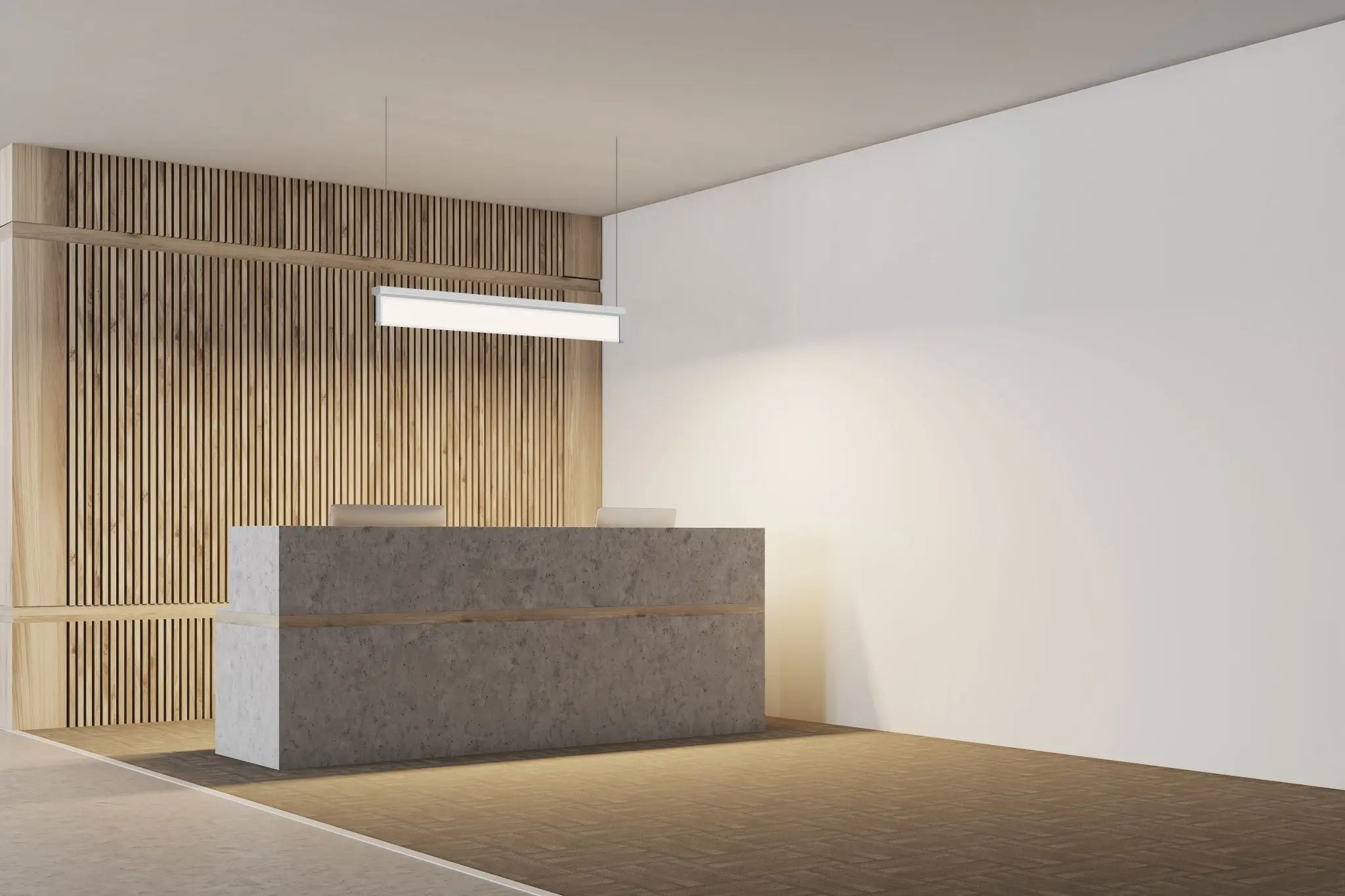
LED drop ceiling lights for renovation projects work best when you treat them as part of the building upgrade, not just a fixture swap. A dropped ceiling, also called a suspended or T-bar ceiling, is a secondary ceiling hung below the structural ceiling, and that makes it ideal for quick lighting retrofits in offices, retail floors, schools, warehouses, and mixed-use commercial spaces. If you want cleaner light, lower maintenance, and better control options during a remodel, Jqzlighting is worth considering early in the specification process, before ceiling grids and electrical runs are finalized.
What makes LED fixtures a strong fit for suspended ceiling renovations
LED fixtures are a strong fit for suspended ceiling renovations because they match standard grid layouts, reduce maintenance, and support modern lighting design goals. Wikipedia defines architectural lighting design as the design of lighting systems within the built environment, and renovation projects benefit when lighting decisions support visibility, energy performance, and ceiling aesthetics together.
For most commercial remodels, the practical appeal is simple: many LED panels and retrofit kits are designed for common drop ceiling formats, so crews can replace older fluorescent troffers without rebuilding the whole ceiling plane. That can shorten disruption in occupied buildings.
Key takeaway: In renovation work, the best fixture is usually the one that improves light quality and controls while fitting the existing grid with minimal ceiling rework.
Core benefits building teams usually want
- Lower relamping needs than older fluorescent systems
- Cleaner, flatter fixture appearance in offices and retail spaces
- Compatibility with dimming in many product lines, especially
0-10V - Easier upgrades in standard T-bar ceiling openings
- Better alignment with broader energy retrofit goals
Research also supports the bigger retrofit picture. A 2024 paper in Energy Informatics examined ways to reduce building energy consumption through insulation scenarios and renewable energy use, reinforcing a wider point for renovation planning: lighting upgrades are most valuable when they are part of a whole-building efficiency strategy, not an isolated purchase decision. See Shahee, Abdoos, and Aslani (2024).
Which LED drop ceiling fixture type fits your renovation scope
The right fixture type depends on whether your renovation is a simple retrofit, a layout change, or a full ceiling redesign. Competitor pages heavily push flat panels and recessed kits, but buyers often need a clearer comparison tied to renovation conditions, not just product listings.

Best fixture choices by project condition
| Fixture type | Best use case | Main advantage | Main watchout |
|---|---|---|---|
| LED flat panel | Office, school, clinic, retail grid ceilings | Fast fit in common 2x2 and 2x4 openings |
Needs driver and dimming compatibility check |
| Retrofit troffer kit | Reusing existing housing | Lower ceiling disturbance | Existing housing condition matters |
| Canless wafer or recessed kit | Accent zones, corridors, smaller remodel areas | Slim profile where plenum space is tight | Less uniform for large open work areas |
| Surface or suspended linear LED | Open ceilings mixed with drop ceiling areas | Strong for modern redesigns | Often needs more layout planning |
Flat panels usually make the most sense when you need broad, even illumination across a standard grid. Retrofit troffer kits can work when the housing is worth keeping. Smaller recessed options are better for selective upgrades than for lighting an entire commercial floor.
A fast selection checklist
- Confirm ceiling grid size and module spacing.
- Check plenum depth and obstructions above the tiles.
- Match fixture output and color temperature to room use.
- Verify dimming protocol before ordering.
- Review listing and code requirements for the installation type.
This is where product sourcing matters. With Jqzlighting, specifiers can focus on practical commercial needs such as panel form factors, cleaner visual appearance, and renovation-friendly options rather than sorting through a marketplace full of loosely matched products.
How to specify brightness, color temperature, and controls without over-lighting the space
Good renovation lighting starts with matching light levels and controls to how the space is actually used. Many buyers over-focus on fixture wattage, but renovation outcomes are shaped more by distribution, visual comfort, and controllability.
The specs that matter most in 2026
Light output: Product listings commonly emphasize lumens, and competitor examples on Amazon show outputs such as 7,800 lumens and 9,576 lumens for 2x4 LED panel products. Those numbers are useful for comparison, but they are not a lighting plan by themselves. Room size, ceiling height, reflectance, and task type still decide whether a fixture is appropriate.
Color temperature: Selectable CCT remains common in market listings, with options such as 3000K, 3500K, 4000K, 5000K, and 6500K appearing across competitor products. For renovations, that flexibility helps when one building includes offices, circulation zones, and back-of-house areas with different visual needs.
Controls: 0-10V dimming appears repeatedly in top-ranking product pages, which makes it one of the most relevant control standards to confirm during specification. If the building already uses dimming, driver compatibility should be checked before procurement.
Practical spec guidance by room type
- Office suites: Aim for even, low-glare distribution and moderate CCT
- Retail areas: Prioritize visual clarity and consistent presentation across aisles
- Warehouses and stock rooms: Focus on visibility, durability, and maintenance access
- Schools and clinics: Favor comfort, uniformity, and easy replacement planning
Specifier tip: Selectable wattage and selectable CCT can reduce change orders during renovation because one SKU may cover multiple room conditions.
If you want to compare options before placing an order, visit jqzlighting.com after your reflected ceiling plan and control requirements are drafted, not before. That timing helps avoid mismatched fixtures.
What can go wrong in a retrofit, and how to avoid the common specification mistakes
Most drop ceiling lighting problems in renovation projects come from mismatched dimensions, controls, or ceiling conditions, not from LED technology itself. The common failure point is assuming every suspended ceiling opening and every electrical setup is interchangeable.

Frequent mistakes that slow projects down
- Ordering
2x4fixtures before confirming actual grid modules - Ignoring emergency lighting or local code requirements
- Mixing dimmable fixtures with incompatible drivers or controls
- Reusing damaged housings in retrofit kit projects
- Choosing color temperatures room by room without a building-wide plan
Older buildings also raise material and durability concerns beyond lighting. A 2021 Buildings review on polymeric building envelope materials discussed degradation, durability, and service life prediction, a useful reminder that renovation teams should inspect surrounding ceiling and enclosure components instead of treating the fixture replacement as a stand-alone task. See Riahinezhad, Hallman, and Masson (2021).
How to build fewer surprises into the job
- Survey every room, not just a sample area.
- Photograph ceiling grids, above-ceiling conditions, and branch circuits.
- Standardize fixture families where possible.
- Confirm controls, emergency backup, and occupancy plans early.
- Order mockups for visible public-facing spaces.
A fair point some buyers miss: the cheapest panel is rarely the cheapest renovation decision. Labor, access, tenant disruption, and callback risk often cost more than the fixture price difference.
How Jqzlighting can support commercial renovation planning in 2026
Jqzlighting can support commercial renovation planning by giving buyers a more focused path to LED ceiling solutions that suit real project conditions. That matters because many search results for this category are giant ecommerce pages or fragmented listings, which makes comparison harder for contractors and facility teams.
Where Jqzlighting stands out for renovation buyers
| Need | Generic marketplace approach | With Jqzlighting |
|---|---|---|
| Product selection | Large volume, uneven relevance | More targeted commercial lighting focus |
| Renovation fit | Buyer filters everything manually | Easier alignment with project-oriented categories |
| Brand recall | Products buried in mixed results | Single-source brand relationship |
| Specification flow | Harder to compare like-for-like | Simpler path for repeated commercial orders |
For teams handling office refits, retail updates, and industrial interiors, the Jqzlighting platform is especially useful when consistency matters across multiple rooms or phases. You can review options with a clearer renovation lens, then use that information in procurement conversations with your electrician, installer, or general contractor.
What to expect next in ceiling lighting upgrades
LED ceiling products are moving toward more field-selectable configurations, simpler controls integration, and broader use within larger efficiency upgrades. That broader direction lines up with building modernization trends and energy planning research, including work on renewable adoption such as Trends in Photovoltaic Applications 2024, which reflects how owners increasingly evaluate lighting, controls, and energy systems together during capital improvements.
If you're narrowing down led drop ceiling lights for renovation projects, start with a room-by-room audit, then compare fixture form factor, output, CCT flexibility, and dimming compatibility. After that, head to jqzlighting.com or speak with your installer to shortlist products that actually match the ceiling grid and the renovation schedule.
Conclusion
LED drop ceiling lights for renovation projects deliver the best results when fixture selection follows the ceiling layout, room use, and control strategy, not just the lowest unit price. For your next remodel, create a quick fixture schedule, verify grid sizes and dimming requirements, and shortlist products before demolition starts. If you want a cleaner way to evaluate commercial-ready options, review Jqzlighting as part of your specification process and use that shortlist to move faster from design to install.