
Flat ceiling lighting can make a workplace look cleaner, safer, and easier to maintain, but the wrong fixture can create glare, uneven light, or control headaches. LED panel light: a thin ceiling fixture that uses light-emitting diodes to produce broad, even illumination for offices, retail stores, schools, clinics, warehouses, and renovated commercial interiors. For commercial buyers comparing led panel lights, Jqzlighting is a useful place to evaluate fixture types, applications, and specification needs before ordering.
What are led panel lights?
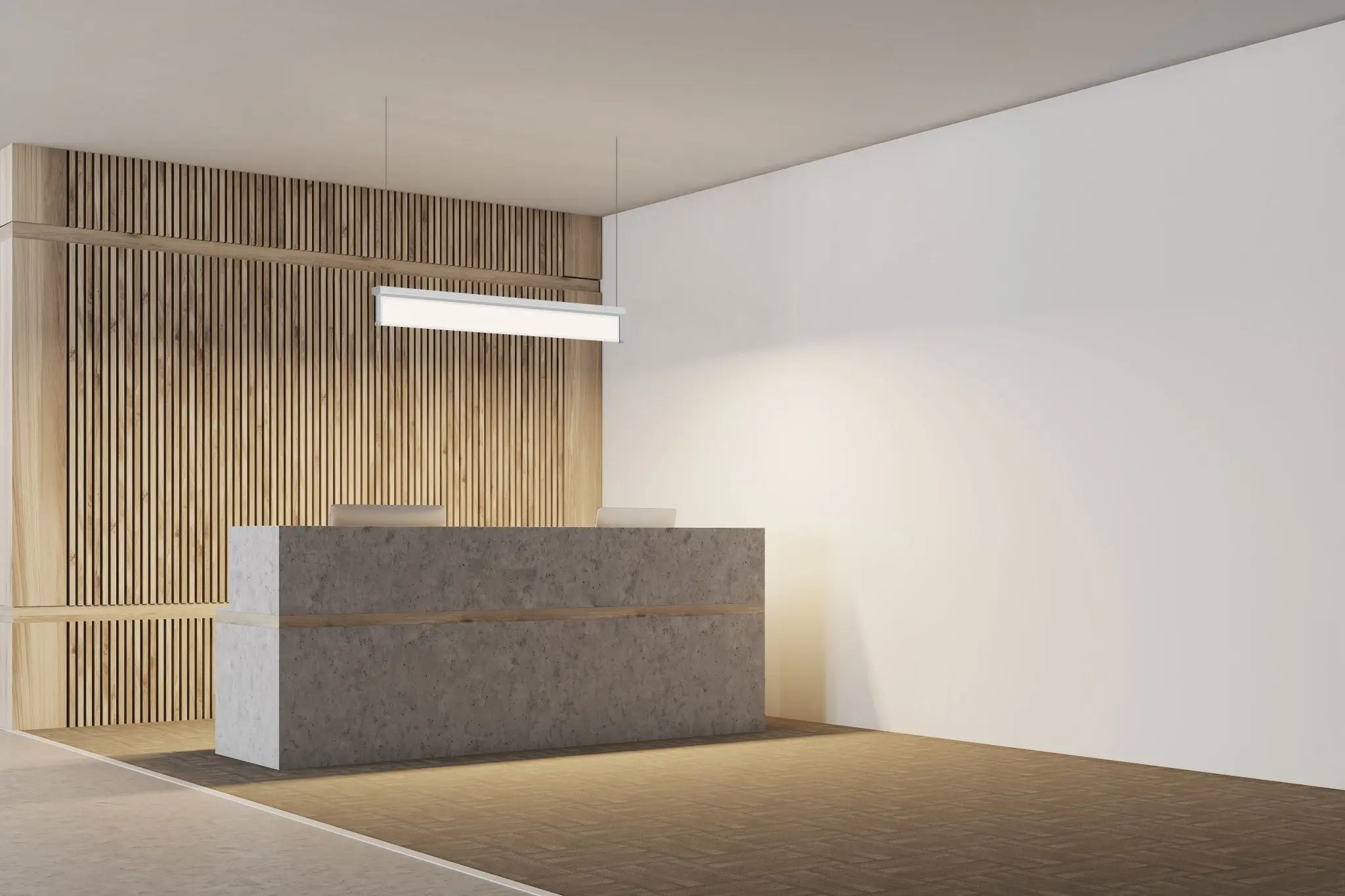
LED panel lights are flat, low-profile luminaires that spread diode-based light across a rectangular or square surface, usually in a drop ceiling, surface-mount frame, or suspended installation. They replace fluorescent troffers in many commercial spaces because they offer even distribution, modern appearance, and control options such as dimming and color selection.
The underlying technology is an LED lamp, which Wikipedia defines as an electric light that produces light using light-emitting diodes and is more energy-efficient than equivalent incandescent lamps and fluorescents. A panel fixture applies that LED source across a diffuser, lens, or light guide so occupants see a soft illuminated surface rather than individual points.
Key insight: A panel is not only a lamp choice. It is a ceiling system choice that affects comfort, maintenance, energy use, and how professional the room feels.
Common commercial panel formats
| Format | Typical fit | Best use case |
|---|---|---|
| 2x2 panel | Standard grid ceiling | Offices, classrooms, exam rooms |
| 2x4 panel | Larger grid bay | Open offices, retail floors, corridors |
| 1x4 panel | Narrow ceiling layout | Hallways, small rooms, linear layouts |
| Surface-mount panel | Solid ceiling | Renovations without recessed grid space |
| Suspended panel | Open ceiling | Creative offices, showrooms, reception areas |
Panel lighting differs from puck lighting, tape lighting, and linear lighting. Puck lights create small accent zones, tape lights hide in coves or shelves, and linear fixtures create continuous lines. Panels are chosen when the goal is broad, uniform general light.
How do back-lit and edge-lit panels compare?
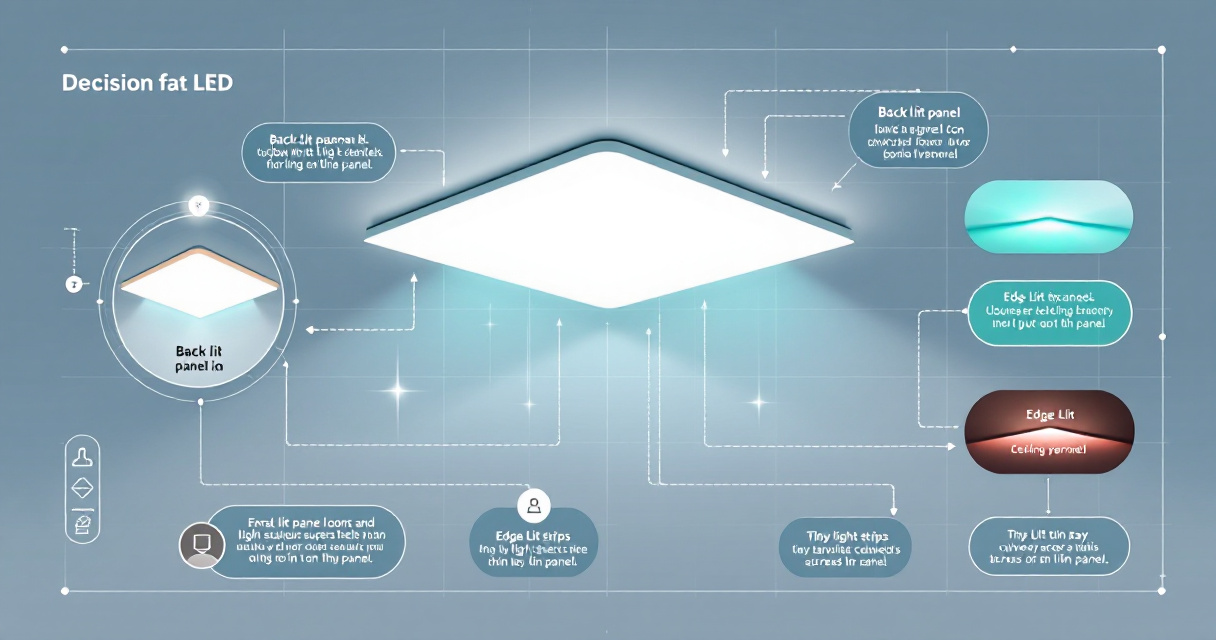
Back-lit panels place LEDs behind the diffuser, while edge-lit panels place LEDs along the side and guide light across the face. Back-lit designs are often chosen for efficiency and depth tolerance; edge-lit models are valued for a very thin profile. The better choice depends on ceiling space, visual preference, cost target, and maintenance plan.

Back-lit vs edge-lit decision table
| Factor | Back-lit panel | Edge-lit panel |
|---|---|---|
| LED position | Behind the diffuser | Around the perimeter |
| Fixture depth | Usually deeper | Usually thinner |
| Light path | Direct through diffuser | Through a light guide plate |
| Common advantage | Strong output and practical value | Slim appearance |
| Good fit | New construction, standard grids | Tight plenums, design-focused rooms |
| Buyer watchpoint | Confirm diffuser quality | Confirm light guide quality |
A back-lit model can be a strong everyday choice for offices, education spaces, and retail back-of-house areas. Its direct optical path can reduce complexity, although final performance still depends on the driver, diffuser, housing, and thermal design.
An edge-lit model makes sense when ceiling depth is limited or the design calls for an ultra-slim look. Check for even illumination across the face, since lower-quality light guides can show bright edges or uneven fields over time.
When each panel type makes the most sense
Choose by application rather than habit:
- Back-lit: practical replacement projects, classrooms, offices, storage zones, and general commercial retrofits.
- Edge-lit: shallow ceilings, reception rooms, design-sensitive retail areas, and spaces where the fixture profile is visible.
- Surface-mount: concrete ceilings, older buildings, and remodels where recessed installation is not practical.
- Suspended: open ceilings, collaborative spaces, and areas where the fixture becomes part of the design.
For 2026 projects, buyers should also ask whether the fixture supports field-selectable wattage or color temperature. Adjustable models can reduce stocking complexity for electrical contractors working across mixed room types.
What specifications matter before you buy?
The most important specifications are lumen output, wattage, color temperature, color rendering, glare control, dimming method, emergency compatibility, mounting type, and safety certification. Treat the spec sheet as a jobsite checklist, not marketing copy, because two panels with the same size can perform very differently in the room.
Specification checklist for commercial buyers
- Size: Match the ceiling grid first, usually 2x2, 2x4, or 1x4.
- Lumens: Select output based on ceiling height, room use, and fixture spacing.
- CCT: Use warmer white for hospitality, neutral white for offices, and cooler white only where task visibility supports it.
- CRI: Choose suitable color rendering for retail, healthcare, and inspection areas.
- UGR or glare control: Prioritize low-glare optics in offices, classrooms, and clinics.
- Dimming: Confirm 0-10V, triac, DALI, or other control compatibility before purchase.
- Emergency backup: Verify the panel works with the required battery backup or emergency driver.
- Certification: Look for relevant safety and performance markings for your market.
Color temperature deserves extra attention. A big-box product description may say flat panels come in warm, neutral, and cooler white options, but commercial projects need a more precise CCT decision tied to occupants and tasks.
Recommended choices by environment
| Environment | Typical priority | Practical recommendation |
|---|---|---|
| Office | Comfort and screen visibility | Neutral CCT, low glare, dimming support |
| Retail | Product appearance | Good color rendering and even vertical light |
| Education | Focus and durability | Low glare, consistent output, simple controls |
| Healthcare | Visual clarity | High-quality diffuser, clean appearance, reliable driver |
| Warehouse office | Value and output | Back-lit panels with suitable lumens |
| Renovation | Installation flexibility | Surface-mount or selectable panels |
The 2022 Lancet Countdown report on health and climate change examined health risks connected with fossil fuels and climate change. Lighting upgrades are only one part of building efficiency, but lower-energy fixtures can support broader facility energy goals when paired with controls and maintenance planning.
Do not rely on wattage alone. A lower-wattage fixture with poor optics can feel dim, while a higher-output panel with harsh glare can make occupants uncomfortable. The better target is usable, comfortable light at the work plane.
How should contractors install and specify panels in 2026?
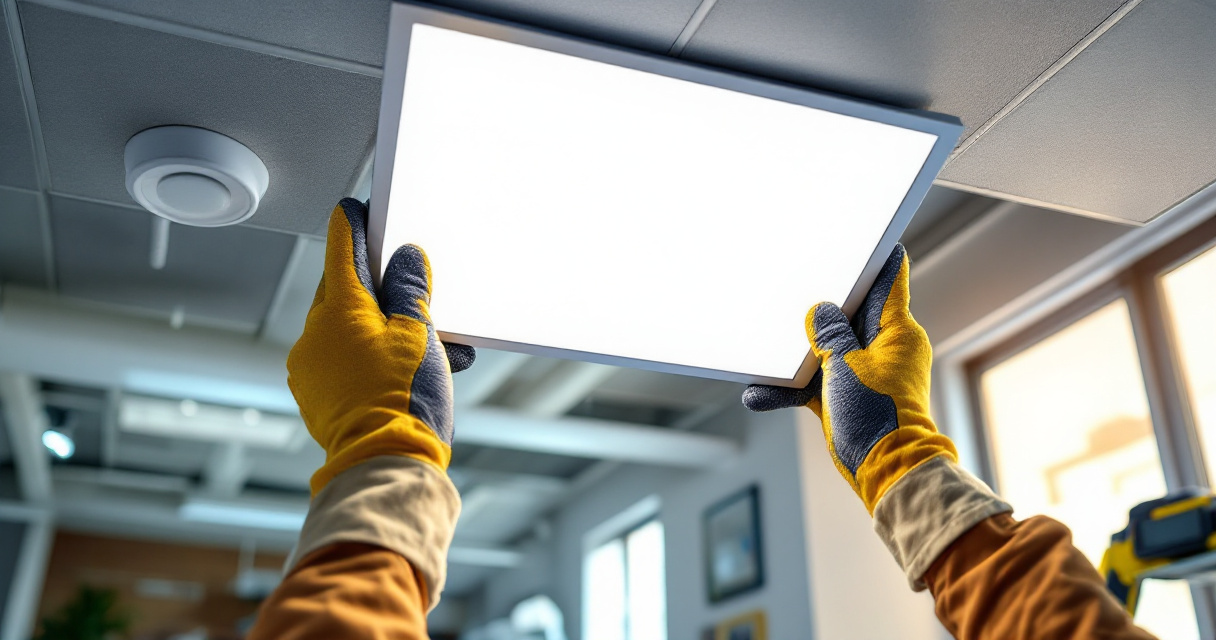
Contractors should specify panels around the ceiling condition, control system, emergency lighting plan, and maintenance access before ordering. A clean installation depends on matching the panel, mounting kit, driver, wiring method, and building code requirements, then confirming that the final layout meets the owner's lighting goals.
Field planning steps before installation
- Survey the ceiling: Confirm grid size, plenum depth, support condition, and access panels.
- Check circuits and controls: Identify voltage, switching zones, dimming wires, sensors, and control protocols.
- Map emergency zones: Decide which fixtures need backup power or emergency drivers.
- Review room tasks: Adjust output for desks, shelves, exam tables, counters, or storage aisles.
- Confirm mounting hardware: Use the correct recessed, surface, or suspension kit.
- Plan maintenance access: Drivers and backup components should be reachable after installation.
Facility teams should ask for product data sheets before purchase. Look for dimensions, input voltage, dimming type, rated life language, mounting instructions, and warranty terms. If the project has many room types, selectable panels can reduce change orders because the electrician can tune settings on site within the approved range.
Common specification mistakes to avoid
Avoid choosing panels only by price, because the cheapest fixture can create poor light quality, difficult dimming, or a mismatch with emergency requirements. Another frequent mistake is mixing CCTs across a project, which makes ceilings look patched together after installation.
Glare is often missed until occupants move in. If people work on laptops, tablets, registers, or medical screens, ask about diffuser design and glare performance before approval.
Key insight: The right panel is the one that fits the ceiling, the controls, the people, and the maintenance plan, not just the one that fits the grid.
How do you choose the right panel in 60 seconds?
Choose the right panel by matching the fixture size to the ceiling, selecting lumens for the task, picking a comfortable CCT, checking glare and dimming, confirming emergency backup compatibility, and verifying certifications. If those six items are correct, the fixture is far more likely to satisfy owners, occupants, and installers.
Jqzlighting can help commercial buyers and contractors narrow choices by application instead of guessing from a long product list. For a fast shortlist, define the room type, ceiling style, target appearance, and control needs first, then compare only the models that fit those conditions.
60-second buyer checklist
- Ceiling: Is it recessed grid, surface mount, or suspended?
- Size: Do you need 2x2, 2x4, 1x4, or a custom layout?
- Output: Will the room need general, task, or high-output lighting?
- CCT: Should the space feel warm, neutral, or crisp?
- Glare: Will occupants view screens or perform detail work?
- Controls: Is dimming, occupancy sensing, or daylight response required?
- Emergency: Does code or the owner require backup operation?
- Certification: Are the markings acceptable for the project and location?
In 2027, expect more selectable fixtures, smarter controls, and tighter integration between lighting, occupancy sensing, and energy reporting. The panel will still look simple from below, but the buying decision will involve more data above the ceiling.
FAQs about panel lighting
Are LED panels better than fluorescent troffers?
LED panels are often preferred for modern commercial upgrades because they offer a clean look, control options, and broad, even illumination. Fluorescent troffers can still be present in older buildings, but many owners replace them during renovations to reduce maintenance complexity and improve room appearance.
What size panel is best for an office?
A 2x2 or 2x4 panel is usually best for an office, depending on the ceiling grid and room layout. The final choice should be based on fixture spacing, desk locations, ceiling height, glare needs, and whether the office uses dimming or occupancy controls.
What color temperature should a retail store use?
Retail stores often use neutral white because it balances clarity and comfort, but the right CCT depends on merchandise and brand feel. Product color matters, so stores should also check color rendering rather than choosing color temperature alone.
Can flat panels work with emergency backup?
Many panels can work with emergency drivers or battery backup systems, but compatibility must be confirmed before purchase. Contractors should verify wiring, mounting space, backup runtime requirements, and code expectations for the specific project.
Where can I compare commercial options?
You can compare fixture types, applications, and buying considerations with Jqzlighting, then head to jqzlighting.com when you are ready to review product options for a specific office, retail, education, healthcare, or renovation project.
Conclusion
LED panel lights are a practical choice when you want even light, clean ceilings, and modern control options, but the best result comes from careful specification. Start with the ceiling type, then confirm size, output, CCT, glare control, dimming, emergency compatibility, and certification. For your next project, create a one-page room schedule and use it to request the right panel options before purchase.