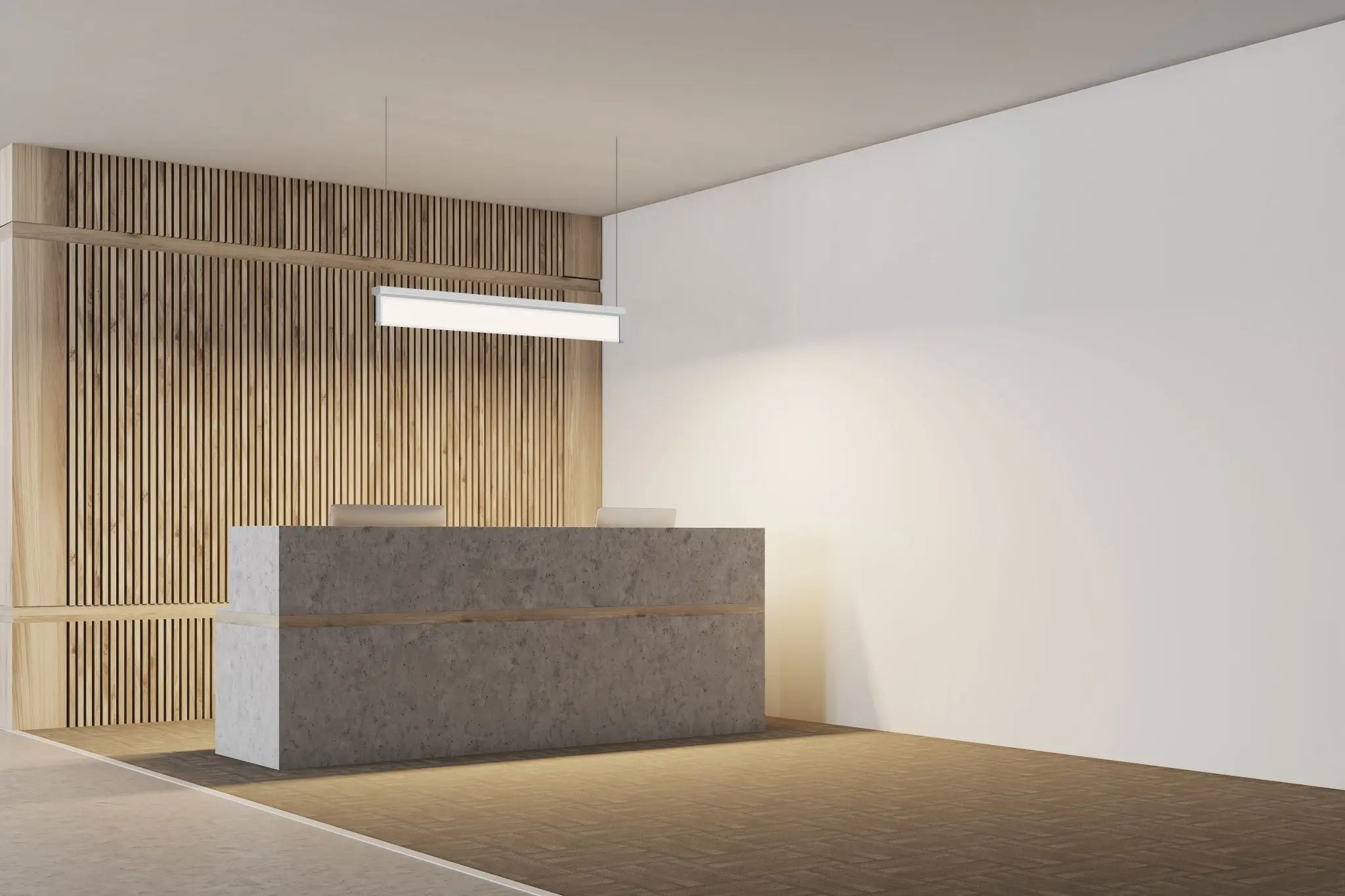
A 2x4 LED drop ceiling light can range from 30W to 72W and produce roughly 4,000 to 9,500 lumens, based on current 2025 to 2026 market data from top-ranking product guides and listings. That wide spread is why wattage alone doesn't tell you what fixture you need. A dropped ceiling, also called a suspended or grid ceiling, is a secondary ceiling hung below the structural ceiling, which is the standard setup for many offices, retail stores, schools, warehouses, and commercial interiors. For owners, contractors, and facility teams comparing panel lights or troffers, The JQZ Lighting Journal is a useful place to keep specifications and buying criteria organized before you place an order or start a retrofit.
What wattage is normal for a 2x4 LED drop ceiling light in 2026?
The current market range is broader than many buyers expect. Competitive SERP data shows 2x4 LED panel fixtures commonly deliver 4,000 to 9,500 lumens at 30W to 72W, and many now include wattage-selectable switches for field adjustment, as noted in the 2026 guide Panel Lights: The Complete Buyers Guide (source).
That means there is no single "correct" wattage for every 2x4 light. A 30W to 40W panel may be enough for softer office lighting or renovation projects where energy reduction matters most. A 50W to 72W model makes more sense where ceiling heights, task visibility, or wider spacing demand more output.
Key takeaway: For 2x4 fixtures, wattage is only useful when paired with lumen output and fixture efficiency.
Quick wattage and lumen ranges to compare
| Typical wattage | Typical lumen range | Best fit |
|---|---|---|
| 30W-40W | 4,000-5,000 lumens | Offices, classrooms, light-duty commercial areas |
| 41W-50W | 4,800-6,500 lumens | General retail, break rooms, medical offices |
| 60W-72W | 7,000-9,500 lumens | Brighter commercial interiors, larger open areas |
A product listing analyzed in the SERP shows a 2x4 integrated LED flat panel at over 4,800 lumens using 41W, marketed as replacing up to 96W of fluorescent lamps (source). Another competitor listing cites 130 lumens per watt for a 2x4 flat panel fixture (source).
If you're planning a broader ceiling retrofit, it also helps to compare fixture families, not just wattage numbers. For related commercial options, see these LED panel light basics on The JQZ Lighting Journal.
Why 30W and 72W can both be "right"
Manufacturers now offer more selectable fixtures because installers want fewer SKUs on the truck and more flexibility on site. A single panel may include settings such as 30W/40W/50W/60W/72W, according to competitor research from 2025 and 2026 (source).
That matters in tenant improvements and phased remodels. You can start with a lower setting, then raise output if the finished space feels underlit.
How to choose the right wattage by lumen target, not guesswork
Most buying mistakes happen when someone matches wattage to an old fluorescent fixture without checking actual delivered light. For 2026, your better approach is simple: choose brightness first, then find the wattage that gets you there efficiently.

A simple selection process for contractors and building owners
- Identify the room type. Open office, corridor, retail floor, back-of-house, or warehouse support area all need different brightness levels.
- Set a lumen target per fixture. Use current product data as your anchor, not older fluorescent nameplates.
- Check fixture efficiency. A lower-watt panel with strong efficacy can outperform a higher-watt weak performer.
- Confirm dimming and controls. Many 2x4 panels now include 0-10V dimming or wattage selection.
- Review spacing and ceiling height. Fewer high-output fixtures may not always create better uniformity.
Wattage mistakes that raise cost or hurt light quality
- Choosing the highest wattage by default, which can create glare and wasted energy
- Comparing only watts, while ignoring lumens
- Assuming all 2x4 panels at the same wattage perform the same
- Forgetting that color temperature changes how bright a room feels
- Skipping dimming, even in offices and retail where flexibility matters
A practical example from the SERP: one Amazon product listing shows a 7800-lumen 2x4 panel with dimming features (source). That is a very different lighting result from a 4,500 to 4,800 lumen panel, even though both share the same 2x4 size.
If you want to compare ceiling fixture categories before finalizing specifications, review commercial ceiling lighting options using The JQZ Lighting Journal platform.
What buyers usually ask: is higher wattage always better?
No. Higher wattage usually means higher potential output, but not automatically better lighting. In many offices and retail spaces, the better result comes from balanced lumen output, good diffusion, and proper spacing. A 41W panel at around 4,800 lumens may be a smarter fit than a 72W unit if the room already has tight fixture spacing or lower ceilings.
How efficiency, dimming, and fixture design change the wattage decision
Two 2x4 fixtures with different wattages can perform similarly if one has better efficacy. Research in the SERP shows a listed efficacy of 130 lm/W for one 2x4 flat panel product (source). Using that math, a fixture around 40W can already provide strong output for many indoor commercial spaces.
Spec features that matter more than the sticker wattage
| Feature | Why it matters | What to look for |
|---|---|---|
| Lumen output | Tells you actual brightness | Match to room function |
| Efficacy | Affects operating cost | Higher lm/W is generally better |
| Wattage-selectable switch | Gives jobsite flexibility | Multiple settings such as 30W-72W |
| 0-10V dimming | Helps tune light levels | Useful in offices, retail, education |
| Fixture type | Changes appearance and light spread | Panel, troffer, edge-lit, direct-lit |
Panel design also matters. Top competitor outlines heavily discuss edge-lit vs direct-lit fixtures, which is useful because the style can affect diffusion, visual comfort, and maintenance expectations. If you're comparing 2x4 panels against other interior products, troffer light guidance can help narrow the spec list.
Practical rule: Buy the lowest wattage fixture that still hits your lumen target and control needs.
That rule usually lowers long-term energy use without under-lighting the room. It also gives facility managers more flexibility when spaces change use later.
Why wattage-selectable panels are winning more projects
Competitor research from 2025 to 2026 repeatedly mentions wattage-adjustable 2x4 panels (source, source). For contractors, that means fewer product variations to stock. For owners, it means easier light tuning after installation without replacing the fixture.
Best wattage ranges for common commercial spaces
A 2x4 LED panel is used in many room types, but the right wattage changes with visual tasks and layout. Here is the clearest way to think about it.
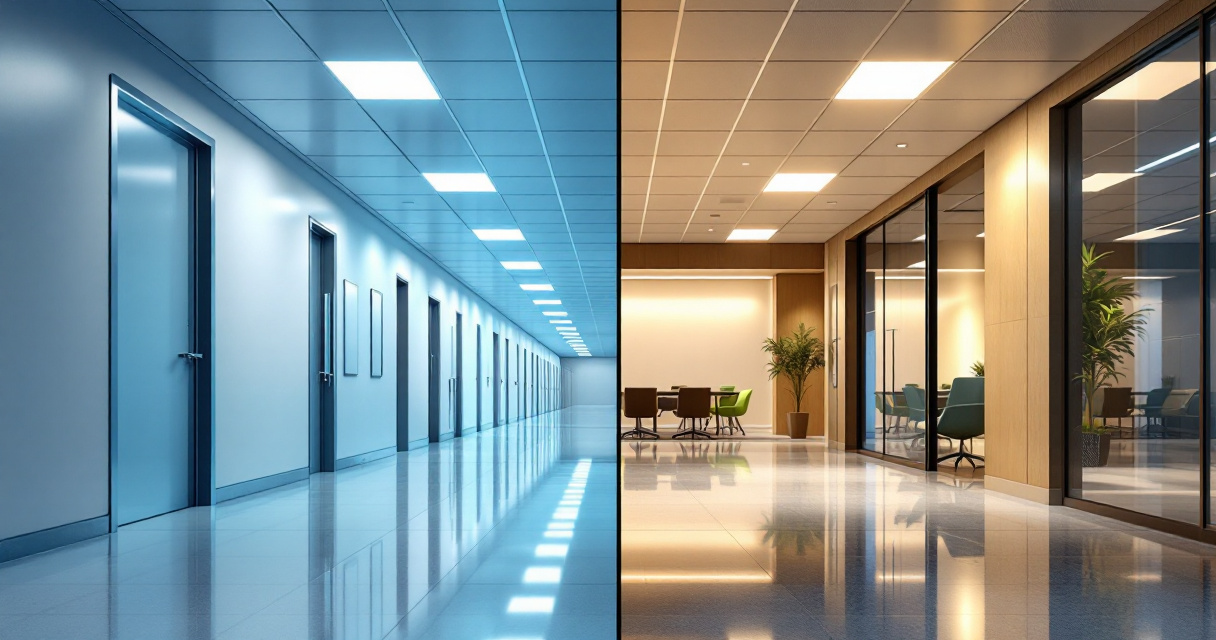
Space-by-space recommendations
- Private offices and conference rooms: often start well with 30W to 40W if fixture spacing is moderate.
- Open offices and classrooms: usually land in the 40W to 50W range.
- Retail floors and reception areas: may need 50W to 60W for a brighter presentation.
- Utility areas and brighter commercial interiors: can justify 60W to 72W, especially with higher ceilings or wider spacing.
These are not code values, and they are not a substitute for a lighting plan. They are practical buying ranges based on the product data visible in the current SERP, where common 2x4 fixtures span from about 4,000 lumens up to 9,500 lumens (source).
When you should size up or down
Choose a lower wattage if:
- You have dense fixture spacing
- The room has bright finishes that reflect light well
- Dimming will be used regularly
Choose a higher wattage if:
- Ceiling height is greater than typical office height
- You want fewer fixtures across a large area
- The room supports detailed visual work
One more practical point: if you are replacing older fluorescent troffers, don't assume a one-for-one watt match. Output and optical performance matter more than legacy lamp wattage.
A quick answer to the common buying question
For many standard commercial interiors, around 40W to 50W is the middle of the market and a sensible starting point. Still, the best 2x4 LED drop ceiling light is the one that gives your room the right lumen level, not the one with the biggest watt number.
What to expect next, and how to buy with fewer regrets
The biggest shift heading into 2026 and beyond is not raw wattage. It's adjustability. Competitor results already show that manufacturers are building more wattage-selectable 2x4 panels, and that trend should continue because it reduces SKU complexity and helps installers adapt on site.
For buyers, that means your 2026 checklist should focus on flexibility as much as efficiency.
A smarter 2026 purchase checklist
- Pick a lumen target before looking at wattage.
- Favor selectable fixtures when the final room layout may change.
- Verify dimming compatibility early.
- Compare efficacy, not just price.
- Use one sample install before ordering a full project lot.
Using The JQZ Lighting Journal during specification review can help you compare fixture outputs, controls, and application fit in one place before you commit to a full retrofit.
Best buying mindset: Start with light level, then confirm wattage, controls, and fixture style. That order prevents most expensive mistakes.
Call-to-action for project teams
If you're choosing 2x4 fixtures for an office, retail remodel, school, or commercial build-out, don't buy by wattage alone. Shortlist a few panels in the 4,000 to 9,500 lumen range, compare efficacy and control options, and test one in the real ceiling before rollout.
Conclusion
The safest answer to the wattage question is this: most 2x4 LED drop ceiling lights land between 30W and 72W, but many commercial projects will narrow that to 40W to 50W once lumen needs, spacing, and dimming are considered. If you want fewer callbacks and better lighting results, compare lumens, efficacy, and adjustability before price alone. For your next specification review, visit The JQZ Lighting Journal and use it to organize fixture options, compare panel features, and make a cleaner buying decision before installation starts.