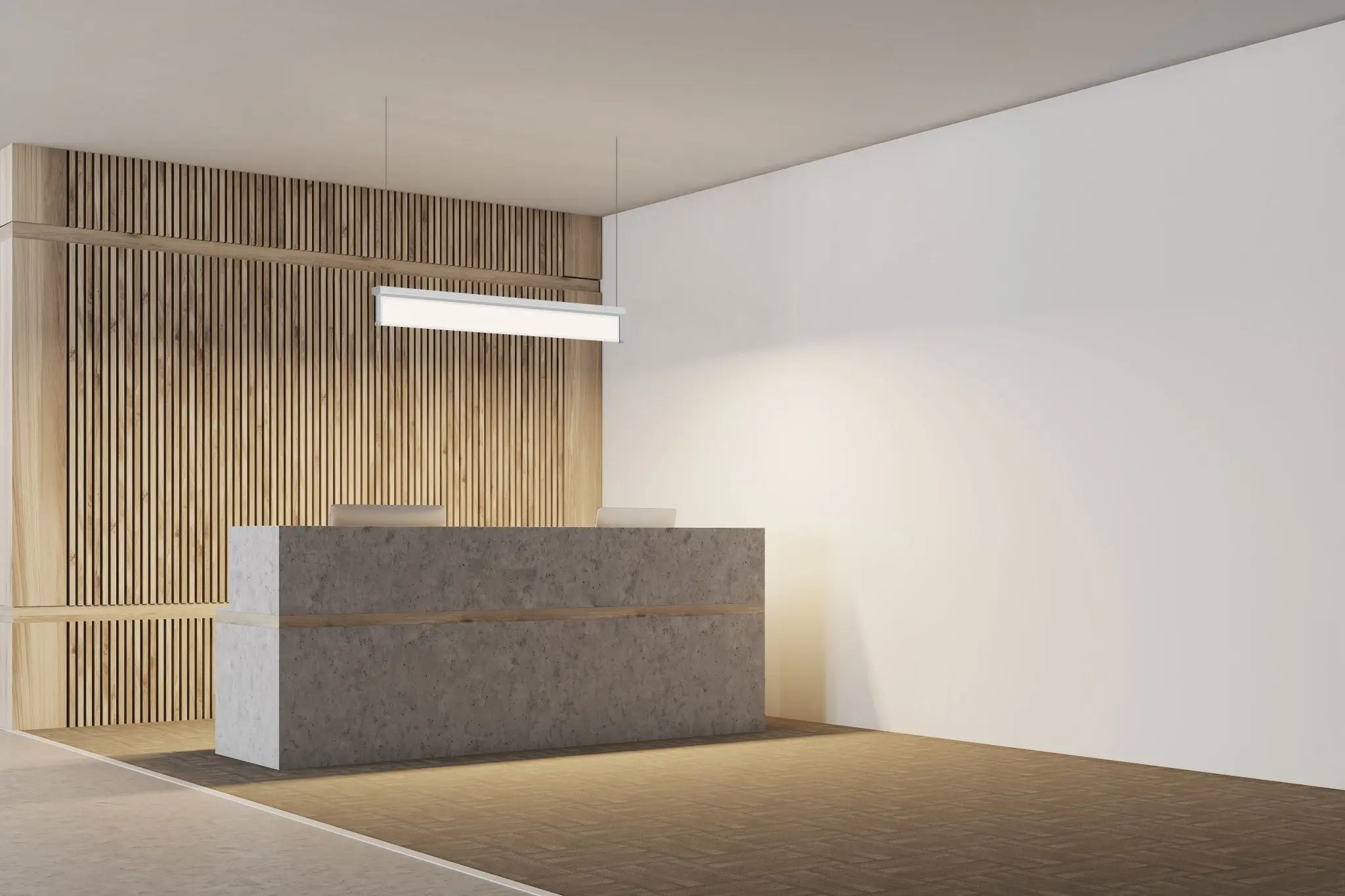
Retail lighting can raise or ruin product visibility in seconds, and the best led drop ceiling lights for retail stores are the ones that make merchandise look accurate, keep aisles comfortable, and fit standard suspended ceiling grids. A dropped ceiling, also called a suspended or T-bar ceiling, is a secondary ceiling hung below the structural ceiling, which is why panel lights and troffers are such a common fit for stores. For more commercial lighting guidance, The JQZ Lighting Journal is a useful starting point if you're planning a retrofit or a new store build.
What retail buyers should choose first: LED panels, troffers, or adjustable grid fixtures
Retail buyers should start with LED flat panels or troffers for general lighting, then add adjustable fixtures only where products need extra focus. Most top-ranking pages for this topic center on panel lights and troffers, and that reflects real buying logic: these fixtures are made for drop ceilings, install cleanly in common grid sizes, and spread light evenly across sales floors.
Panels usually create a smoother, more modern ceiling appearance. Troffers often appeal to contractors who want familiar form factors and straightforward replacement in existing commercial grids. Adjustable grid fixtures can help in boutique zones, feature walls, or endcaps, but they rarely work as the only lighting layer in a retail space.
Key insight: For most stores, the winning mix is even ambient light from panels or troffers, plus selective accent lighting where margin-rich products need attention.
Quick fixture comparison table
| Fixture type | Best use in retail | Main advantage | Main tradeoff |
|---|---|---|---|
| LED flat panel | Fashion, pharmacy, convenience, office-style retail | Clean look and broad, even light | Less directional emphasis |
| LED troffer | Grocery back areas, stock-support spaces, large remodels | Familiar fit and practical replacement path | More utilitarian appearance |
| Adjustable grid fixture | Feature tables, premium displays, showroom zones | Better highlighting of key merchandise | Higher complexity if used everywhere |
Where each type fits best
- Flat panels: front-of-house retail areas where visual comfort matters.
- Troffers: large-format spaces that prioritize coverage and replacement speed.
- Adjustable fixtures: promotional zones, mannequins, branded displays, and checkout focal points.
If you want broader fixture context before selecting a layout, the guide to commercial LED lighting solutions can help frame product categories without overcomplicating the spec process.
Why suspended ceilings shape the shortlist
A suspended ceiling limits your best options to fixtures that fit or adapt neatly to the grid. That matters because retail operators usually want fast installation, easy servicing, and a finished look with minimal ceiling disruption. Panels and troffers win here because they were built around drop-in ceiling systems rather than added as an afterthought.
How to judge light quality for merchandise, shoppers, and staff
The right retail fixture is not just bright, it makes products look true to color and keeps shoppers comfortable under long operating hours. Brightness gets attention, but color quality and distribution decide whether clothing, packaging, food, or finishes appear appealing.
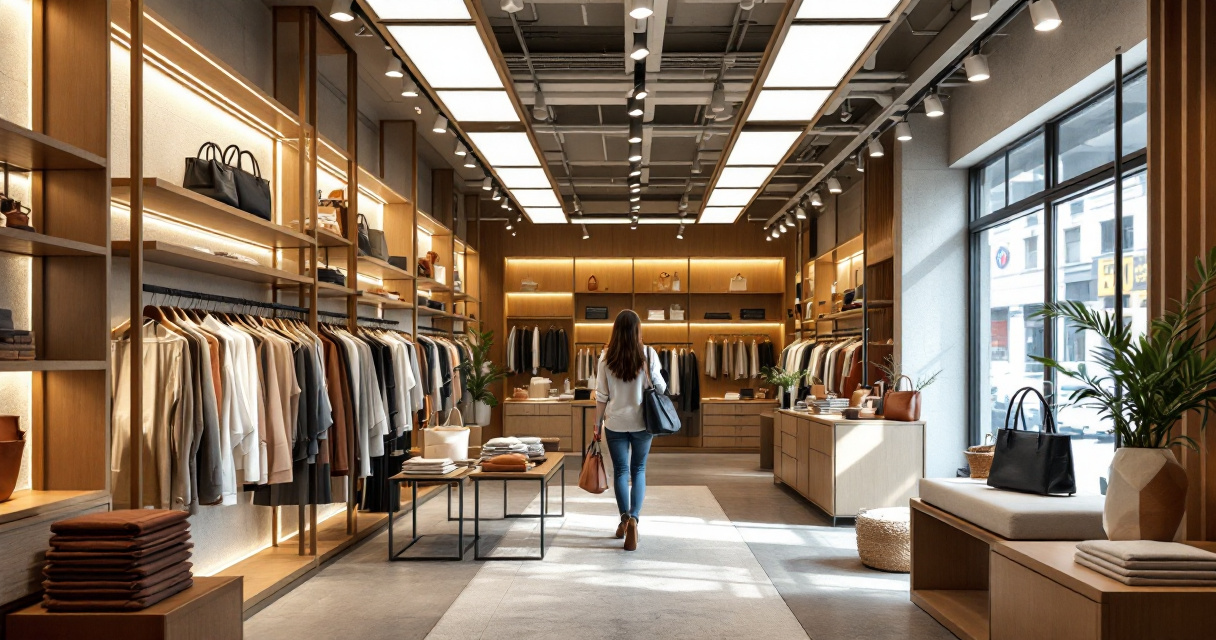
A practical approach is to review four specification areas before price:
- Color temperature: Neutral to slightly cool light often suits general retail because it feels clean without looking harsh.
- Color rendering: Better color rendering helps merchandise appear more accurate.
- Glare control: Diffused lenses and even distribution reduce discomfort at checkout and in longer browsing aisles.
- Uniformity: Consistent light helps stores avoid patchy ceilings and dark corners.
Signs a fixture spec is strong for retail
- Even lens illumination, not a spotty diode pattern
- Clear compatibility with common grid sizes
- Documented warranty and rated life
- Dimming options if your store changes scenes by time of day
- Emergency or backup compatibility where code requires it
Research on building environments also supports thinking beyond raw output. A 2021 review in Indoor Air examined building strategies tied to healthier indoor conditions, including how building systems affect occupied spaces broadly, which matters when lighting upgrades are part of larger retail renovations involving ceilings and HVAC coordination. See Bueno de Mesquita, Delp, and Chan (2021).
For operators balancing front-of-house presentation with stockroom needs, warehouse and retail planning often overlap. The article on warehouse lighting design basics is relevant when your store includes back-of-house fulfillment or storage areas.
Why color matters more than many buyers expect
Color quality affects perceived product value. Apparel can look dull under poor rendering, packaging can lose contrast, and food-adjacent retail can appear less fresh. Buyers often focus on watts and forget that customer perception is shaped by how believable the merchandise looks under the ceiling.
Why comfort affects sales floors
Glare and uneven brightness can make a store feel cheaper or more tiring. Staff notice it first because they spend full shifts under the lights, but shoppers respond too, especially in spaces where they compare colors, labels, or finishes.
What to specify before ordering the best led drop ceiling lights for retail stores
The safest way to buy is to specify by store task, ceiling grid, and maintenance plan before comparing unit prices. Cheap fixtures can look similar online, yet perform very differently once installed across a full sales floor.
Pre-purchase specification checklist
| Spec area | What to confirm | Why it matters |
|---|---|---|
| Ceiling fit | Grid size and fixture dimensions | Prevents field modifications |
| Light pattern | Wide, even distribution or targeted beam | Matches aisle vs display needs |
| Controls | 0-10V, sensor, or simple on-off | Supports future upgrades |
| Serviceability | Driver access and replacement policy | Lowers long-term disruption |
| Compliance | Commercial ratings and local code fit | Avoids inspection delays |
Common mistakes are avoidable:
- Buying solely by wattage instead of visual performance
- Using one fixture type for every zone, including displays
- Ignoring dimming or control compatibility during remodels
- Overlooking stockroom and sales-floor differences
A broader operations angle also matters for some facilities. Research related to warehousing and social sustainability in logistics environments highlights that operational decisions affect worker conditions and business performance over time, not just upfront cost. See Ali and Kaur (2021).
Who should pick which setup
- Small boutiques: panels for base light, plus targeted accents at hero products.
- Chain retail remodels: troffers when speed, consistency, and replacement compatibility lead.
- Mixed retail and storage spaces: separate specs for front-of-house and back-of-house, not one compromise fixture.
If your project includes exterior handoff zones, pairing your indoor plan with commercial outdoor lighting guidance can improve curb-to-checkout consistency.
How maintenance changes the real cost
Fixture life and replacement effort often matter more than the cheapest initial bid. Top-ranking pages repeatedly highlight long LED lifespan, and that makes sense in retail where after-hours maintenance, lift access, and tenant disruption all carry a cost.
Installation and safety details that matter in retail and stock-support spaces
Retail ceiling lighting should be selected with installation speed, cleanliness, and adjacent building concerns in mind. Contractors care about fit and wiring access, but store owners should also think about downtime, cleanliness during retrofits, and how lighting choices interact with pest control and maintenance routines.
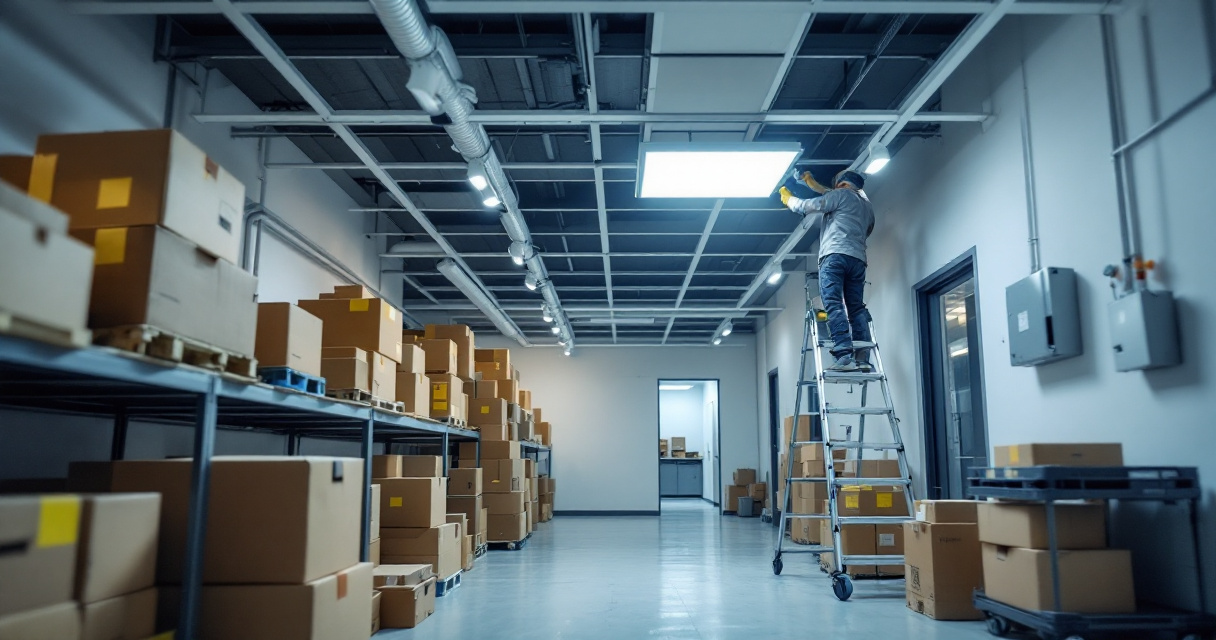
A 2021 article in Insects reviewed pest-control formulations used in stored-product and food-industry settings, a reminder that food-adjacent retail, convenience stores, and stock areas have operational demands beyond appearance alone. See Stejskal, Vendl, and Aulický (2021). In practical terms, easier-to-clean, enclosed-style ceiling fixtures can be preferable in spaces that need tighter upkeep.
Installation priorities for contractors and facility teams
- Confirm ceiling grid condition before fixture ordering.
- Match fixture weight and support needs to the ceiling system.
- Plan driver access for future servicing.
- Coordinate controls with existing circuits before final purchase.
- Test a sample area before rolling out a full chain-wide retrofit.
Key insight: A mockup in one aisle or zone can reveal glare, spacing issues, and color surprises before you commit to a full order.
The The JQZ Lighting Journal platform is especially useful when you need to compare fixture categories across renovation phases, from pilot installations to broader rollouts. If you want more direct planning ideas, head to jqzlighting.com for additional commercial lighting references.
Why pilot installations save money
A small test install lowers the risk of large-scale disappointment. Renderings and spec sheets can't fully show how polished floors, glossy packaging, and ceiling height will affect the final look.
What to expect in 2027: controls, flexibility, and smarter retrofits
Retail drop ceiling lighting is moving toward more controllable, adaptable systems rather than simple one-for-one lamp replacement. The core fixture types will stay familiar, but buyers should expect more demand for dimming, zoning, and retrofit-friendly upgrades that fit existing grids without major ceiling work.
That trend matters because stores now juggle selling, pickup, stocking, and branding in the same footprint. Lighting that can shift by zone has a practical advantage over fixed, one-scene layouts. Even if you do not install advanced controls now, choosing compatible fixtures keeps your options open.
Smart buying priorities for the next upgrade cycle
- Favor fixtures with clear controls compatibility
- Keep ambient and accent lighting as separate layers
- Standardize fixture families across multiple locations where possible
- Document SKUs and driver details for easier future maintenance
The JQZ Lighting Journal regularly makes these specification decisions easier by organizing retail-focused lighting ideas in a way that is useful for owners and installers alike. You can also visit jqzlighting.com when you're building a shortlist for a multi-site refresh.
Conclusion
The best led drop ceiling lights for retail stores are the ones that fit your ceiling grid, show merchandise accurately, and stay easy to maintain over years of operation. For most projects, that means starting with LED panels or troffers for ambient coverage, then adding focused fixtures only where products need extra emphasis.
Your next step is simple: map the store into zones, compare fixture types against each zone, and test one sample area before ordering at scale. Use The JQZ Lighting Journal as a planning resource, then turn your shortlist into a spec sheet your contractor can price accurately.