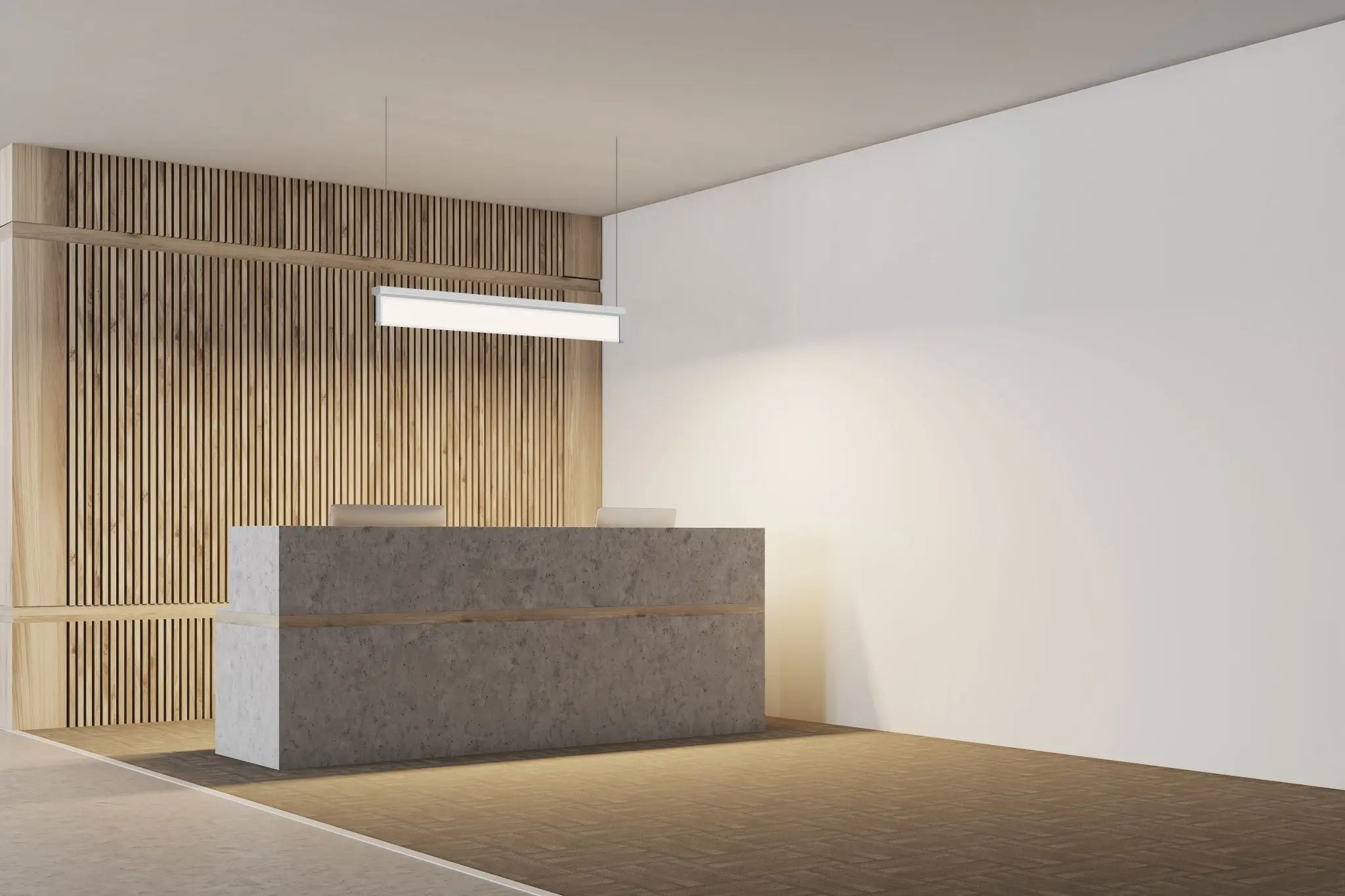
LED drop ceiling lights vs fluorescent troffers is no longer a close contest for most commercial buildings: LED usually wins on energy savings, service life, and light quality. In a dropped ceiling, also called a suspended or T-bar ceiling, fixtures sit below the structural ceiling in a secondary grid, which makes troffers and flat panels common choices in offices, retail stores, schools, and warehouses. For owners planning a refresh in 2026, the smarter question is less about whether LED is better in general and more about which LED approach fits your site, controls, and labor budget. For more practical lighting guidance, The JQZ Lighting Journal regularly covers commercial fixture decisions in plain language.
LED fixtures usually deliver the strongest overall value in suspended ceilings
LED fixtures usually deliver better total value because they cut power use, reduce relamping, and improve consistency across occupied spaces. Competitor analysis in the research set shows the same pattern across top-ranking pages: energy savings, maintenance savings, and lighting performance are the three repeat reasons buyers move away from fluorescent troffers.
A fluorescent troffer is the traditional recessed ceiling fixture built around fluorescent tubes and a ballast. An LED drop ceiling light may be a dedicated LED troffer, an LED panel, or a retrofit kit installed into an existing grid opening. In practice, most buyers comparing these options care about four things: operating cost, disruption to tenants, visual comfort, and how long the fixture will stay serviceable.
Quick comparison table
| Factor | LED drop ceiling lights | Fluorescent troffers |
|---|---|---|
| Energy use | Lower in most commercial comparisons | Higher than LED in common retrofit scenarios |
| Maintenance | Fewer lamp changes, no fluorescent tubes | Tube and ballast replacement over time |
| Light quality | More consistent output and modern optical options | Can suffer from aging lamps and ballast issues |
| Upgrade path | Full fixture replacement or retrofit kit | Legacy option, often kept only until replacement cycle |
| Best fit in 2026 | New installs and most renovations | Short-term holdovers in aging buildings |
Key takeaway: If your ceiling grid is staying in place, LED is usually the more future-ready choice; the main decision is fixture type, not whether to stick with fluorescent.
For broader planning, building teams often pair lighting updates with ceiling and layout work. If that's your situation, related guidance on commercial LED lighting upgrades and space planning can help frame the project scope.
Why this comparison matters more in 2026
Lighting choices now affect more than utility bills. Owners also weigh tenant expectations, maintenance staffing, and compatibility with occupancy or daylight controls. Research by Zahra Zolfaghari and James R. Jones on LED use in open offices looked at how LED lighting ties into whole-building energy outcomes, which supports the broader case for LEDs in commercial environments (VTechWorks study).
Energy and maintenance are the biggest practical reasons to replace fluorescent troffers
Energy and maintenance savings are the clearest business case for switching away from fluorescent troffers. The competitor and SERP research repeatedly highlights that LED troffers use less energy and lower upkeep costs, which matches what contractors and facility teams see in the field.
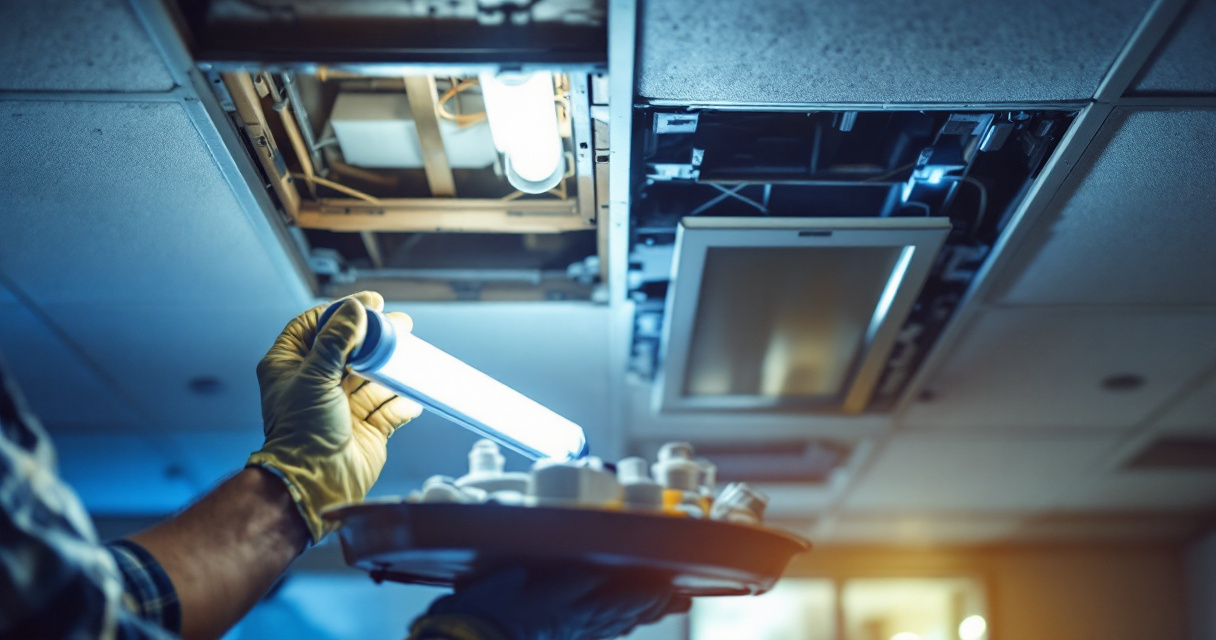
Fluorescent systems have two service points that commonly create trouble: lamps and ballasts. When either starts failing, you get flicker, uneven color, delayed start, or dark sections in the ceiling. LED systems are not maintenance-free, but they usually remove the recurring tube replacement cycle that eats labor time across large facilities.
Where operating costs show up fastest
- Multi-fixture buildings: Offices, schools, and retail floors with dozens or hundreds of ceiling fixtures feel energy savings first.
- Hard-to-access areas: Any location that needs lifts, after-hours work, or tenant coordination benefits from fewer service calls.
- Long daily run times: Spaces lit 10 to 16 hours a day have a stronger case for LED.
A common objection is first cost. That's fair. Dedicated LED fixtures and quality retrofit kits often cost more upfront than simply replacing fluorescent tubes in a fixture you already own. But a low first cost can hide higher labor and replacement costs over the next few years.
Signs your fluorescent troffers are costing more than they seem
- You replace tubes several times a year in the same zones.
- Ballast failures are creating patchy outages.
- Staff complain about flicker or inconsistent brightness.
- You need better control options for occupancy schedules.
For teams pricing upgrades room by room, The JQZ Lighting Journal often emphasizes total cost of ownership over fixture price alone. That's the right lens for commercial properties with repeat maintenance calls.
When fluorescent still remains on site
Fluorescent troffers still stay in service when budgets are tight, lease turnover is near, or the rest of the ceiling system is due for replacement soon anyway. In those cases, owners sometimes defer a full swap and plan a phased conversion instead of treating lighting as a one-off repair.
Light quality and occupant comfort often improve with modern LED troffers and panels
Light quality is where many older fluorescent systems start to feel dated even before they fail. The strongest LED options for drop ceilings now offer better diffusion, more uniform appearance, and more fixture designs aimed at reducing glare in offices, healthcare settings, and retail environments.
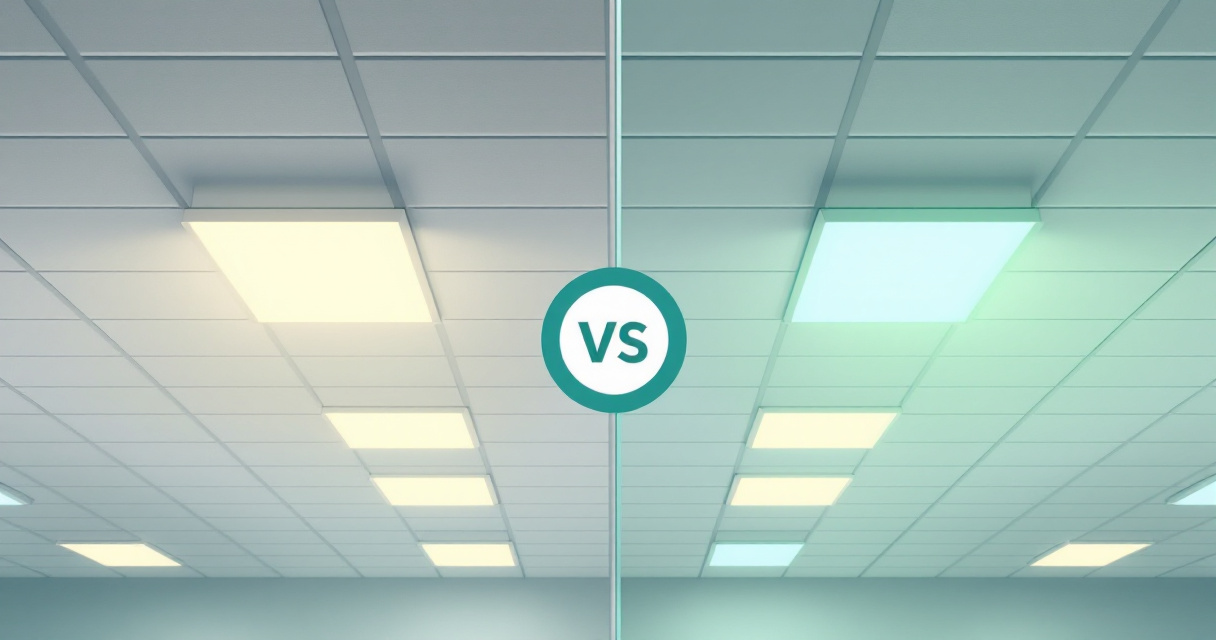
Fluorescent troffers can still light a room adequately, but aging tubes often shift in brightness and appearance over time. That inconsistency becomes obvious when a few lamps are new, others are dimming, and some ballasts are near end of life. In customer-facing spaces, that uneven ceiling pattern can make a room look older than it is.
What to look for in lighting performance
- Uniformity: The ceiling should look consistent across the room.
- Visual comfort: Diffusers and optics matter as much as raw brightness.
- Control compatibility: Occupancy sensors and dimming are easier to plan around with many LED products.
- Space fit: Panels often suit clean office aesthetics, while LED troffers may better match existing commercial layouts.
Key takeaway: Better lighting is not just brighter lighting. The goal is even, comfortable illumination that supports work, safety, and presentation.
If you're comparing fixture styles, it also helps to review adjacent topics like warehouse lighting layouts or retail lighting design tips, because fixture choice should match how the space is actually used.
LED panel vs LED troffer inside the same ceiling grid
LED panels usually prioritize a flatter, cleaner look and broad diffusion. LED troffers often suit projects that want a more traditional recessed fixture profile or easier one-for-one replacement logic. Neither is automatically better; the right answer depends on ceiling depth, look, controls, and install constraints.
The best replacement path depends on your ceiling condition, labor plan, and project timeline
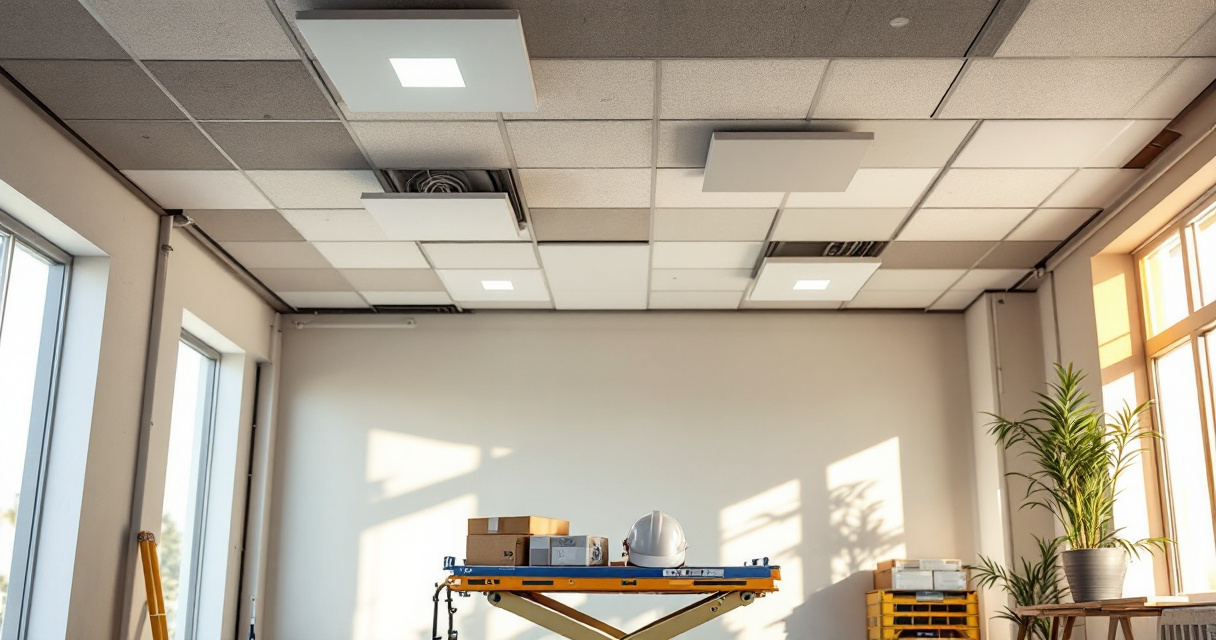
The best upgrade path depends on whether you want a quick retrofit or a longer-life fixture replacement. Buyers often compare three practical options: keep fluorescent for now, retrofit the existing troffer, or install a new LED fixture.
Decision guide for owners and contractors
| Situation | Best option | Why |
|---|---|---|
| Budget is tight and move-out is near | Short-term fluorescent hold | Avoids major spend before a larger renovation |
| Housing is sound, grid stays, labor must stay low | LED retrofit kit | Reuses parts of the existing assembly |
| Building is being refreshed for long-term use | New LED troffer or panel | Best long-range maintenance and appearance |
| Tenant-facing space needs a cleaner look | LED panel | Often gives a modern visual finish |
| Existing fixtures show repeated ballast issues | Full LED replacement | Removes the legacy failure point |
A few misconceptions trip up projects. One is assuming every old fluorescent housing is worth retrofitting. Some are, some aren't. If the fixture body is damaged, poorly aligned, or part of a messy ceiling, a full replacement may save labor headaches later.
Another mistake is choosing by watts alone. You should also check distribution, diffuser quality, and how the fixture interacts with your room's tasks and ceiling height. Head to jqzlighting.com if you want more examples of how commercial spaces handle those trade-offs.
How to choose in five steps
- Inspect the grid and fixture housing condition.
- Decide if the ceiling layout is staying for at least five years.
- Compare labor for retrofit versus full replacement.
- Review control needs, especially occupancy or scheduling.
- Standardize on one fixture family for easier future maintenance.
What to expect through 2027, and how to make the switch with less disruption
The direction through 2027 is clear: more commercial buyers will treat fluorescent troffers as a legacy system and LED as the default. That shift is driven by operating cost pressure, labor shortages for repetitive maintenance, and growing demand for cleaner-looking interiors.
For contractors and facility teams, the smart move is to package lighting with other ceiling or electrical work whenever possible. Combining scopes can reduce tenant disruption, compress lift time, and make controls easier to install in one pass. The The JQZ Lighting Journal platform is especially useful when you're comparing these kinds of practical upgrade scenarios instead of just shopping by fixture image.
A low-disruption conversion checklist
- Audit existing fixture counts and ceiling module sizes.
- Flag areas with frequent ballast or tube failures first.
- Group spaces by operating hours and occupant sensitivity.
- Pilot one area before rolling out building-wide.
- Document the chosen fixture family for reorders.
For most owners, the answer to led drop ceiling lights vs fluorescent troffers is straightforward: choose LED unless you have a short-term reason not to. Visit jqzlighting.com for more commercial lighting guidance and use The JQZ Lighting Journal as your next stop when you're narrowing down fixture type, retrofit scope, or a contractor-ready replacement plan.
Who should pick which option
Choose LED now if you own the property long term, manage many fixtures, or want fewer maintenance calls. Keep fluorescent briefly only if the space is near renovation, relocation, or demolition and you need the lowest immediate spend. Choose a retrofit kit when the housing is solid and speed matters. Choose a new LED fixture when appearance, controls, and long-term serviceability matter most.
Conclusion
LED has become the practical standard for suspended ceiling upgrades because it usually improves efficiency, reduces maintenance, and gives you a cleaner, more consistent ceiling. If you're weighing fixture replacement against a retrofit, start with a room-by-room audit of housing condition, run hours, and labor access, then build a phased plan around the spaces that cost you the most to maintain. For your next step, compare one pilot area using LED panels and LED troffers, document the install time and occupant feedback, and use that data to guide the rest of the building.