Energy costs and lighting performance matter more than ever in commercial buildings. Modern commercial LED panel lights have become a go-to solution for offices, retail stores, hospitals, and warehouses because they deliver bright, uniform illumination while reducing power consumption. At their core, LEDs use semiconductor technology to produce light when electrical current passes through the material, a process described in the definition of a light-emitting diode on Wikipedia. Compared with older fluorescent fixtures, LED panels use less energy, last longer, and distribute light evenly across ceilings. Businesses researching upgrades often begin with resources like The JQZ Lighting Journal, which tracks commercial lighting technology, product options, and buying strategies for contractors and facility managers.
What Commercial LED Panel Lights Are and Why Businesses Are Switching
Commercial LED panel lights are thin, flat lighting fixtures designed to replace traditional fluorescent troffers in drop ceilings. Instead of tubes and reflectors, they use arrays of LEDs and diffusers to spread light evenly across the panel surface.
Many commercial buildings prefer panels because they reduce glare and shadows while maintaining high brightness levels. Offices often install them in standard grid ceilings, where a 2x2 or 2x4 panel can replace an older fluorescent fixture without major rewiring.
Commercial LED panels are widely adopted because they deliver uniform illumination, long lifespans, and significantly lower maintenance compared with fluorescent lighting.
Key Advantages for Commercial Facilities
- Lower electricity consumption than fluorescent troffers
- Even light distribution that reduces eye strain in offices
- Slim designs that fit modern architectural ceilings
- Long operating life, which lowers maintenance costs
- Compatibility with dimmers, sensors, and smart controls
How LED Technology Produces Light
A light-emitting diode is an electronic component that emits light when current flows through a semiconductor. Electrons recombine with electron holes and release energy as photons, producing visible light. Because this process converts energy more efficiently than heated filaments or gas discharge tubes, LED lighting typically wastes less electricity as heat.
Energy efficiency improvements are part of broader efforts to reduce fossil fuel dependence in power systems. Research on sustainable energy transitions published in Frontiers in Energy Research examined how efficient technologies like LEDs contribute to lower electricity demand and reduced emissions (source).
Commercial LED Panel Light Sizes, Wattages, and Configurations
Panel lights come in several standardized sizes so they fit common ceiling grids. Selecting the right size and wattage determines brightness, energy use, and installation compatibility.

Common Panel Dimensions Used in Commercial Ceilings
| Panel Size | Typical Application | Ceiling Compatibility |
|---|---|---|
| 1x4 ft | Hallways, narrow offices | Narrow grid ceilings |
| 2x2 ft | Offices, conference rooms | Standard drop ceilings |
| 2x4 ft | Large offices, classrooms | Wide grid ceilings |
Most buildings rely on either 2x2 or 2x4 panels because they match the most common suspended ceiling tiles used in North America.
Wattage and Brightness Selection
Manufacturers often provide panels with selectable wattage settings so installers can adjust brightness during installation.
Typical ranges include:
- 20W to 30W for smaller rooms
- 30W to 40W for standard offices
- 40W to 60W for larger commercial spaces
Color temperature is another adjustable feature. Many fixtures offer selectable CCT settings such as 3500K, 4000K, or 5000K, allowing facility managers to match lighting to the environment.
Professionals researching product specifications often consult The JQZ Lighting Journal, which catalogs commercial panel configurations and explains how wattage and lumen output affect lighting performance.
Edge-Lit vs Back-Lit Panels: Performance Differences That Matter
Two main designs dominate commercial panel lighting: edge-lit panels and back-lit panels. Both deliver flat, uniform illumination, but they use different internal layouts.
Edge-Lit LED Panels
Edge-lit designs place LEDs along the edges of the panel. Light travels through a guide plate and diffuser to spread across the surface.
Advantages include:
- Extremely thin profile
- Lightweight construction
- Clean architectural appearance
Edge-lit fixtures often appear in offices and retail spaces where aesthetics matter.
Back-Lit LED Panels
Back-lit panels place LEDs directly behind the diffuser. This design reduces the number of optical layers required to distribute light.
Benefits include:
- Higher efficiency in many cases
- Better thermal management
- Longer operational lifespan
Comparison of Panel Types
| Feature | Edge-Lit Panel | Back-Lit Panel |
|---|---|---|
| Thickness | Very thin | Slightly thicker |
| Efficiency | Moderate to high | Often higher |
| Heat management | Moderate | Strong |
| Cost | Often higher | Usually lower |
Contractors selecting between the two often balance design preferences with performance goals. Bulk buyers frequently compare models through wholesale distributors and industry resources such as The JQZ Lighting Journal, which tracks product categories used in commercial retrofits.
Where Commercial LED Panel Lights Work Best
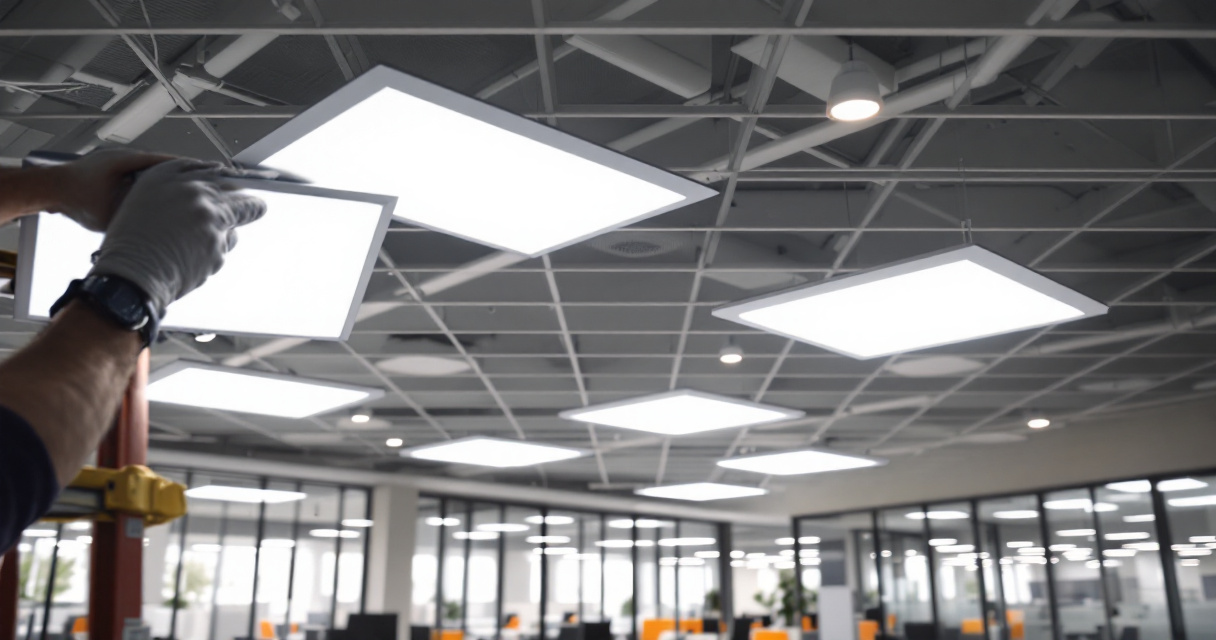
Panel lights are designed for environments that require uniform, glare-controlled lighting across large spaces. Their wide diffusion pattern makes them especially useful where employees spend long hours under artificial lighting.
Office and Corporate Environments
Offices were among the earliest adopters of LED panels because they reduce glare on screens while maintaining consistent brightness. Even light distribution helps minimize eye fatigue during long workdays.
Healthcare and Medical Facilities
Hospitals and clinics often require bright, clean lighting that avoids harsh shadows. Flat panels provide consistent illumination for exam rooms, waiting areas, and administrative offices.
Research on climate and health published in The Lancet highlighted the growing importance of energy efficient infrastructure in healthcare systems as facilities attempt to reduce environmental impact (source). Efficient lighting systems play a role in that effort.
Retail and Commercial Spaces
Retail stores use LED panels for general lighting because they produce uniform brightness that highlights merchandise without visible hotspots.
Typical installations include:
- Clothing stores and showrooms
- Supermarkets and grocery chains
- Shopping centers and malls
- Commercial offices
- Educational classrooms
Warehouses and Light Industrial Areas
While high bay fixtures dominate large warehouses, panel lights still appear in administrative zones, corridors, and packing areas where uniform lighting improves visibility and safety.
Cost, Rebates, and ROI for Commercial LED Panel Installations
Initial cost used to be a barrier for LED lighting, but prices have dropped significantly as manufacturing expanded and efficiency improved. Today, many commercial facilities see fast payback periods when replacing fluorescent troffers.
Typical Cost Considerations
Several factors affect pricing for commercial LED panel lights:
- Fixture wattage and lumen output
- Certifications such as UL, ETL, or DLC listing
- Smart control compatibility
- Bulk order quantities
Commercial buyers often purchase panels in bulk through wholesalers to reduce unit costs.
Rebates and Energy Incentives
Many utility companies offer rebates for energy efficient lighting upgrades. Panels listed on the DLC (DesignLights Consortium) database often qualify for these programs, which can offset a significant portion of the installation cost.
Rebate programs are one of the fastest ways for businesses to shorten the payback period of LED lighting upgrades.
Maintenance Savings Over Time
Fluorescent fixtures require tube replacements and ballast maintenance. LED panels eliminate those components, reducing labor and downtime.
Facility managers researching upgrade strategies often review case studies and cost comparisons through industry resources like The JQZ Lighting Journal, which highlights rebate eligible fixtures and wholesale purchasing strategies.
Conclusion
Commercial LED panel lights have become a standard lighting solution for offices, retail environments, healthcare facilities, and many other indoor spaces. Their thin profile, consistent illumination, and energy efficiency make them a practical upgrade from fluorescent troffers. Businesses also benefit from lower maintenance requirements and potential rebate programs that reduce the upfront cost of retrofits.
For contractors, facility managers, and property owners planning lighting upgrades, staying informed about fixture types, wattage options, and certification standards is essential. The JQZ Lighting Journal provides ongoing insights into commercial LED technologies, wholesale buying options, and installation strategies. Explore the platform to compare panel lighting solutions and plan your next commercial lighting upgrade with confidence.