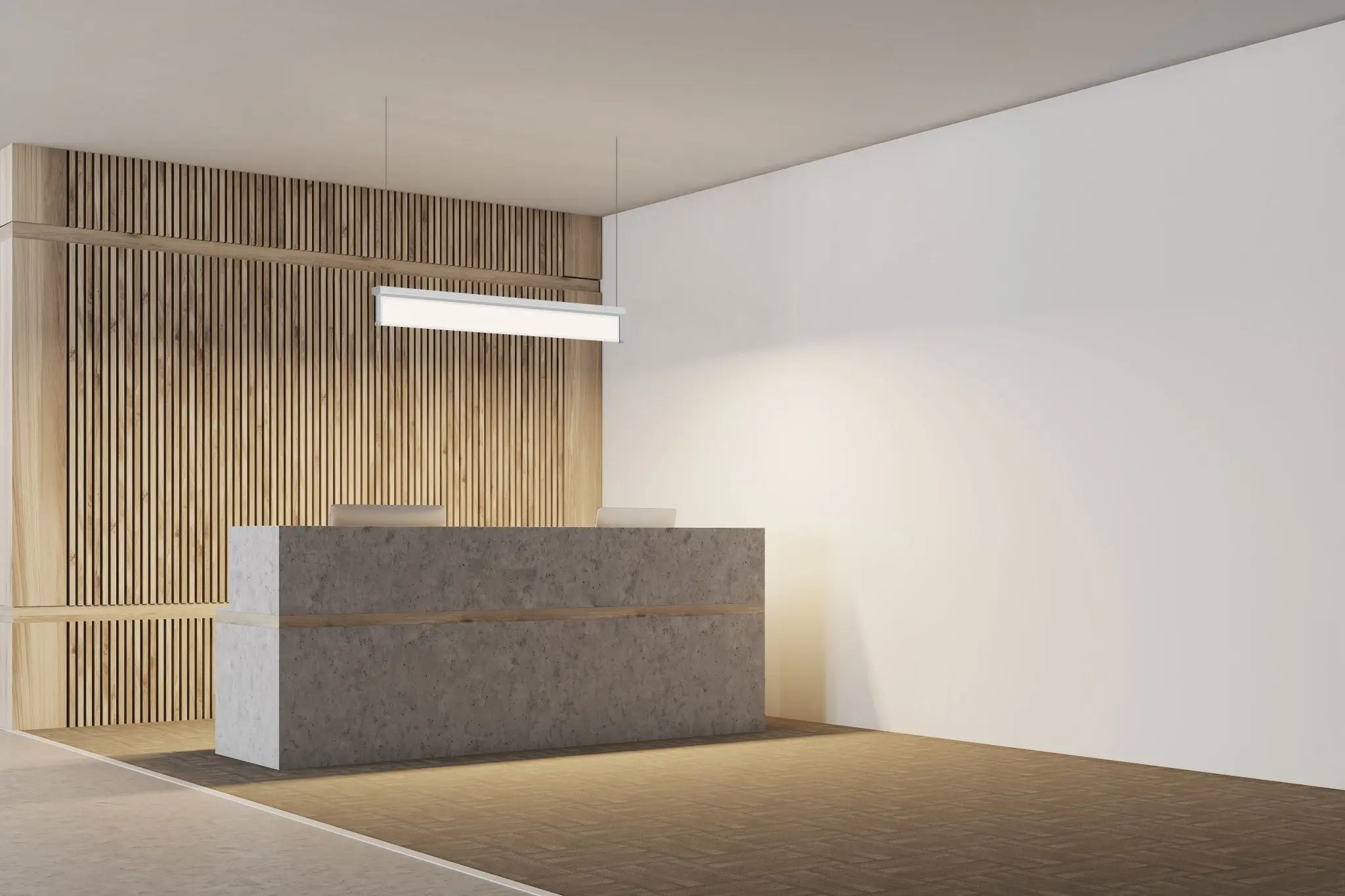
Lighting influences nearly every task inside a warehouse. From forklift navigation to barcode scanning and order picking, visibility directly affects productivity and safety. Many older facilities still rely on fluorescent or metal halide fixtures, which consume more power and require frequent replacement. LED lighting offers a different approach: longer lifespan, higher efficiency, and consistent illumination across large industrial spaces. As commercial operators upgrade facilities in 2026, the move toward LED systems has become standard practice. Resources like The JQZ Lighting Journal highlight how modern LED fixtures help warehouses cut operating costs while improving lighting performance across storage and logistics environments.
Why Warehouses and Distribution Centers Are Switching to LED Lighting
A distribution center is a specialized warehouse facility used to store and redistribute products to retailers or customers. These buildings often run 24 hours per day and require dependable lighting across aisles, loading areas, and staging zones. Traditional lighting systems struggle to maintain consistent output under these conditions.
An LED lamp, which produces light using light emitting diodes, uses significantly less energy than incandescent and fluorescent lighting while lasting much longer. This efficiency has made LED the preferred option for commercial and industrial facilities.
Several operational factors drive the shift toward LED lighting in warehouses:
- Lower electricity consumption across large floor areas
- Reduced maintenance due to longer fixture lifespan
- Better light distribution for tall shelving systems
- Instant startup without warm up delays
- Compatibility with sensors and automation
Industrial buildings often contain ceilings 20 to 40 feet high. Replacing failed lamps in these spaces requires lifts and labor, so longer lasting fixtures translate directly into lower maintenance costs.
Research on technology and sustainability suggests that digital infrastructure improvements, including energy efficient systems, can play an important role in reducing environmental impact across industries. A 2021 editorial examining digital technologies and sustainability highlighted how improved energy management tools support broader climate goals (International Journal of Information Management).
Key takeaway: LED lighting upgrades reduce energy use and maintenance demands while improving visibility in large storage environments.
Key LED Fixture Types Used in Warehouse Lighting Systems
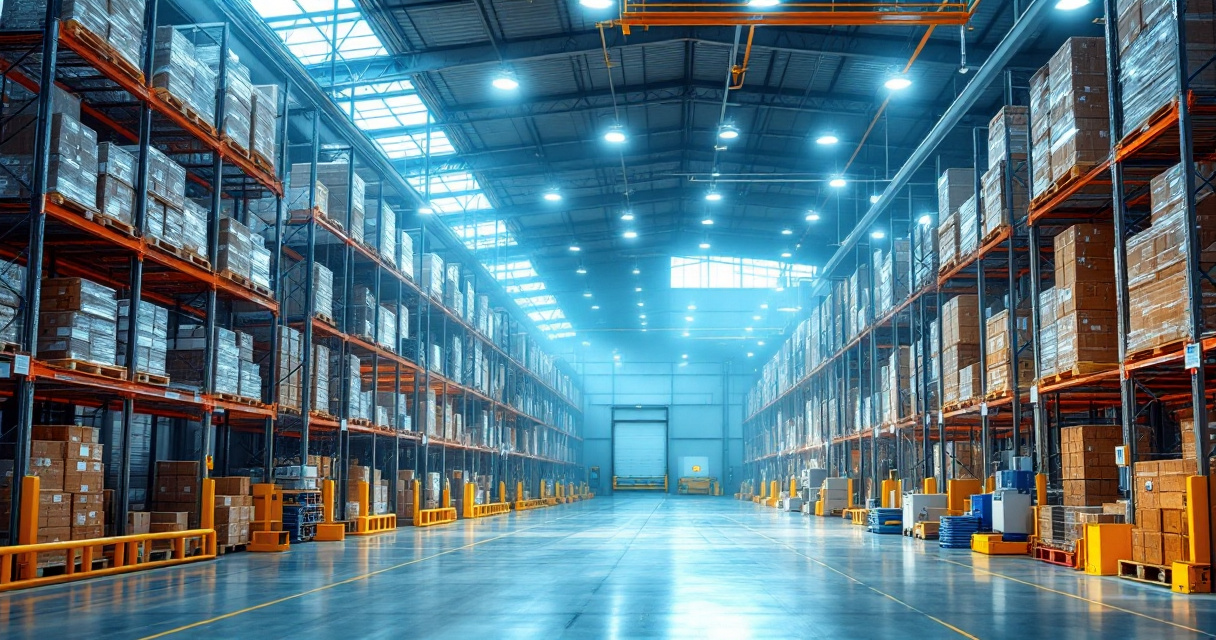
Different zones inside a warehouse require different lighting solutions. High ceilings, narrow aisles, and exterior loading areas all have unique illumination requirements. Choosing the right fixture type ensures even lighting and optimal energy use.
Common Warehouse LED Fixtures
| Fixture Type | Typical Application | Key Advantage |
|---|---|---|
| High Bay Lights | Open warehouse floors with ceilings above 20 ft | High lumen output for wide coverage |
| Low Bay Lights | Areas under 20 ft ceilings | Efficient for smaller storage spaces |
| LED Linear Fixtures | Aisle lighting between racks | Even light distribution along shelves |
| Vapor Tight Lights | Cold storage or damp environments | Sealed design protects electronics |
| Wall Packs | Exterior doors and loading docks | Improves security and visibility |
High bay LED fixtures remain the most common solution because they provide powerful illumination from tall ceilings. Many modern fixtures exceed 20,000 lumens, making them suitable for wide storage areas.
Warehouse managers often combine multiple fixture types. For example, high bays light the central floor, while linear LED fixtures illuminate narrow aisles for accurate order picking.
Using wholesale suppliers and lighting resources such as The JQZ Lighting Journal platform helps facility planners compare fixture types, certifications, and installation options before purchasing large quantities.
Design Factors That Improve Warehouse Lighting Performance
Installing LED fixtures alone does not guarantee optimal lighting. Proper layout and specification determine whether a warehouse achieves safe and efficient illumination.
Lighting designers consider ceiling height, aisle width, and reflectivity when planning a system. Racking structures and stored goods can create shadows that interfere with scanning labels or navigating forklifts.
Essential Planning Considerations
- Ceiling Height: Higher ceilings require higher lumen output and wider beam angles.
- Aisle Orientation: Fixtures aligned with rack aisles reduce shadowing on shelving.
- Color Temperature: Many warehouses prefer 4000K to 5000K lighting for clear visibility.
- Uniformity Ratio: Even light distribution prevents dark zones that increase safety risks.
- Energy Controls: Motion sensors and daylight sensors reduce energy use when areas are inactive.
Typical Lighting Requirements by Area
| Warehouse Area | Recommended Lighting Goal |
|---|---|
| Storage aisles | Bright, focused light for labels and picking |
| Open floor areas | Broad illumination for equipment movement |
| Packing stations | Higher brightness for inspection tasks |
| Loading docks | Outdoor rated lighting for safety |
Another factor gaining attention is integration with connected building systems. Research on the Internet of Things highlights how connected sensors and devices improve operational monitoring and energy efficiency in industrial facilities (Sensors journal study).
LED fixtures that support occupancy sensors or centralized controls allow warehouse operators to reduce lighting levels during periods of inactivity without affecting productivity.
Energy Savings and Maintenance Advantages of LED Warehouse Lighting
Large warehouses may contain hundreds of fixtures operating for 12 to 24 hours daily. Even small efficiency gains can produce major cost reductions over time.

LED technology uses far less electricity than older lighting systems while maintaining higher light output. Fluorescent and metal halide fixtures also degrade faster, causing brightness levels to drop well before the lamp fails.
Key Operational Benefits of LED Lighting
- Lower electricity consumption across large facilities
- Longer lifespan, often tens of thousands of hours
- Reduced maintenance downtime
- Consistent brightness without warm up periods
- Better compatibility with automated controls
Because LEDs maintain more stable light levels over time, warehouse operators experience fewer disruptions caused by dimming or flickering lamps. Maintenance teams also avoid frequent fixture replacements in high ceiling environments.
Organizations researching industrial materials and energy consumption have noted the importance of improving resource efficiency across manufacturing and infrastructure systems. A U.S. Geological Survey report examining mineral resources highlights how materials used in technology production support modern energy solutions (USGS Mineral Commodity Summaries 2021).
Facility managers exploring lighting upgrades often review technical guides and product comparisons from industry resources like The JQZ Lighting Journal before committing to a large retrofit project.
What to Expect from Smart Warehouse Lighting Systems by 2027
Warehouse lighting is evolving quickly as logistics operations adopt automation, robotics, and data driven facility management. LED fixtures now serve as the foundation for smarter building infrastructure.
Lighting systems are increasingly integrated with sensors, wireless controls, and warehouse management software. These systems allow operators to adjust brightness levels automatically based on occupancy, daylight, or work schedules.
Emerging Trends in Warehouse LED Lighting
- Networked lighting controls that allow remote monitoring and adjustments
- Motion activated lighting zones for rarely used storage areas
- Energy analytics dashboards for tracking consumption
- Integration with automated warehouses and robotics
Some facilities already use lighting sensors to collect operational data such as occupancy patterns. This data helps facility managers improve layout efficiency and reduce wasted energy.
Expect lighting infrastructure to become part of broader smart building systems, connecting lighting, security, and facility management tools.
As distribution networks grow and fulfillment centers expand, efficient lighting will remain a core requirement for logistics operations.
Conclusion
LED lighting has become the standard solution for warehouses and distribution centers because it improves visibility, reduces operating costs, and supports modern automation systems. From high bay fixtures to sensor controlled lighting networks, the technology continues to evolve as logistics facilities demand better efficiency and reliability.
Warehouse operators planning a lighting upgrade should focus on fixture selection, layout design, and control systems that match their facility size and workflow. Reliable suppliers and industry resources make the process much easier. To explore commercial grade LED fixtures, planning insights, and product comparisons, visit The JQZ Lighting Journal and review solutions designed specifically for warehouses and distribution facilities.