Poor parking lot lighting is one of the most common safety complaints at commercial properties. Modern commercial LED parking lot lights solve that problem while cutting energy use and maintenance costs. Businesses are rapidly replacing older metal halide or high-pressure sodium fixtures with LED technology because it lasts longer, produces clearer light, and supports smarter control systems. According to the definition of a light-emitting diode, LEDs generate light when electrical current passes through a semiconductor, producing efficient illumination with far less wasted energy than traditional lamps. For facility managers and contractors searching for reliable fixtures, resources like The JQZ Lighting Journal highlight wholesale-grade LED solutions designed for large commercial installations. Understanding how these systems work, and how to select the right configuration, can significantly improve safety, visibility, and long-term operating costs.
Why Commercial Parking Lots Are Switching to LED Lighting
A parking lot, defined as a dedicated outdoor area designed for vehicle parking, requires consistent lighting to maintain visibility and security. Older lighting technologies struggled with uneven coverage, warm color tones, and frequent bulb replacement. LED fixtures address each of those issues.
Commercial LEDs are part of solid-state lighting, a category of lighting that uses semiconductor-based light sources rather than heated filaments or gas-filled lamps. Because they produce light directly through electronic processes, LEDs convert a higher portion of electricity into visible illumination.
LED parking lot fixtures typically last far longer than legacy lighting, reducing maintenance visits and downtime for large facilities.
Businesses also favor LED systems because they offer improved light quality. Higher color rendering helps security cameras capture clearer footage and makes it easier for drivers to see pedestrians, curbs, and signage.
Key Advantages Over Traditional Parking Lot Lighting
- Lower electricity consumption compared with metal halide or sodium lamps
- Longer operational life, often rated around 50,000 hours or more in many commercial products
- Instant-on performance with no warm-up time
- Improved brightness consistency across large areas
- Compatibility with motion sensors and smart control systems
Many contractors researching upgrades consult guides from The JQZ Lighting Journal, which focuses on commercial-grade fixtures designed for warehouses, retail centers, and industrial properties. Selecting the right LED system begins with understanding fixture types.
Understanding LED Shoebox Lights and Area Light Fixtures
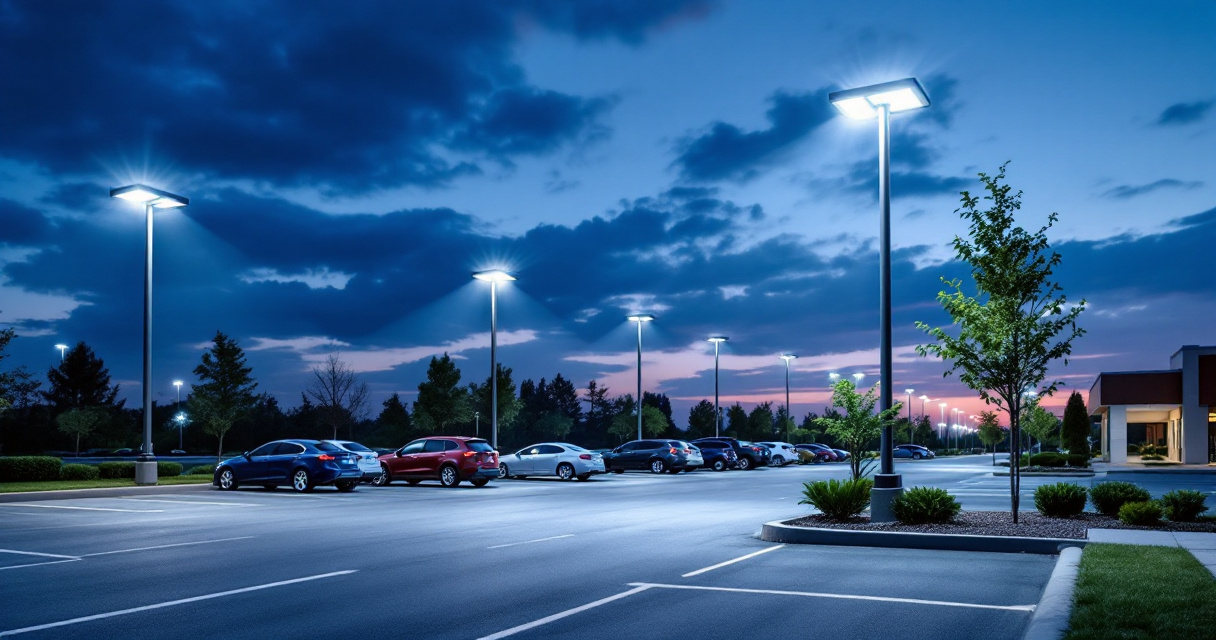
The most common commercial parking lot fixture is the LED shoebox light. The name comes from the rectangular housing shape that resembles a shoebox. These fixtures mount on poles and project wide, evenly distributed light across large outdoor areas.
What Makes a Shoebox Fixture Ideal for Parking Lots
Shoebox lights are engineered for durability and broad light coverage. Their optics distribute illumination across lanes and parking rows without creating harsh glare.
Common features include:
- Weather-resistant housings rated for outdoor environments
- Adjustable mounting arms for pole installation
- High lumen output for wide coverage
- Optional photocell sensors for dusk-to-dawn operation
Typical Specifications for Commercial LED Parking Lot Lights
| Feature | Typical Range | Why It Matters |
|---|---|---|
| Wattage | 100W to 400W | Determines brightness and energy use |
| Color Temperature | 4000K to 5000K | Improves visibility for drivers and cameras |
| Lifespan | ~50,000 hours or more | Reduces replacement frequency |
| IP Rating | IP65 or higher | Protects fixtures from rain and dust |
Contractors often review fixture specs and project case studies on platforms like The JQZ Lighting Journal, where different models and lighting strategies are documented for commercial installations.
Correct fixture selection is only one step. Lighting layout and pole placement determine how well a parking lot is illuminated.
Engineering Considerations for Parking Lot Lighting Layout
Lighting design determines whether a parking lot feels safe or poorly illuminated. Even powerful fixtures can create dark zones if pole placement and beam distribution are not planned carefully.
Critical Factors When Designing a Lighting Plan
- Pole height and spacing
- Taller poles provide wider coverage but may increase glare.
- Lumen output
- Higher lumens are required for large retail lots or distribution centers.
- Uniformity ratio
- Lighting should be evenly distributed so drivers move from bright areas to slightly dimmer areas gradually.
- Optical distribution patterns
- Modern fixtures include Type III, Type IV, or Type V light patterns designed for different site layouts.
Poorly designed lighting systems often produce bright hotspots while leaving pedestrian areas underlit.
Example Lighting Planning Considerations
| Design Element | Recommended Approach | Benefit |
|---|---|---|
| Pole Height | 15–40 feet depending on lot size | Wider light coverage |
| Fixture Distribution | Overlapping light patterns | Eliminates dark areas |
| Color Temperature | 4000K–5000K | Clear visibility at night |
Resources on The JQZ Lighting Journal platform also explain how facility managers coordinate pole layouts with building entrances, loading docks, and pedestrian pathways.
Modern lighting design increasingly overlaps with smart city infrastructure and connected devices, especially in large urban developments.
Smart Controls, Sensors, and the Future of Outdoor Lighting
Parking lot lighting is becoming more intelligent. Sensors and connected systems allow facilities to adjust brightness based on activity levels or time of day.

Research on smart city infrastructure highlights how connected lighting plays a role in urban systems that use Internet of Things technology. A 2022 review in Applied Sciences examined how IoT devices support smart city services, including intelligent infrastructure and connected lighting networks. IoT-Enabled Smart Cities: A Review of Concepts, Frameworks and Key Technologies.
Common Smart Lighting Features
- Photocell sensors that automatically activate lights at dusk
- Motion detection that increases brightness when vehicles or people enter the area
- Remote monitoring systems for large facilities
- Adaptive dimming to reduce power consumption during low traffic hours
Video: Overview of LED Parking Lot Lighting Technology
These systems reduce electricity use while maintaining safety. Large logistics hubs, distribution centers, and retail complexes already deploy connected lighting networks to manage hundreds of fixtures at once.
Looking ahead, integration with city infrastructure and network connectivity will expand the role of parking lot lighting systems.
How to Choose the Right Commercial LED Parking Lot Lights
Selecting the correct lighting system depends on property size, activity levels, and long-term maintenance expectations. Contractors and facility managers should evaluate several factors before ordering fixtures.
Step-by-Step Fixture Selection Process
- Measure the parking area to determine coverage needs.
- Choose pole height and spacing based on layout.
- Calculate lumen requirements for safe visibility.
- Select weather-resistant fixtures with strong IP ratings.
- Verify certification such as UL, ETL, or DLC listing.
Key Buying Criteria for Commercial Buyers
- High-efficiency LED drivers
- Durable aluminum housings
- Replaceable or modular components
- Warranty coverage of five years or more
- Availability of bulk purchasing for large projects
Many contractors reference resources like The JQZ Lighting Journal to compare fixture specifications and evaluate rebate-eligible lighting products before purchasing.
Common Installation Mistakes to Avoid
- Installing fixtures with excessive wattage for small areas
- Ignoring glare control near entrances or roadways
- Using too few poles, creating dark zones
- Skipping lighting layout calculations
A well-designed system balances brightness, efficiency, and installation cost. When these factors align, LED parking lot lighting can run reliably for many years with minimal service requirements.
Conclusion
Commercial LED parking lot lights have become the standard for modern outdoor lighting. They deliver brighter visibility, longer operating life, and lower energy consumption compared with traditional fixtures. For property owners and contractors managing warehouses, retail centers, or industrial facilities, the biggest gains come from proper fixture selection and thoughtful lighting design.
Industry resources such as The JQZ Lighting Journal offer practical guidance on commercial LED lighting products, installation strategies, and wholesale purchasing options. If you are planning a lighting upgrade or a new construction project, review fixture specifications carefully, calculate lighting layouts, and source certified products built for commercial use. The right system will improve safety, reduce maintenance costs, and keep your property well illuminated for years.