Power outages in commercial buildings do more than interrupt work. They create immediate safety risks in stairwells, warehouses, retail spaces, and office corridors. Emergency lighting solves that problem by activating automatically when the main electrical supply fails. According to the general definition, an emergency light is a battery backed lighting device that turns on automatically during a power outage. Modern commercial facilities increasingly rely on LED technology for these systems because LEDs run longer on battery power and require less maintenance than older lamp types. Resources like The JQZ Lighting Journal help contractors and facility managers understand which emergency LED solutions work best in large commercial environments.
How Emergency and Backup LED Lighting Systems Work in Commercial Buildings
Emergency lighting systems are designed to activate instantly when normal power fails. Inside most fixtures, a small battery pack continuously charges while grid power is available. When voltage drops, the fixture switches to battery mode and powers the LED light source.
Unlike standard luminaires, these systems include additional electrical components. A typical light fixture contains a light source and supporting electrical parts needed to operate safely. Emergency LED fixtures add battery packs, charging circuits, and monitoring electronics.
For commercial spaces, the system usually supports lighting for at least 90 minutes. This duration allows occupants to evacuate safely or continue limited operations until backup generators start.
Emergency lighting is not simply convenience lighting. It is life safety equipment designed to maintain visibility when normal power fails.
Core Components of a Commercial Emergency LED Fixture
Most modern emergency fixtures include several integrated parts that allow reliable operation during an outage.
- LED light source designed for low energy consumption
- Rechargeable battery pack
- Battery charging circuit
- Automatic transfer switch
- Test button or self diagnostic system
LED technology makes these systems more efficient because LEDs consume significantly less energy than older lighting types. Lower power draw means batteries can support illumination longer during outages.
Common Types of Emergency LED Lighting
Commercial buildings rarely rely on a single fixture style. Instead, multiple types work together to cover corridors, exits, and large spaces.
- Exit signs with battery backup
- Emergency wall packs for hallways and stairwells
- Combo exit and emergency units with adjustable heads
- Emergency LED wrap lights for large interior spaces
Facility managers often review product specifications and installation strategies through industry resources such as The JQZ Lighting Journal, which highlights commercial LED products designed for large scale facilities.
Where Commercial Emergency Lighting Is Required in Buildings
Emergency lighting is mandatory in most commercial buildings because safe evacuation depends on it. Regulations typically focus on areas where visibility is essential for exiting a structure safely.
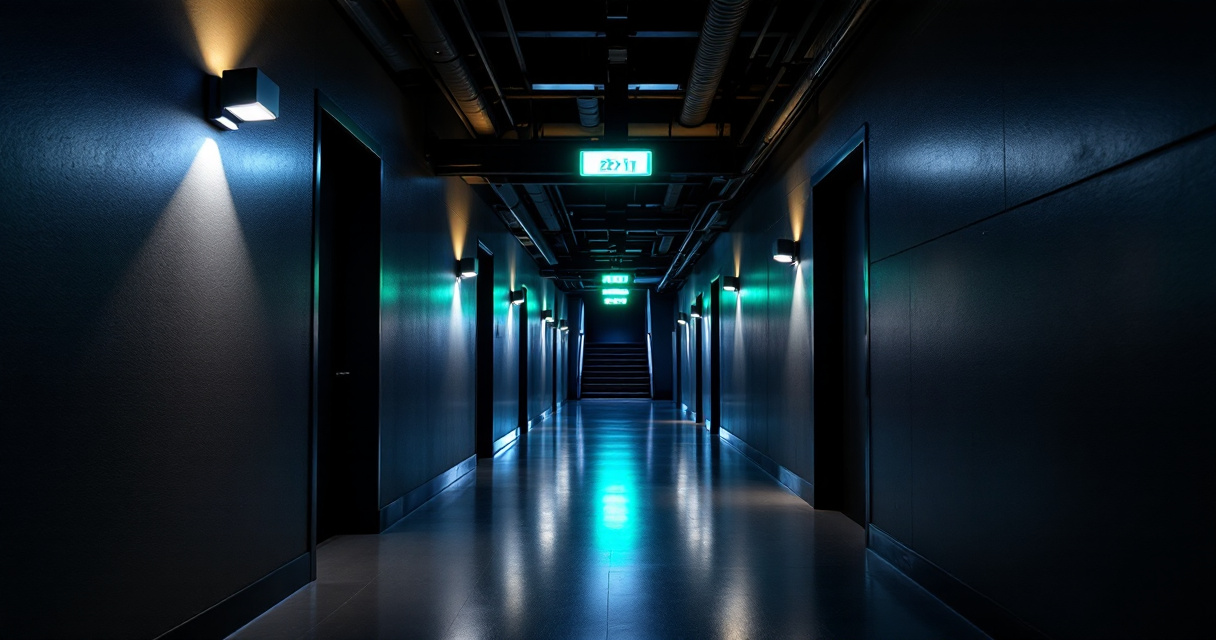
Large commercial properties such as warehouses, distribution centers, hospitals, and shopping centers require carefully planned emergency lighting coverage.
High Priority Areas for Emergency Fixtures
Certain parts of a building must maintain illumination during an outage. These areas guide occupants toward exits and prevent panic during emergencies.
- Exit corridors
- Stairwells and stair landings
- Emergency exits and doorways
- Parking garages
- Large assembly areas
- Mechanical or electrical equipment rooms
Typical Commercial Emergency Lighting Locations
| Area | Lighting Type | Purpose |
|---|---|---|
| Stairwells | Emergency wall lights | Maintain safe movement between floors |
| Exit routes | LED exit signs | Clearly mark building exits |
| Warehouses | High output emergency fixtures | Provide visibility in large spaces |
| Parking garages | Emergency LED wall packs | Maintain vehicle and pedestrian safety |
| Retail spaces | Ceiling mounted emergency lights | Guide customers during evacuation |
Buildings with complex layouts often combine emergency lights with illuminated exit signage to create a continuous path to safety. Installers typically evaluate lighting placement during construction or major renovations.
Commercial distributors frequently track product updates and installation practices through educational resources such as The JQZ Lighting Journal, which focuses on lighting used in warehouses, retail centers, and industrial facilities.
Battery Backup Technologies Used in Emergency LED Fixtures
Battery performance determines how long emergency lighting can operate after power failure. Over the past decade, improvements in battery chemistry have significantly increased reliability.
Research on battery market trends and reuse strategies published in Sustainable Chemistry in 2021 examined the evolution of modern battery technologies and recycling practices, highlighting how advances in battery design support longer lasting electronic systems and energy storage solutions (study). These improvements also influence commercial lighting systems.
Common Battery Types in Emergency Lighting
Different batteries provide different cost, lifespan, and performance characteristics.
| Battery Type | Typical Lifespan | Key Advantages |
|---|---|---|
| Nickel Cadmium (NiCd) | 5–7 years | Reliable under temperature swings |
| Nickel Metal Hydride (NiMH) | 4–6 years | Higher energy density |
| Lithium Ion | 6–10 years | Lightweight and longer runtime |
Lithium based batteries are increasingly common in newer LED fixtures. Their higher energy density allows smaller battery packs to deliver longer backup lighting durations.
Maintenance Considerations for Facility Managers
Even the best emergency lighting requires periodic inspection. Commercial buildings typically implement regular testing schedules.
- Monthly quick test using the fixture test button
- Annual full 90 minute discharge test
- Battery replacement when capacity declines
Routine testing ensures emergency fixtures will operate correctly during a real outage. Modern fixtures sometimes include automatic self testing circuits that record diagnostic data and alert maintenance teams when service is required.
Selecting the Right Commercial Emergency LED Fixtures
Choosing emergency lighting for a commercial property involves more than picking the lowest price fixture. Reliability, certification, and installation compatibility all matter.
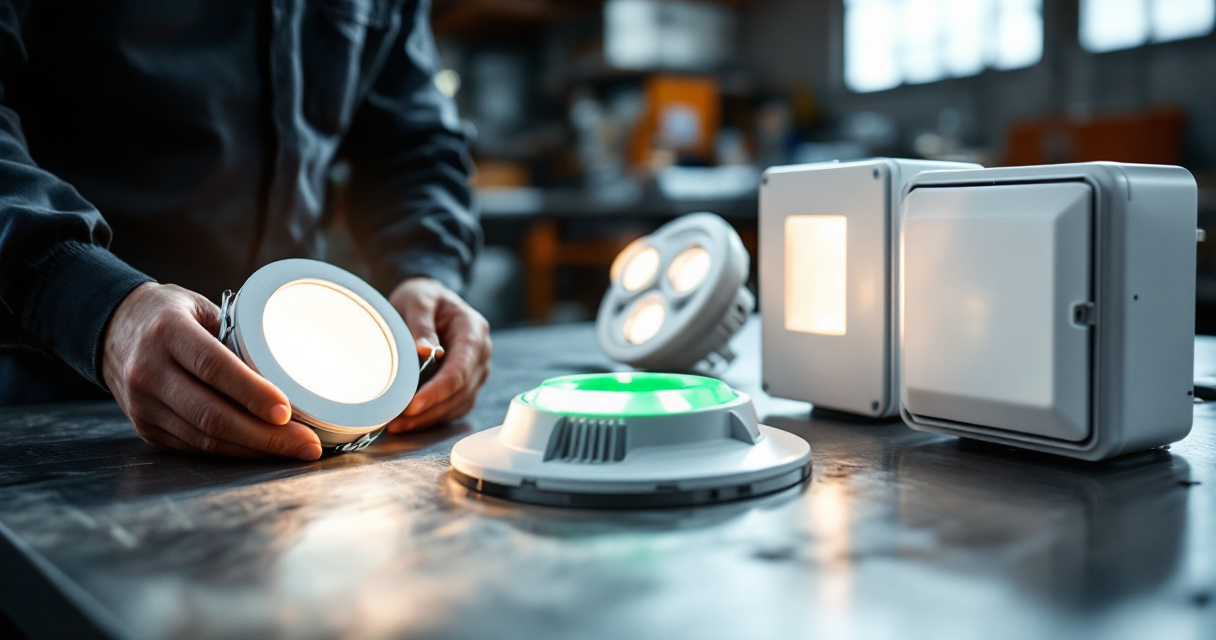
Wholesale distributors often recommend focusing on products designed specifically for commercial duty rather than residential grade fixtures.
Features to Look for in Commercial Emergency Lights
- UL or ETL safety certification
- DLC listed efficiency ratings when applicable
- Minimum 90 minute battery backup capability
- High lumen output for large spaces
- Adjustable emergency lamp heads
- Long warranty periods
Products with longer warranties often indicate higher component quality. Many commercial grade LED fixtures now include warranties of five years or more.
Comparing Emergency Lighting Fixture Types
| Fixture Type | Best Use Case | Advantages |
|---|---|---|
| Emergency combo unit | Offices and hallways | Exit sign and lighting in one fixture |
| LED emergency wall pack | Exterior pathways | Durable and weather resistant |
| Emergency high bay | Warehouses | Wide coverage from high ceilings |
| Emergency LED wrap | Commercial interiors | Even light distribution |
Contractors working on commercial builds often review product comparisons and installation advice on platforms such as The JQZ Lighting Journal, where new LED technologies and product categories are regularly discussed.
Trends Shaping Commercial Emergency Lighting Through 2027
Emergency lighting is evolving quickly as LED technology, battery systems, and building automation improve. Several trends are already shaping how commercial facilities manage emergency illumination.
Self Testing and Smart Monitoring
New emergency LED fixtures increasingly include automated testing systems. Instead of manual inspections, fixtures run periodic diagnostic checks and store results digitally.
Benefits include:
- Reduced labor for facility maintenance teams
- Early detection of battery failures
- Digital compliance records for inspections
Integration With Smart Building Systems
Modern commercial buildings rely heavily on connected systems for energy management and security. Emergency lighting is starting to integrate with these platforms.
For example, monitoring software can track battery status across hundreds of fixtures in a warehouse or office complex.
Higher Efficiency LEDs Extend Backup Time
LED technology continues improving each year. Lower power consumption allows emergency systems to run longer on the same battery capacity. In large facilities, this efficiency can reduce the number of backup fixtures required.
As LED efficiency improves, emergency lighting systems can deliver longer runtime with smaller batteries and lower maintenance requirements.
Facility planners following industry updates through sources like The JQZ Lighting Journal often track these changes when upgrading older lighting infrastructure.
Conclusion
Emergency and backup LED lighting is a critical safety system for commercial buildings. When power fails, properly installed fixtures guide occupants to exits, keep stairwells visible, and allow staff to manage emergencies safely. Modern LED technology improves reliability while reducing maintenance costs, especially when paired with long lasting battery systems and automated testing features.
Contractors, facility managers, and building owners planning lighting upgrades should evaluate certified fixtures designed for commercial environments and ensure proper placement across all exit routes and critical spaces. For detailed guides, product comparisons, and industry insights, visit The JQZ Lighting Journal to explore current commercial LED lighting solutions and installation strategies.