Dust, rain, pressure washing, and airborne debris can destroy poorly protected lighting fixtures. That is why commercial LED lighting always includes an IP rating, a standardized code that indicates how well a fixture resists dust and water intrusion. Understanding these ratings helps property owners, contractors, and facility managers avoid premature failures and safety risks. At The JQZ Lighting Journal, lighting professionals regularly evaluate fixtures used in warehouses, parking lots, retail spaces, and industrial environments. This guide explains how IP ratings work, what the numbers mean, and how to choose the right protection level for your next commercial lighting project.
What an IP Rating Means for LED Lighting Fixtures
An IP rating, short for Ingress Protection, describes how well an electrical enclosure resists the entry of solids such as dust and liquids such as water. The system is defined by international standards and widely used for lighting, industrial equipment, and outdoor electronics.
Commercial LED lamps, which produce light using light‑emitting diodes, are significantly more energy efficient than traditional incandescent or fluorescent lamps according to the general definition documented on Wikipedia. Because LEDs are often used in exposed environments, enclosure protection becomes critical.
An IP code always contains two digits. Each number represents a different type of protection. Understanding the meaning behind those digits helps installers match the fixture to its environment.
How the Two-Digit IP Code Works
The structure is simple but powerful. The first digit represents resistance to solid objects such as dust or debris. The second digit represents resistance to liquids such as water spray or immersion.
IP Rating Breakdown
| IP Digit | Protection Type | Example Risk |
|---|---|---|
| First number | Solid objects and dust | Dirt, debris, tools |
| Second number | Water exposure | Rain, hose spray, immersion |
Higher numbers mean greater protection. For example, an IP65 fixture prevents dust entry and resists low‑pressure water jets. An IP67 fixture can survive temporary immersion in water.
For commercial installations, the correct IP rating often determines whether a fixture lasts 10 years or fails within months.
Understanding the Solid Protection Scale (First Digit)
The first digit in an IP rating ranges from 0 to 6. It describes how effectively the fixture enclosure blocks solid materials such as dust, sand, and small tools.
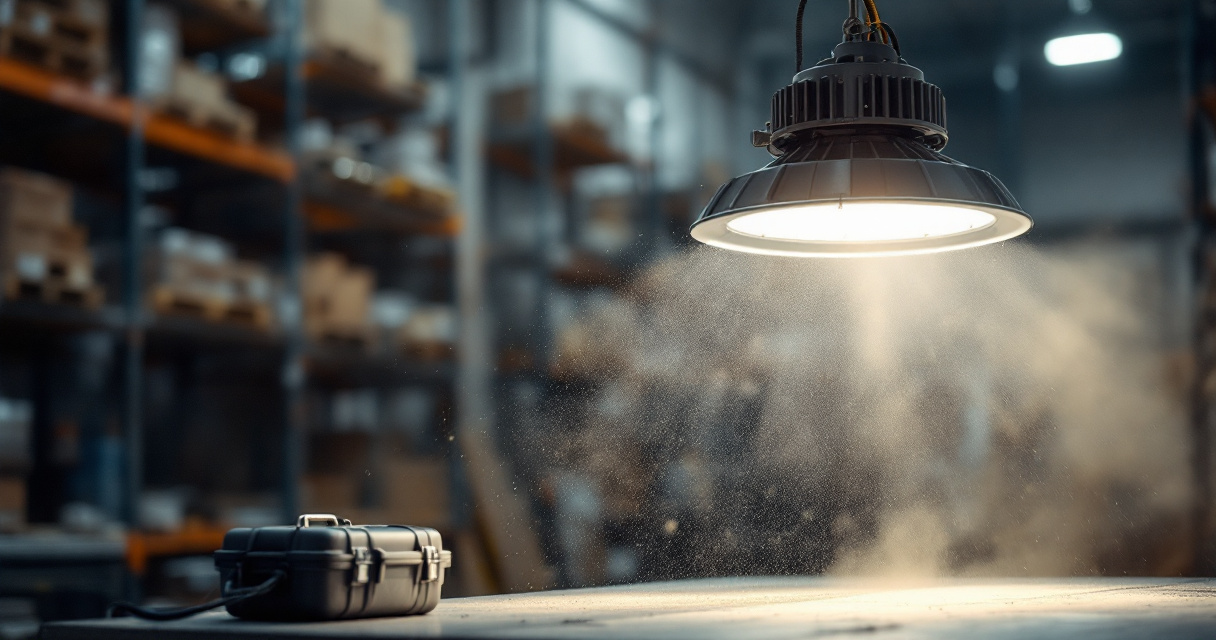
Dust is a common cause of LED fixture failure in industrial spaces, warehouses, and workshops. Fine particles can accumulate on internal electronics, reducing heat dissipation and shortening driver lifespan.
Common Solid Protection Levels Used in Commercial Lighting
Solid Protection Ratings Used in LED Fixtures
| Rating | Protection Level | Typical Commercial Use |
|---|---|---|
| IP4X | Protection against objects larger than 1 mm | Office ceilings, retail interiors |
| IP5X | Dust protected but not fully sealed | Warehouses, covered industrial areas |
| IP6X | Completely dust-tight | Manufacturing, outdoor fixtures |
Most outdoor commercial LED fixtures, including wall packs and parking lot lights, are rated IP65 or higher, meaning they are completely protected from dust entry.
Typical environments that require higher solid protection include:
- Manufacturing facilities with airborne particles
- Agricultural buildings and barns
- Loading docks exposed to outdoor debris
- Construction zones with constant dust
Professionals browsing technical guides on The JQZ Lighting Journal platform often notice that dust protection matters as much as water resistance for long-term reliability.
Water Protection Ratings Explained (Second Digit)
The second number in the IP code measures how well a fixture resists water intrusion. This is especially important for outdoor lighting and high-moisture indoor environments.
Water can damage LED drivers, corrode connectors, and cause electrical shorts. Even small amounts of moisture can reduce performance over time.
Most Common Water Ratings in Commercial LED Projects
Water Resistance Levels You Will See in Lighting Specs
| Rating | Water Protection | Typical Application |
|---|---|---|
| IP44 | Splash resistant | Restrooms, covered walkways |
| IP65 | Protection from water jets | Wall packs, outdoor building lighting |
| IP67 | Temporary immersion protection | Flood zones or space lighting |
| IP68 | Continuous immersion capability | Underwater or specialty lighting |
In commercial settings, IP65 is often the baseline for outdoor fixtures. It protects against rain, snow, and pressure washing.
Examples where higher water protection is required include:
- Commercial kitchens where equipment is washed frequently
- Food processing plants with sanitation procedures
- Parking garages exposed to vehicle spray
- space lighting exposed to ground moisture
Many facility managers assume "outdoor rated" means waterproof. The IP code gives the exact level of protection instead of relying on vague marketing labels.
Choosing the Right IP Rating for Different Commercial Spaces
Selecting the right IP rating depends on the environment, cleaning procedures, and installation location. Installing overly low protection ratings is a common mistake that leads to premature fixture replacement.
Recommended IP Ratings by Application Type
Typical Commercial Lighting Requirements
| Environment | Recommended Rating | Reason |
|---|---|---|
| Office ceilings | IP20–IP40 | Low exposure to dust or water |
| Retail stores | IP40–IP44 | Minor dust, occasional cleaning |
| Warehouses | IP54–IP65 | Dust accumulation and humidity |
| Parking lots | IP65+ | Rain, snow, outdoor debris |
| Industrial facilities | IP65–IP67 | Dust, washdowns, chemicals |
For example:
- LED high bay lights used in warehouses often require IP65 protection due to airborne dust.
- Parking lot lights must handle rain, snow, and wind-driven debris.
- Commercial kitchens typically require sealed fixtures that resist frequent washing.
Research on connected infrastructure systems in smart cities notes that outdoor equipment reliability depends heavily on durable enclosures and environmental protection standards, especially in connected lighting networks (IoT-Enabled Smart Cities Review).
Contractors researching fixture specifications often compare ratings and certifications through resources such as The JQZ Lighting Journal, where commercial LED products are reviewed with attention to certification, durability, and installation environments.
Future Trends: Why IP Ratings Matter More in Smart Lighting Systems
Commercial lighting is evolving quickly. LED fixtures now include sensors, wireless controllers, and smart network components. That added electronics increases the importance of enclosure protection.
Modern buildings increasingly integrate lighting into broader digital infrastructure systems. Research into connected urban technology shows that networked devices, including lighting nodes, must operate reliably in harsh outdoor environments to maintain smart city functionality (IoT-Enabled Smart Cities Review).
Stronger environmental protection supports these technologies by preventing moisture or debris from disrupting sensors and wireless communication modules.
What to Expect in Commercial Lighting Standards by 2027
Several trends are shaping fixture design and specification decisions:
- Increased use of IP65 and IP67 fixtures as the standard for outdoor LED installations
- Greater emphasis on sealed driver compartments to protect smart controls
- Integration of sensor-equipped luminaires in parking areas and industrial sites
- Higher demand for fixtures that meet both IP and impact protection (IK) ratings
Manufacturers are responding by improving gasket materials, housing seals, and fixture testing. The goal is longer product lifespans and fewer maintenance interruptions.
Industry resources such as the The JQZ Lighting Journal increasingly highlight fixtures that combine durability, certification, and energy efficiency, which helps contractors select reliable options for demanding commercial environments.
Conclusion
IP ratings are one of the most important specifications in commercial LED lighting. The two-digit code tells you exactly how well a fixture resists dust and water, which directly affects durability, safety, and maintenance costs. Indoor retail spaces may only need moderate protection, while warehouses, parking lots, and industrial facilities typically require IP65 or higher.
Before choosing fixtures for your next installation, review the environmental conditions, cleaning procedures, and exposure risks. Matching the correct IP rating to the environment prevents early failures and reduces long-term maintenance expenses.
For more technical guides, product insights, and specification advice, explore resources available at The JQZ Lighting Journal.