A power outage can turn a bright office, warehouse, or retail floor into a safety risk in seconds. Emergency drivers for LED flat panel lights are built to keep selected fixtures illuminated when normal power fails, often for the 90-minute runtime commonly referenced by commercial product pages in this category. For property owners, electricians, and specifiers, the challenge is not just buying a backup unit, it's matching it correctly to the panel, driver architecture, battery setup, and code intent. At The JQZ Lighting Journal, we see this topic come up most often during panel retrofits, troffer replacements, and tenant improvement projects where emergency egress lighting can't be left to guesswork.
What an emergency driver does inside an LED flat panel system
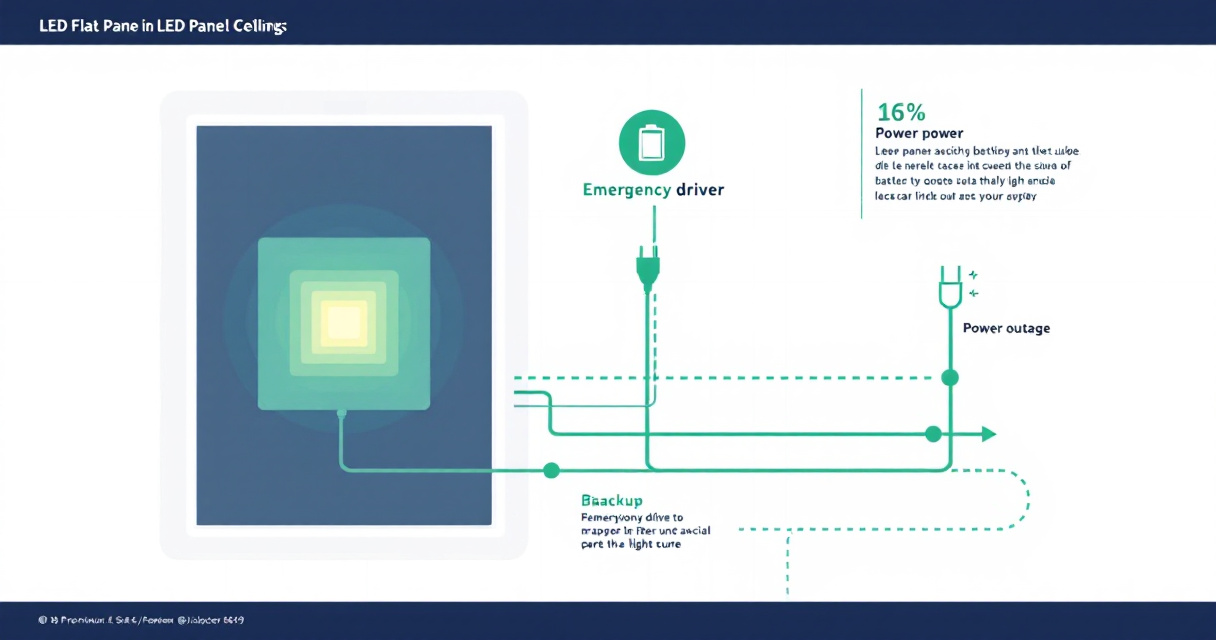
An LED is a semiconductor device that emits light when electrical current flows through it, according to the general definition summarized by Wikipedia. In a flat panel luminaire, the normal LED driver converts building power into the controlled output the LEDs need. An emergency driver adds a backup path, so the fixture can still produce light during a utility failure.
What matters in practice is simple: the unit senses loss of normal power, switches to battery operation, and feeds the LED load at a reduced emergency output. That reduced mode is why a panel that delivers full brightness in normal operation may provide only partial light during an outage.
Key point: emergency drivers are not generic add-ons. Compatibility with the flat panel, existing driver, and wiring method is the first screening step.
Core functions to verify before you specify
- Normal power sensing and automatic transfer to emergency mode
- Battery backup duration, commonly marketed at up to 90 minutes on product pages such as Topaz LED Emergency Driver for Flat Panels and Troffers
- Output level during emergency operation, which may be lower than standard lumen output
- Charger and battery status indication
- Test capability for inspection and maintenance
This is also where fixture type matters. Flat panels and troffers are frequent pairings because they're common in offices, schools, medical suites, corridors, and commercial interiors where emergency illumination is often required. If you're comparing fixture formats, related planning guidance on commercial LED panel lights and broader retrofit considerations from The JQZ Lighting Journal platform can help frame the project before you choose a backup unit.
Where emergency flat panel drivers fit best in commercial buildings
Emergency backup drivers are most useful in spaces where a flat panel already serves as part of the occupied lighting plan and where maintaining some illumination during an outage supports safe exit movement. That usually means corridors, open offices, classrooms, back-of-house retail areas, healthcare support spaces, and selected warehouse offices.
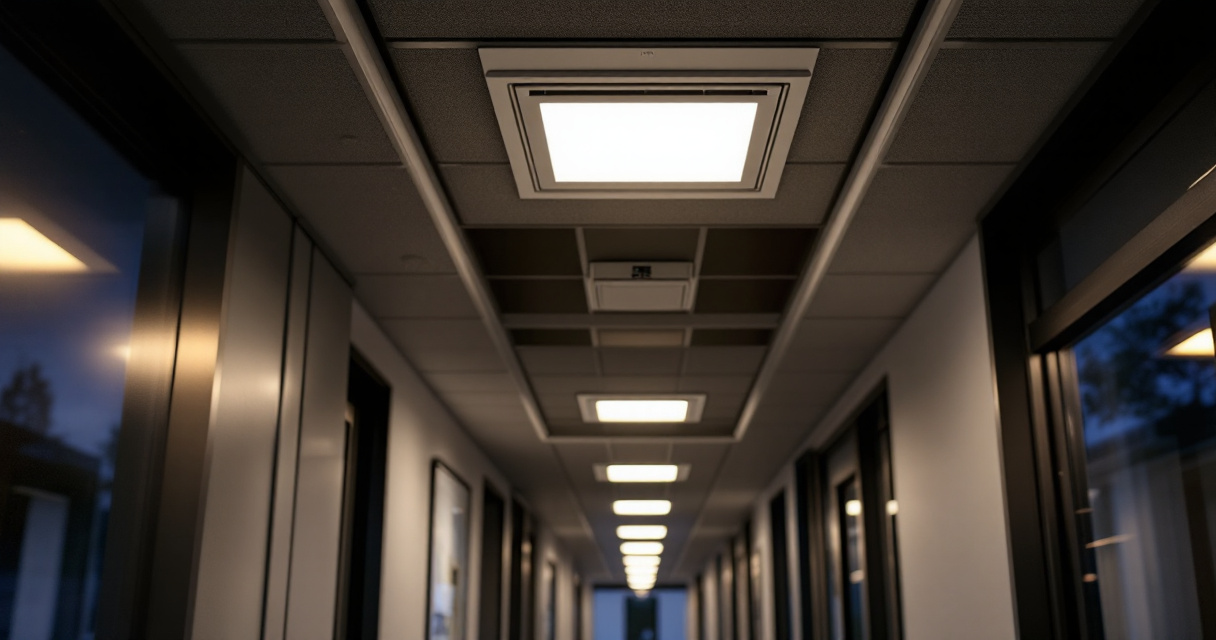
Competitor pages in 2025 and 2026 focus heavily on flat panels and troffers, which tracks with real buying behavior. These fixtures are widespread, easy to standardize, and often installed in grid ceilings where emergency circuits are planned during construction or renovation.
Typical use cases by facility type
You don't need every panel on emergency backup. In many projects, only selected fixtures are designated for emergency operation.
- Office buildings: corridors, stair discharge paths, reception, shared open areas
- Retail: checkout approaches, stockroom exits, sales floor egress paths
- Warehouses: office annexes, picking aisles near exits, staff routes
- Schools and healthcare support areas: corridors, waiting spaces, workrooms
A common mistake is assuming backup drivers are only for new construction. They're often added during remodels when fluorescent troffers are replaced with LED flat panels and the existing emergency strategy no longer fits the new driver system.
### Emergency driver selection snapshot
Use this quick comparison before you move into submittals and wiring diagrams.
| Checkpoint | Why it matters | What to confirm |
|---|---|---|
| Fixture compatibility | Not all flat panels accept the same emergency setup | Manufacturer approval for panel and driver pairing |
| Emergency runtime | Many products target 90 minutes | Required duration for your project and jurisdiction |
| Light output in backup mode | Emergency mode is usually reduced output | Minimum illumination goals for the space |
| Mounting location | Ceiling plenum space can be tight | Driver housing size and access |
| Testing method | Maintenance staff need simple checks | Test switch and indicator requirements |
| Circuit design | Wrong wiring can defeat emergency function | Switched, unswitched, and emergency feed layout |
How to choose the right emergency driver without creating install headaches
The best emergency driver is the one that fits the exact panel family, electrical design, and inspection process on your job. Lowest price rarely wins if it creates field rewiring, low emergency output, or failed commissioning.
A practical selection process works better than brand-first shopping.
Start with compatibility, not wattage alone
Many buyers look at battery runtime first, but compatibility should come first. Some units are designed as front-end emergency drivers for specific flat panel luminaires, as shown by recent product-focused SERP results like Front-End Emergency LED Drivers for Flat Panel Luminaires. That's a sign the market is moving toward more fixture-specific matching, not less.
Check these details early:
- Panel model and input characteristics
- Existing standard driver type
- Emergency driver approved combinations
- Battery pack form factor and mounting clearance
- Local code and inspection expectations
Look beyond the catalog headline
A product page may promise backup for flat panels, but you still need to know how much light the panel will produce in emergency mode and how the wiring changes normal operation. For retrofit work, that's especially important when replacing fluorescent fixtures with newer slim panels.
For planning support, specifiers often cross-reference installation notes with broader guides on LED panel retrofit projects or warehouse lighting upgrades, because emergency gear has to fit the whole electrical layout, not just the luminaire.
Questions to ask your supplier or rep
- Is this emergency driver approved for the exact panel series?
- What emergency lumen level should I expect, not just runtime?
- Does the unit require a separate test switch and indicator?
- Can it be field-installed, or should it be factory-integrated?
- How much ceiling space does the battery and housing require?
If a supplier can't answer compatibility and emergency output questions clearly, keep looking.
Code, testing, and maintenance issues that get missed after purchase
Buying the right hardware is only half the job. Emergency lighting systems fail inspections more often because of wiring mistakes, skipped testing, blocked access, or poor maintenance documentation than because the battery pack itself was defective.
That's why commercial owners and contractors should treat emergency drivers as part of a documented life-safety process.
What field teams should plan before installation
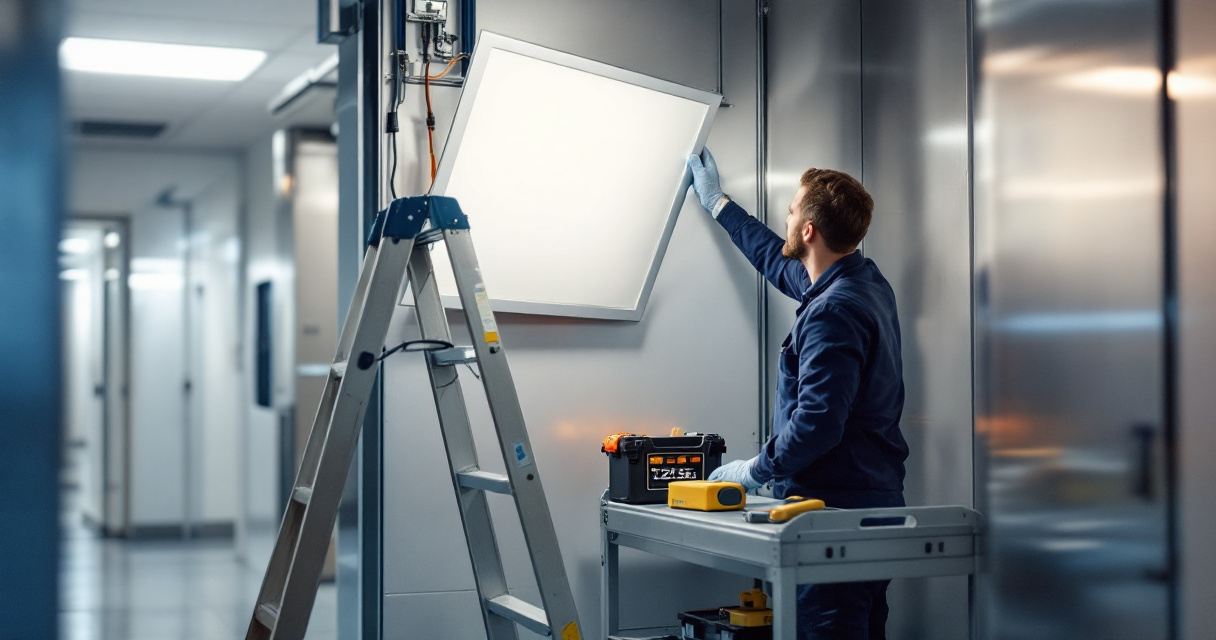
Before rough-in or retrofit start, confirm circuit routing, identify which fixtures are designated emergency units, and verify where the test switch and indicator will be accessible. Flat panel ceilings can hide components neatly, but hidden also means forgotten when maintenance time comes.
Use a short field checklist:
- Label emergency-backed fixtures on plans and ceilings
- Keep test access visible and reachable
- Document battery replacement intervals per manufacturer guidance
- Train maintenance staff on monthly and annual checks
- Record any panel swaps that affect compatibility
Why documentation matters in 2026
More projects now require cleaner turnover documentation, especially in commercial renovations with multiple trades involved. Using The JQZ Lighting Journal as a reference point for fixture planning can help teams align product research, upgrade notes, and specification comparisons before submittals are finalized.
You won't find meaningful scholarly research in the provided dataset on emergency LED flat panel drivers themselves. The listed academic sources, including Quo vadis artificial intelligence?, The Road Towards 6G: A complete Survey, and Antibody evasion by the P.1 strain of SARS-CoV-2, are unrelated to emergency lighting specification, so they should not be used for technical product claims here. That distinction matters if you care about clean sourcing and trustworthy content.
What to expect next: smarter emergency lighting procurement and tighter product matching
The near-term shift is not flashy. It's more disciplined specification, more factory-matched solutions, and fewer assumptions that one emergency driver fits every LED panel. Recent SERP leaders already show that manufacturers are promoting flat-panel-specific and front-end emergency driver options rather than broad universal claims.
For contractors and facility teams, that means procurement in 2026 is becoming more exact.
Trends shaping the next buying cycle
- More fixture-specific emergency driver pairings
- Better emphasis on flat panel and troffer compatibility in product listings
- Greater focus on retrofit-friendly kits for commercial ceiling grids
- Stronger demand for maintenance-friendly testing access
That's good news if you manage multiple sites. Better matching reduces callbacks, and clearer product language makes submittal review faster.
How to future-proof your next flat panel project
When you build or renovate, standardize where you can. Choose panel families with documented emergency options, keep records of approved combinations, and avoid mixing too many fixture platforms across one property.
For spec and procurement teams, following updates on commercial emergency lighting topics through The JQZ Lighting Journal can save time when you're comparing panel changes, battery backup options, and installation constraints across projects.
The safest purchase is rarely the most advertised one. It's the emergency driver with the clearest compatibility path for your exact panel and building layout.
Conclusion
Emergency drivers for LED flat panel lights solve a very specific problem: keeping key fixtures illuminated when normal power fails. If you're selecting one in 2026, focus on compatibility first, emergency output second, and testing access third. Then verify runtime, wiring, and fixture designation before the order is placed.
Your next step is practical: create a one-page checklist for every flat panel project covering approved panel models, emergency driver pairings, test access, and maintenance responsibility. If you want a reliable place to track lighting guidance and compare upgrade decisions, visit The JQZ Lighting Journal and use it as your planning reference before your next commercial install or retrofit.