
Incandescent lighting still has a familiar warm glow, but most commercial buildings now need a stronger reason than nostalgia to keep using it. Facility managers, electrical contractors, retailers, and builders are comparing lamp cost, heat, maintenance, dimming, and replacement access before every retrofit. Incandescent light bulb: an electric lamp that produces light by Joule heating a filament until it glows. For commercial planning, Jqzlighting helps buyers think beyond the bulb and match lighting choices to actual operating needs.
What is incandescent lighting?
Incandescent lighting is electric light produced when current heats a filament until it becomes hot enough to glow. The lamp usually contains a filament enclosed in glass, with a base that connects to the electrical circuit. Its main advantages are warm color, simple dimming, and low upfront lamp cost.
The technology is old, but the buying question is current: does the warmth justify the energy, heat, and replacement work in a commercial building?
Core terms to know:
- Filament: the thin wire that glows when heated by electric current.
- Joule heating: heat produced when current meets electrical resistance.
- Lamp base: the screw, pin, or specialty connector that fits the socket.
- Lumen: the amount of visible light a lamp produces.
- Color temperature: the warm or cool appearance of light, measured in kelvin.
Key insight: incandescent lamps are simple light sources, but simple does not always mean practical for offices, warehouses, hospitality, or retail facilities.
How does an incandescent bulb work?
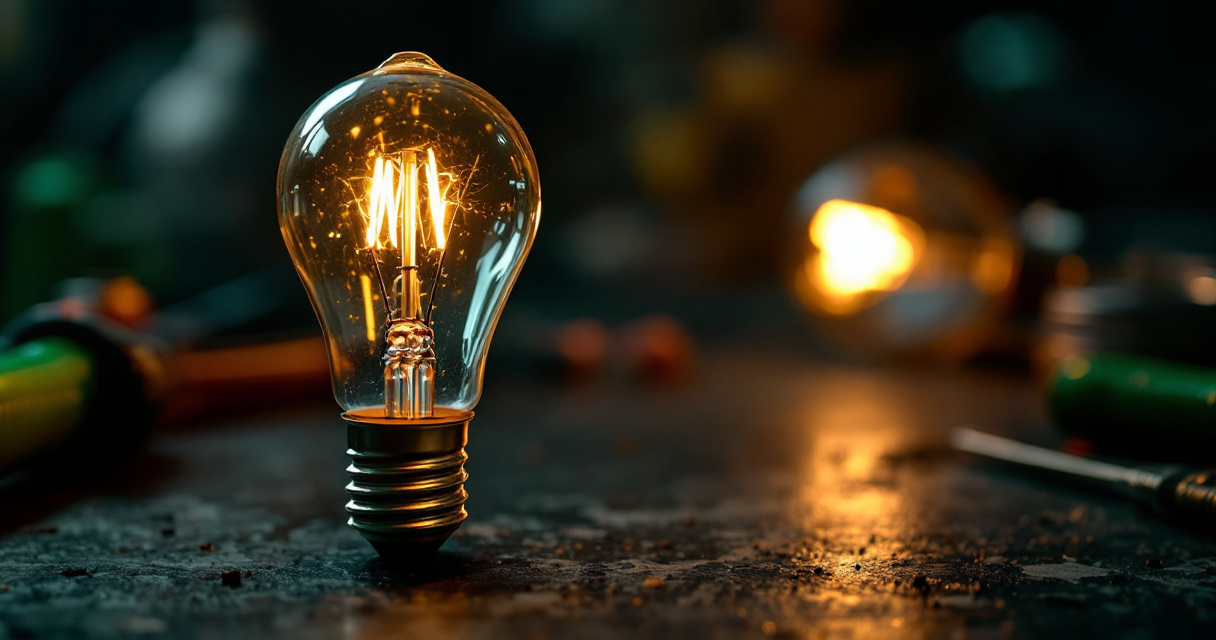
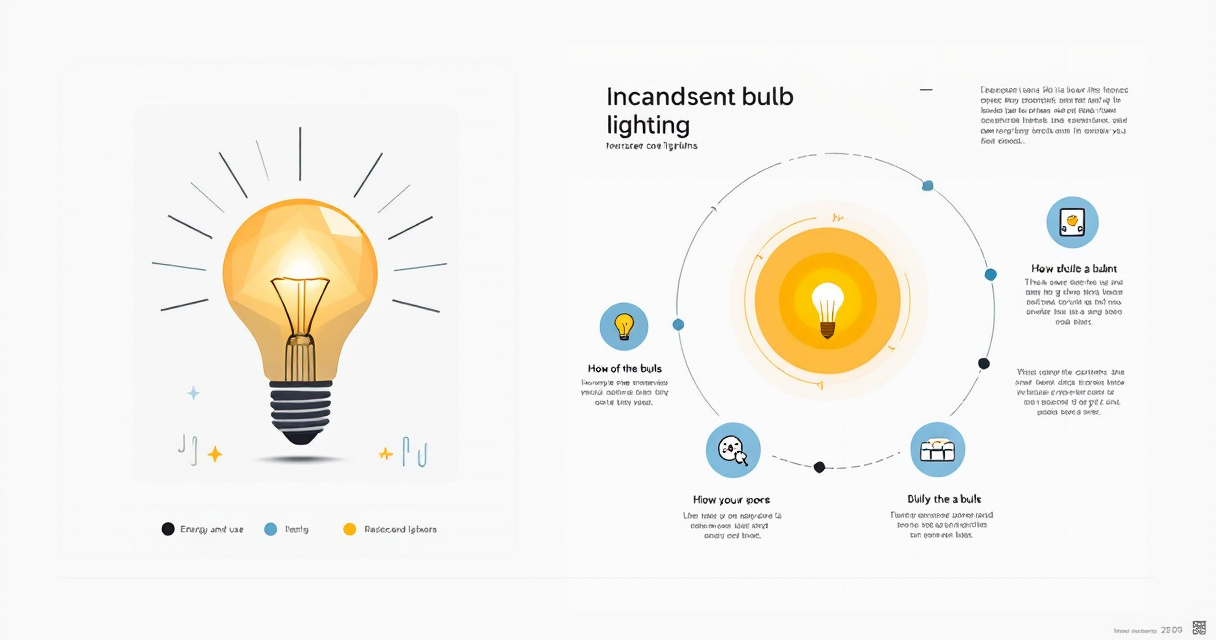
An incandescent bulb works by sending electric current through a resistive filament, which heats up and emits visible light. The glass envelope protects the filament, while the base provides electrical contact. Most of the process is heat first and light second, which explains the lamp's warmth and inefficiency.
Basic operating sequence
- Power enters through the lamp base.
- Current passes through the filament.
- Electrical resistance raises the filament temperature.
- The hot filament glows and produces visible light.
- Heat radiates from the lamp into the surrounding space.
That heat is not a side detail for commercial buildings. In small decorative fixtures, it may be manageable. In dense retail displays, hotels, corridors, or older recessed cans, it can affect comfort, air-conditioning load, fixture materials, and maintenance schedules.
Scholarly work on low-carbon transitions, including Benjamin K. Sovacool's 2021 paper in Energy Research & Social Science, frames energy changes as social and operational decisions, not just technical swaps. That matters for lighting retrofits because contractors must consider budgets, tenants, staff disruption, and who carries the cost of change: Sovacool 2021.
Where are incandescent lamps still used in commercial buildings?
Incandescent lamps are still found in commercial spaces where warm appearance, legacy fixtures, specialty shapes, or short operating hours matter more than energy performance. Common locations include decorative hospitality fixtures, theater lamps, vintage retail displays, some appliance lights, and older emergency or indicator applications.
Typical remaining use cases by property type
| Property type | Where they still appear | Why they remain | Better 2026 option |
|---|---|---|---|
| Hotels and restaurants | Chandeliers, sconces, accent fixtures | Warm ambience and dimming familiarity | Warm-dim LED lamps or LED decorative fixtures |
| Retail stores | Display lamps, vintage pendants | Product presentation and visual style | High-CRI LED accent lighting |
| Warehouses | Older task lights, utility sockets | Existing sockets and low replacement planning | LED high bays, strips, or task lights |
| Offices | Legacy desk lamps, closets, storage rooms | Infrequent use and low urgency | LED A-lamps or integrated fixtures |
| Renovation projects | Existing screw-base fixtures | Budget timing and fixture compatibility | LED retrofit lamps or new luminaires |
For owners planning tenant improvements, the best approach is not "replace everything blindly." Start by mapping hours of use, access difficulty, dimmer compatibility, fixture condition, and desired appearance.
A practical lighting schedule should group fixtures into three buckets:
- Replace now: long run hours, hard-to-reach lamps, high heat areas, customer-facing spaces.
- Replace during renovation: decorative fixtures, old dimmers, mixed lamp types, inconsistent color.
- Keep temporarily: rarely used specialty lamps with no immediate safety or maintenance issue.
The Jqzlighting platform is a useful reference point when comparing commercial LED options across offices, retail areas, hospitality spaces, and industrial buildings. If you are building a fixture list, visit jqzlighting.com after you identify socket types, ceiling heights, and required light levels.
How do incandescent and LED options compare for cost, heat, and maintenance?
LED lighting is usually the better commercial replacement because it provides comparable useful light with lower wattage, less heat, and longer service intervals. Incandescent lamps can still make sense in narrow decorative or specialty uses, but they are rarely the best default choice for facilities with long operating hours.

Side-by-side replacement planning table
| Decision factor | Incandescent lamp | LED replacement | Commercial planning note |
|---|---|---|---|
| Wattage for similar light | Higher wattage | Lower wattage | Compare by lumens, not by old wattage habits |
| Lifespan | Shorter service life | Longer service life | Longer intervals reduce ladder work and tenant disruption |
| Heat output | High radiant heat | Lower heat at the beam and fixture area | Heat matters in displays, small rooms, and conditioned spaces |
| Operating cost | Higher energy use over time | Lower energy use over time | Use local kWh cost and run hours for payback math |
| Dimming | Often smooth on legacy dimmers | Requires compatible dimmer and driver | Test before large rollouts |
| Color quality | Naturally warm | Available in warm, neutral, and high-CRI types | Specify color temperature and CRI on the submittal |
The table shows why "cheap bulb" thinking can mislead building owners. A lamp with a low shelf price can become expensive when it runs all day, adds heat, fails often, or requires labor to replace.
Simple operating-cost formula for contractors
Use this basic calculation before proposing a retrofit:
- Find lamp wattage from the label or submittal.
- Multiply by the number of lamps.
- Multiply by operating hours per year.
- Divide by 1,000 to convert watt-hours to kilowatt-hours.
- Multiply by the local electricity rate.
Do the same for the LED replacement, then compare annual savings, labor reduction, and fixture upgrade cost. This method is easy to explain to owners because it uses their building, not a generic national average.
What should commercial buyers expect in 2026 and beyond?
Commercial buyers should expect incandescent lamps to keep shrinking into specialty, decorative, and legacy categories while LED systems become more tunable, controllable, and application-specific. The future is not just a different bulb; it is better control over brightness, color, sensors, scheduling, and maintenance.
Modern LED systems are already moving beyond basic replacement lamps. In horticulture, for example, Roberta Paradiso and Simona Proietti's 2021 review examined how light quality can be adjusted to influence plant growth, showing how modern LED systems can control spectrum for specific outcomes: Paradiso and Proietti 2021. That same direction matters in commercial lighting: owners want the right light for the task, not just illumination.
Materials research may also shape future lighting and electronics. A 2023 review by Jiayang Wu, Han Lin, and David Moss covered graphene oxide in photonics, electronics, and optoelectronics, areas tied to future device performance and light-related technologies: Wu, Lin, and Moss 2023.
Buyer checklist before replacing legacy lamps
- Confirm fixture condition, socket type, voltage, and enclosure rating.
- Match lumens before comparing wattage.
- Select color temperature by space use, not personal preference alone.
- Check dimmer and control compatibility.
- Review heat limits in enclosed or decorative fixtures.
- Standardize lamp families to simplify stocking.
- Document product SKUs for future maintenance.
For larger projects, mock up one area first. A lobby, guest room, aisle, or office zone can reveal glare, dimming noise, color mismatch, or beam spread issues before you order hundreds of lamps.
FAQs about incandescent lighting
Incandescent lighting questions usually come down to comfort, compatibility, and replacement timing. These answers focus on commercial decisions for contractors, facility managers, and property owners.
Is incandescent light bad for commercial buildings?
Incandescent light is not automatically bad, but it is often inefficient for commercial buildings with long operating hours. The larger concerns are heat, frequent replacement, and higher energy use compared with LED alternatives. It may still fit low-use decorative fixtures, but most offices, stores, hotels, and warehouses should evaluate LED replacements.
Can LED bulbs replace incandescent bulbs in the same fixture?
LED bulbs can often replace incandescent bulbs in the same socket, but compatibility must be checked first. Confirm the base, voltage, fixture rating, dimmer type, enclosure conditions, and lamp size. Enclosed fixtures and decorative housings need special attention because heat can affect LED driver life.
Why do some people prefer incandescent lamps?
Many people prefer incandescent lamps because they create a warm tone, dim smoothly on older controls, and feel familiar in hospitality or residential-style spaces. The preference is usually visual, not operational. Commercial buyers can often match that warmth with warm-dim or high-CRI LED products.
What is the best replacement for incandescent lamps?
The best replacement depends on the fixture and space. LED A-lamps work for many screw-base sockets, LED decorative lamps suit chandeliers and sconces, and integrated LED luminaires are better for major renovations. For warehouses or industrial areas, purpose-built LED high bays and task lights are usually stronger choices.
Conclusion
Incandescent lighting still has a place in select decorative, specialty, and low-use applications, but it should no longer be the default for commercial properties. Start with a fixture audit, calculate operating cost from real run hours, test LED samples, and standardize replacements before a full rollout. For project-ready commercial lighting guidance, work with Jqzlighting and head to jqzlighting.com with your fixture schedule, ceiling heights, and space types ready.