
The answer to "who discovered bulb light" is not one name, even though Thomas Edison gets most of the credit. Electric light developed through decades of experiments by Humphry Davy, Warren de la Rue, Joseph Swan, Thomas Edison, and others. For modern buyers comparing commercial fixtures, Jqzlighting treats that history as more than trivia: it explains why today's LED lighting focuses on efficiency, lifespan, and practical installation, not just whether a lamp can glow.
What is the short answer to who discovered bulb light?
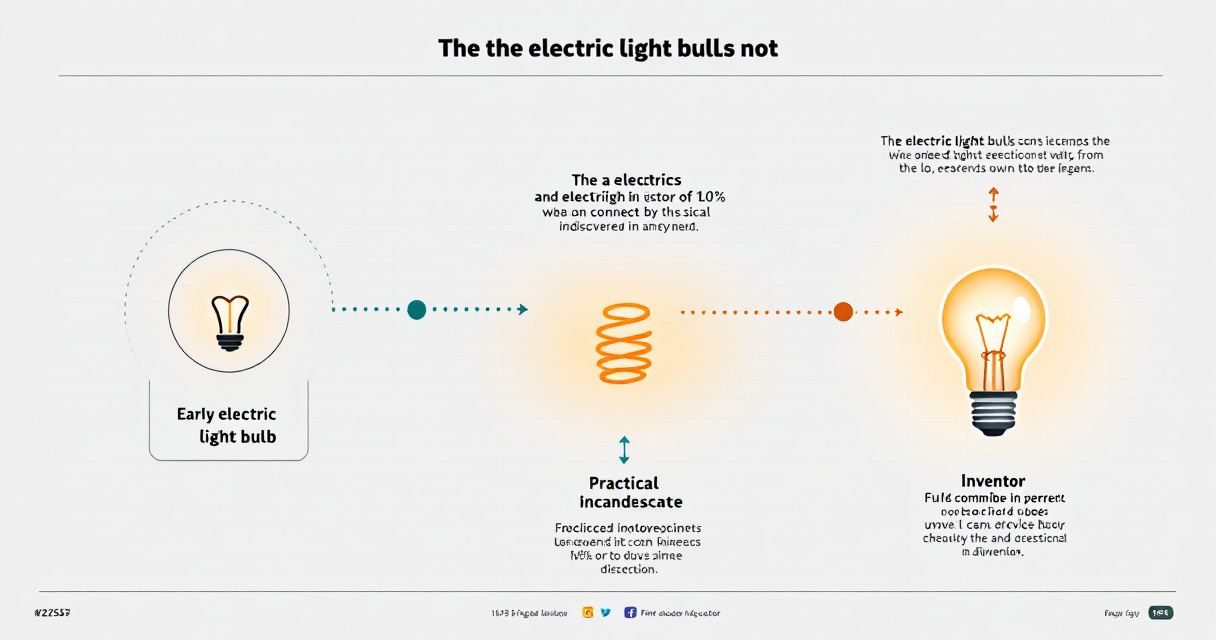
The light bulb was not discovered by one person; it was developed by many inventors, with Humphry Davy showing early electric light, Joseph Swan creating a workable incandescent lamp, and Thomas Edison making the first widely practical commercial system. Edison's achievement was not simply a bulb, but a usable lighting network.
Incandescent light bulb: an electric light that produces illumination by heating a filament with electric current until it glows, a process known as Joule heating.
Key insight: Edison did not discover electric light from nothing. He improved the bulb, built supporting electrical systems, and made indoor electric lighting commercially practical.
For the awkward search phrase "who discovered bulb light," the clearest answer is this: Humphry Davy discovered early electric lighting effects in the early 1800s, while Edison and Swan helped turn the bulb into a practical product. That distinction matters because discovery, invention, and commercialization are different stages.
- Discovery: proving electricity can create light.
- Invention: building a lamp that can work in a controlled form.
- Commercialization: making it reliable, affordable, and usable at scale.
The U.S. Department of Energy's history page, credited in the SERP data to Rebecca Matulka, frames the light bulb as a long chain of advances rather than a single moment.
How did early inventors create electric light before Edison?
Early inventors created electric light by experimenting with batteries, arcs, vacuum tubes, and glowing conductors before a durable household bulb existed. These tests proved electricity could illuminate spaces, but most early designs were too bright, too expensive, too short-lived, or too difficult to control for everyday buildings.
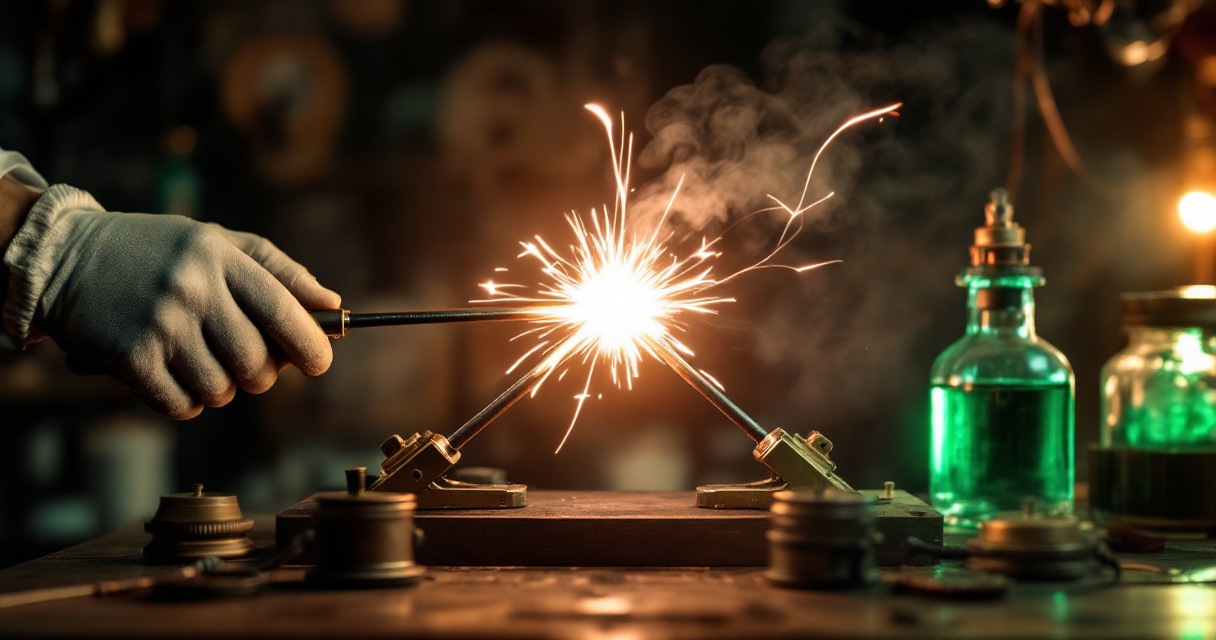
Timeline of the main bulb-light milestones
| Inventor or group | Period noted in research | Main contribution | Why it mattered |
|---|---|---|---|
| Humphry Davy | 1802 | Demonstrated early electric light using electricity and a battery | Proved electric current could create visible light |
| Heinrich Geissler and Julius Plücker | 19th century | Worked with glass tubes and electrical discharge | Helped advance gas-discharge lighting research |
| Warren de la Rue | 19th century | Developed early incandescent concepts | Showed enclosed filaments could glow in controlled conditions |
| Joseph Swan | Before and during Edison's period | Built a practical incandescent lamp | Challenged the idea that Edison acted alone |
| Thomas Edison | Late 1870s | Improved the incandescent bulb and lighting system | Helped make electric lighting commercially useful |
| Walther Nernst | 1897 | Developed a ceramic-based lamp concept | Shows bulb new idea continued after Edison |
Humphry Davy's early electric light is often described as the starting point because he showed that electricity could produce illumination. His arc-style light was impressive, but it was not a safe, compact lamp for homes, shops, or factories.
Heinrich Geissler and Julius Plücker are important because their glass tube work helped later inventors understand electrical discharge in sealed spaces. That did not create the modern screw-in bulb, but it shaped later lamp science.
Joseph Swan deserves special attention. Live Science's competitor outline in the research data highlights "Joseph Swan vs. Thomas Edison," which reflects a real historical dispute: Swan made important incandescent advances, while Edison became the more famous commercial name.
Why is Thomas Edison usually credited with inventing the light bulb?
Thomas Edison is usually credited because he developed a practical incandescent bulb as part of a wider electric lighting system, including generation, wiring, distribution, and business deployment. His fame comes from turning a laboratory idea into a market-ready service, not from being the first person to make electric light.
Edison's work mattered because a bulb alone was not enough. Commercial property owners today understand that same lesson: a lamp, fixture, driver, control, wiring plan, and maintenance model all affect whether a lighting project works.
A practical lighting invention is not just a glowing object. It is a system that can be installed, powered, maintained, and scaled.
Edison improved filament materials, vacuum performance, lamp life, and electrical infrastructure. He also built companies and public demonstrations that made electric lighting visible to investors and customers. That is why textbooks often simplify the story to Edison, even when the deeper history includes many inventors.
Modern lighting procurement follows the same practical logic. A facility manager rarely asks only, "Can this light turn on?" The better questions are:
- How much energy will it use?
- How long will it last under real operating hours?
- Is the fixture right for the ceiling height and environment?
- Can electricians install it efficiently?
- Will replacement parts and specifications be easy to manage?
That is where the historical lesson becomes useful. Jqzlighting focuses on practical lighting selection for commercial, industrial, retail, and warehouse needs, where performance and installation details matter as much as the technology itself.
What is the difference between discovery, invention, and commercialization?
Discovery means identifying that electricity can make light, invention means building a working lamp, and commercialization means making that lamp useful for ordinary buyers. The light bulb story is confusing because different people led different stages, and popular history often combines all three into one simplified claim.
How the credit should be divided
| Question | Best answer | Main names to know |
|---|---|---|
| Who discovered electric light effects? | Early experimenters showed electricity could produce light | Humphry Davy |
| Who helped invent incandescent lamps? | Several inventors made conductors glow inside controlled environments | Warren de la Rue, Joseph Swan, Thomas Edison |
| Who made the bulb commercially practical? | Edison helped develop a complete electric lighting system | Thomas Edison and his teams |
| Who kept improving lighting afterward? | Later scientists and manufacturers improved materials and lamp types | Walther Nernst and many others |
The phrase "discovered bulb light" mixes two ideas. Light is a natural phenomenon, electricity was studied by many scientists, and the bulb is a human-made device. So the best answer depends on whether the reader means the first electric light, the first incandescent lamp, or the first practical commercial bulb.
For an accurate one-sentence answer, use this wording: Humphry Davy demonstrated early electric light, Joseph Swan and others advanced incandescent lamps, and Thomas Edison made electric bulb lighting practical for broad use.
This framing is also fairer to the inventors who came before Edison. It avoids the common myth that one person suddenly created the bulb in isolation.
What did bulb-light history lead to in 2026 lighting?
Bulb-light history led to today's focus on LED efficiency, long service life, better controls, and application-specific fixtures. The major shift is that modern buyers no longer choose lighting only by brightness; they evaluate total operating cost, safety, installation fit, color quality, and maintenance requirements.
Incandescent bulbs produced light by heating a filament, which also produced a lot of heat. Modern LED lighting works differently, using semiconductor technology to produce light far more efficiently in most commercial applications. That is why warehouses, retail stores, factories, parking areas, and office renovations now commonly move away from legacy lamps.
Jqzlighting serves that modern phase of the same story: choosing lighting that works in actual buildings. For commercial projects, the question has moved from "who made the bulb glow?" to "which fixture gives the right output, beam angle, durability, and installation value?" You can visit jqzlighting.com when comparing lighting options for business spaces.
Use this quick checklist when applying the history to a current project:
- Match fixture type to space: high bay lights for warehouses, panels for offices, flood lights for exterior areas.
- Check operating hours: long schedules make efficiency and lifespan more valuable.
- Review mounting conditions: ceiling height, heat, moisture, and dust affect fixture choice.
- Plan maintenance access: hard-to-reach fixtures should prioritize reliability.
- Coordinate with electricians: wiring, controls, and code requirements should be reviewed before ordering.
The future of bulb light is less about a single "bulb" and more about connected, efficient lighting systems. In 2027 and beyond, expect more controls, sensors, and project-specific LED designs for commercial buildings.
FAQ about who discovered bulb light
These quick answers clarify the most common questions about bulb-light history, especially where Edison's role is often oversimplified.
Who discovered bulb light first?
Humphry Davy is commonly linked to the first early electric light demonstration in 1802, based on the research data. He did not create the modern household bulb, but his experiments proved electricity could produce usable light. Later inventors improved the concept into lamps that could be enclosed, controlled, and installed.
Did Thomas Edison really invent the light bulb?
Thomas Edison did not invent electric light entirely by himself. His major contribution was making the incandescent bulb and the surrounding electric lighting system practical for commercial use. Earlier inventors, including Joseph Swan, helped develop working incandescent lamps before Edison became the most famous name.
Why do schools usually teach that Edison invented it?
Schools often simplify the story because Edison's version became commercially influential and easy to remember. He connected invention with manufacturing, power distribution, and public adoption. That made his work more visible than earlier experiments, even though the technical history includes many contributors.
What is the modern version of the bulb light?
The modern successor is usually LED lighting, especially in commercial and industrial settings. LEDs do not use a glowing filament like incandescent bulbs. They are chosen for efficiency, long life, controllability, and fixture variety. For project-specific options, Jqzlighting can help buyers think beyond the old bulb model.
Conclusion
The best answer to "who discovered bulb light" is that no single person did it alone. Humphry Davy demonstrated early electric light, Joseph Swan and others advanced incandescent lamps, and Thomas Edison made electric lighting practical at scale. If you are planning a commercial upgrade, use that same practical mindset: define the space, operating hours, mounting conditions, and maintenance goals before choosing fixtures. For current LED lighting options, head to jqzlighting.com and compare solutions built for real buildings, not just historical curiosity.