
A k light bulb can change how merchandise looks, how alert employees feel, and how safe a work area appears, even when wattage and lumens stay the same. K means Kelvin, the unit used to describe a bulb's color temperature, from warm yellow-white to cool blue-white. Color temperature: the visual appearance of white light measured in Kelvin, not the amount of light produced. For commercial-grade fixture selection, Jqzlighting helps property owners and installers match Kelvin ratings to real spaces instead of guessing from packaging.
What does K mean on a light bulb?
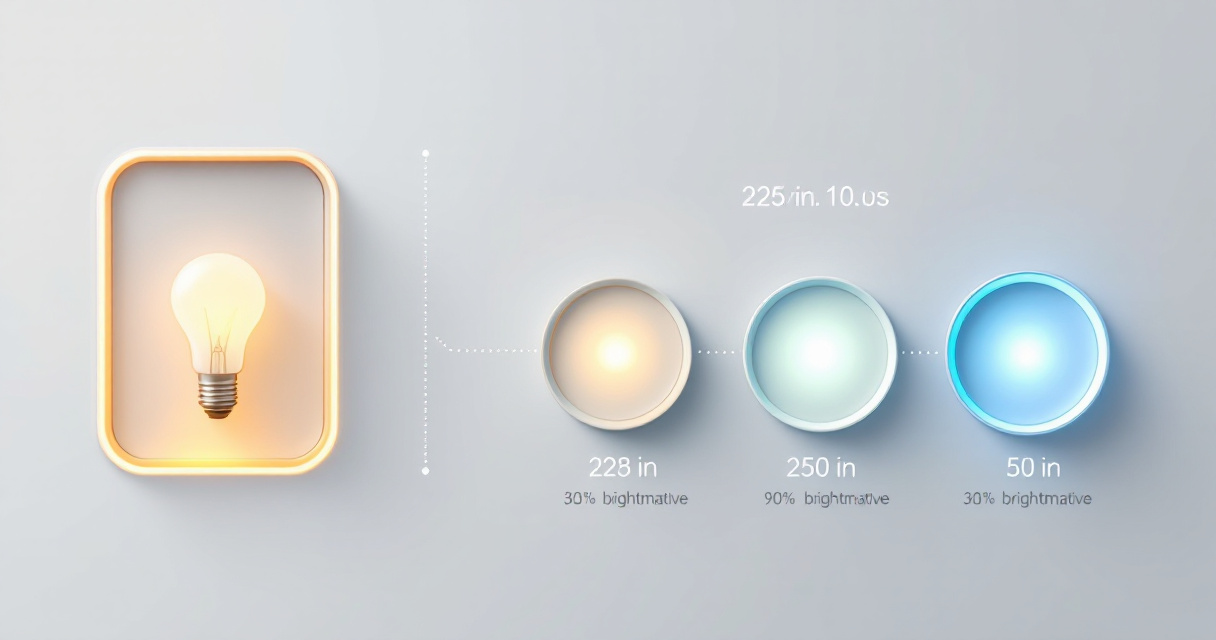
K on a light bulb means Kelvin, the scale used to describe whether white light looks warm, neutral, or cool. It does not measure brightness. Brightness is measured in lumens, while energy use is measured in watts. A 3000K lamp and 5000K lamp can have the same lumen output but look very different.
The Kelvin scale is central to lighting specifications because it turns a subjective appearance into a usable number. Westinghouse Lighting explains that color temperature describes the light appearance provided by a bulb and is measured in degrees of Kelvin on its color temperature guide.
Key insight: Kelvin answers "what color does the white light appear to be?" Lumens answer "how much light does it produce?" Watts answer "how much energy does it use?"
An electric light, lamp, or light bulb is an electrical device that produces light from electricity. Edison-style lamps, often called vintage or filament bulbs, are usually chosen for appearance, but their Kelvin rating still controls whether the glow feels amber, soft white, or brighter white.
Kelvin terms facility teams should separate
- Kelvin, K: color appearance of white light.
- Lumens: visible light output, used for brightness planning.
- Watts: power consumed by the lamp or fixture.
- CRI: color rendering index, used to judge how accurately colors appear.
- CCT: correlated color temperature, the formal lighting term for Kelvin-rated white light.
Which Kelvin rating fits commercial spaces best?
The best Kelvin rating depends on the task, brand atmosphere, ceiling height, and surface colors in the space. Warm ratings such as 2700K and 3000K suit hospitality and relaxed retail. Neutral 3500K to 4000K works well for offices and showrooms. Cooler 5000K fits warehouses, task areas, and exterior security lighting.
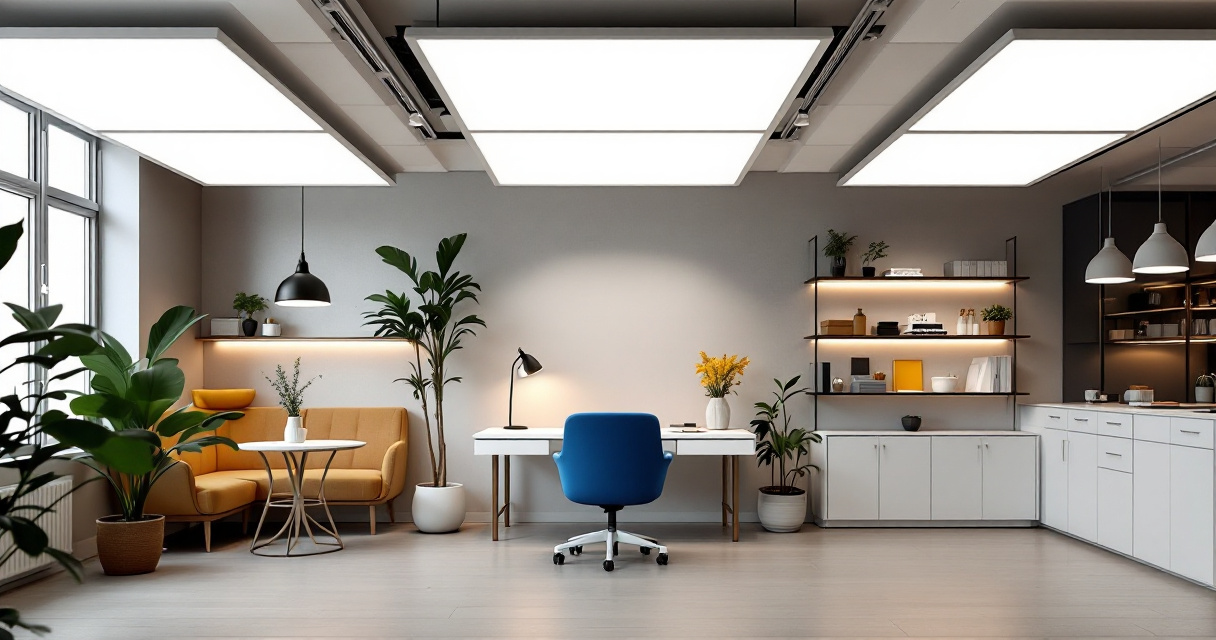
Lower Kelvin ratings look warmer because they contain more amber and yellow tones. Higher ratings look cooler because they appear whiter or slightly blue-white. Neither is automatically better; the right choice depends on the work being done and the feeling the space should create.
Kelvin comparison table for commercial lighting
| Kelvin rating | Appearance | Mood | Best-use environment |
|---|---|---|---|
| 2700K | Warm yellow-white | Relaxed, intimate | Restaurants, lounges, hotel rooms, decorative sconces |
| 3000K | Warm white | Comfortable, polished | Boutique retail, reception areas, apartments, corridors |
| 3500K | Balanced white | Neutral, professional | Offices, conference rooms, clinics, classrooms |
| 4000K | Cool neutral white | Clean, alert | Warehouses, supermarkets, workshops, garages |
| 5000K | Daylight white | High-visibility, crisp | Inspection zones, exterior security, loading docks, industrial task areas |
A retail store may use 3000K for fitting rooms because skin tones look softer, while a stockroom behind the same store may use 4000K for label reading. A warehouse may use 5000K over loading docks, but 4000K in break rooms to avoid an overly harsh feel.
The Jqzlighting platform is especially useful when a project includes mixed-use areas, because each zone can be matched to a fixture family, Kelvin rating, mounting height, and commercial application.
How should facilities choose between 3000K, 4000K, and 5000K?
Facilities should choose between 3000K, 4000K, and 5000K by matching the light appearance to the task and the people using the space. Choose 3000K for comfort, 4000K for general commercial productivity, and 5000K for visibility-focused areas where detail, safety, or inspection matter most.
The mistake is treating Kelvin as a brightness upgrade. A cooler lamp may feel brighter to the eye, but it does not replace a lumen calculation. Fixture spacing, beam angle, ceiling height, reflectance, and glare control still matter.
Climate and energy research also makes efficient lighting choices more relevant. The 2022 Lancet Countdown report examined health and climate risks tied to fossil fuels, making energy-conscious building systems part of a wider operational conversation, not just a utility-bill issue (Romanello, Di Napoli, and Drummond, 2022).
Specification rule: pick Kelvin for appearance first, then confirm lumens, wattage, controls, and fixture layout for performance.
Simple selection process for contractors and owners
- Define the primary activity. Selling, inspecting, storing, dining, and navigating all need different light appearances.
- Pick the Kelvin family. Use 3000K for warmth, 4000K for balanced commercial use, and 5000K for high-detail visibility.
- Confirm lumen needs. Do not assume a cooler bulb solves low light levels.
- Check color rendering. Retail, food, paint, flooring, and medical spaces often need stronger color accuracy.
- Mock up one area. Test a sample fixture before buying a full site package.
- Keep zones consistent. Avoid random Kelvin mixes in the same sightline unless the design intentionally separates areas.
What should commercial buyers avoid when specifying Kelvin?
Commercial buyers should avoid mixing random Kelvin ratings, choosing daylight bulbs only because they seem brighter, and ignoring how wall colors, flooring, and merchandise react under different white light. Poor color-temperature planning can make a professional space feel patchy, cold, dim, or visually tiring.

One common issue is using 5000K everywhere. Daylight-white lighting can be useful in industrial work zones, but it may feel stark in restaurants, hotel corridors, waiting rooms, and premium retail areas. Another issue is installing 2700K in high-task spaces where labels, tools, inventory, or safety markings need sharper contrast.
Kelvin also affects camera views. Security footage, video calls, product photography, and self-checkout areas can look inconsistent if adjacent fixtures have different CCT values.
Practical rules for cleaner specifications
- Use one Kelvin per open area unless a lighting designer creates a layered plan.
- Match replacement lamps to existing fixtures by checking the printed CCT value.
- Avoid judging only from online photos because screens distort warmth and coolness.
- Treat exterior lighting separately since security, visibility, and glare control differ from indoor comfort.
- Document Kelvin in the bid package so substitutions do not change the final look.
How will Kelvin selection change through 2027?
Kelvin selection through 2027 will become more zone-based, control-based, and application-specific. Commercial buyers are moving away from one-temperature buildings and toward tunable LED systems, dimming controls, occupancy sensors, and fixture schedules that support different tasks at different times of day.
Warehouses and retail properties will likely keep using 4000K and 5000K for high-output applications, but hospitality, mixed-use, and workplace projects will place more emphasis on visual comfort. Tunable white fixtures, which can shift between warmer and cooler settings, will become more common where budgets and controls allow.
For project planning with Jqzlighting, the best next step is to define each zone before choosing fixtures: front-of-house, back-of-house, workstations, aisles, loading areas, exterior paths, and display zones may not need the same Kelvin rating.
2026 planning checklist for a k light bulb purchase
- For offices: start with 3500K or 4000K, then test for screen comfort.
- For retail: use 3000K or 3500K for warmth, with higher CRI where color accuracy matters.
- For warehouses: use 4000K or 5000K based on task detail and mounting height.
- For hospitality: keep most guest-facing areas at 2700K or 3000K.
- For exterior security: consider 4000K or 5000K with glare-controlled fixtures.
FAQ
These quick answers clarify the most common Kelvin questions for contractors, owners, and facility teams.
Is a higher K light bulb brighter?
A higher Kelvin rating is not automatically brighter. Kelvin describes color appearance, while lumens describe brightness. A 5000K lamp may look sharper or cooler than a 3000K lamp, but both can produce the same lumen output. Always compare lumen ratings when the goal is more light.
Is 3000K or 4000K better for an office?
3000K feels warmer and softer, while 4000K feels cleaner and more alert. Many offices choose 3500K or 4000K for general work areas because they balance comfort and visibility. Reception areas or lounges may use 3000K for a calmer impression.
What Kelvin is best for warehouse lighting?
Warehouse lighting commonly uses 4000K or 5000K. A 4000K fixture gives a clean neutral appearance for general storage and movement. A 5000K fixture can help in inspection, picking, loading, and detail-heavy task areas where crisp visibility matters.
Can different Kelvin bulbs be mixed in one building?
Different Kelvin ratings can be used in one building when each zone has a clear purpose. Mixing them within the same open area often looks inconsistent. A clean plan might use 3000K in a lobby, 4000K in offices, and 5000K at exterior loading doors.
Conclusion
A k light bulb choice is really a Kelvin choice: warm for comfort, neutral for professional spaces, and cool for high-visibility work. Before ordering, list each room or zone, select the target Kelvin, confirm lumens and CRI, then test one sample fixture in the actual space. For commercial fixtures and practical Kelvin matching, visit jqzlighting.com and build the specification around how the space is used, not just how the bulb looks in a box.