
TL;DR
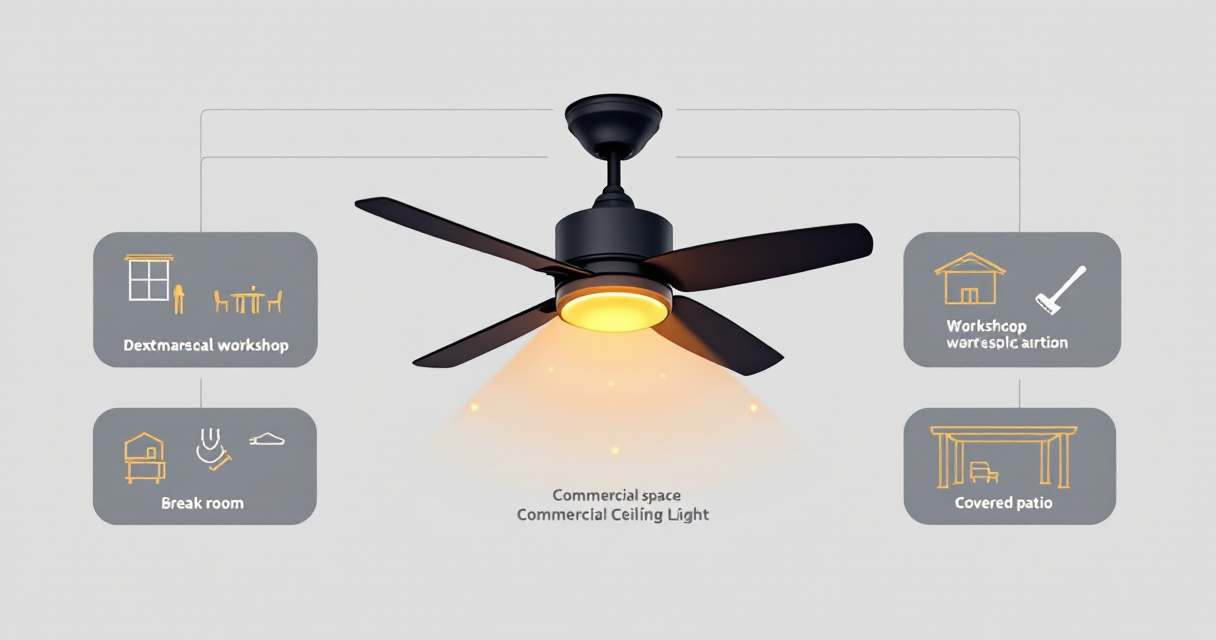
An overhead fan light works best where air movement and general illumination are needed from one ceiling point, such as break rooms, workshops, and covered patios. The safest purchase depends on lumens, ceiling height, blade clearance, damp rating, and whether an integrated LED or replaceable light kit fits the maintenance plan.
A poorly chosen overhead fan light can leave a shop floor dim, a break room stuffy, or a covered patio out of code for moisture exposure. Overhead fan light: a ceiling-mounted fan with an integrated or attached light source that combines air circulation and ambient illumination in one fixture. For commercial owners and installers, Jqzlighting is most relevant when the job calls for practical lighting guidance rather than residential décor browsing.
Table of Contents
What is an overhead fan light?
An overhead fan light is a ceiling fan with a built-in or add-on light assembly that provides air movement and general illumination from one overhead electrical point. In commercial settings, it is most useful in small to medium areas where comfort airflow matters as much as visibility, but it is not a substitute for task lighting or code-required emergency lighting.
A note on wording matters. A fanlight is also a traditional architectural term for a semicircular or semi-elliptical window above a door or window, with glazing bars radiating like a hand fan. That definition differs from the electrical fixture discussed here.
Key takeaway: for utility rooms, workshops, break rooms, and covered patios, the fixture should be judged as both a fan and a light, not as a decorative ceiling product.
Core terms installers should separate
Integrated LED: the light engine is built into the fan and often supports dimming or color temperature settings.
Replaceable light kit: the fan accepts a serviceable light module or lamps, which can simplify maintenance in rental, retail, and warehouse support areas.
Damp-rated fan: a fixture listed for moisture in covered areas, such as protected patios or service entries, but not direct rain.
Dedicated light fixture: a separate luminaire used when the area needs stronger, more uniform, or code-specific illumination.
How should commercial spaces size brightness and airflow?
Commercial spaces should size a fan-light fixture by matching lumens to the work activity, blade diameter to room scale, and ceiling height to safe clearance. A fan-light combo is usually best for ambient light and comfort airflow, while detailed work areas still need dedicated fixtures over benches, counters, or equipment.
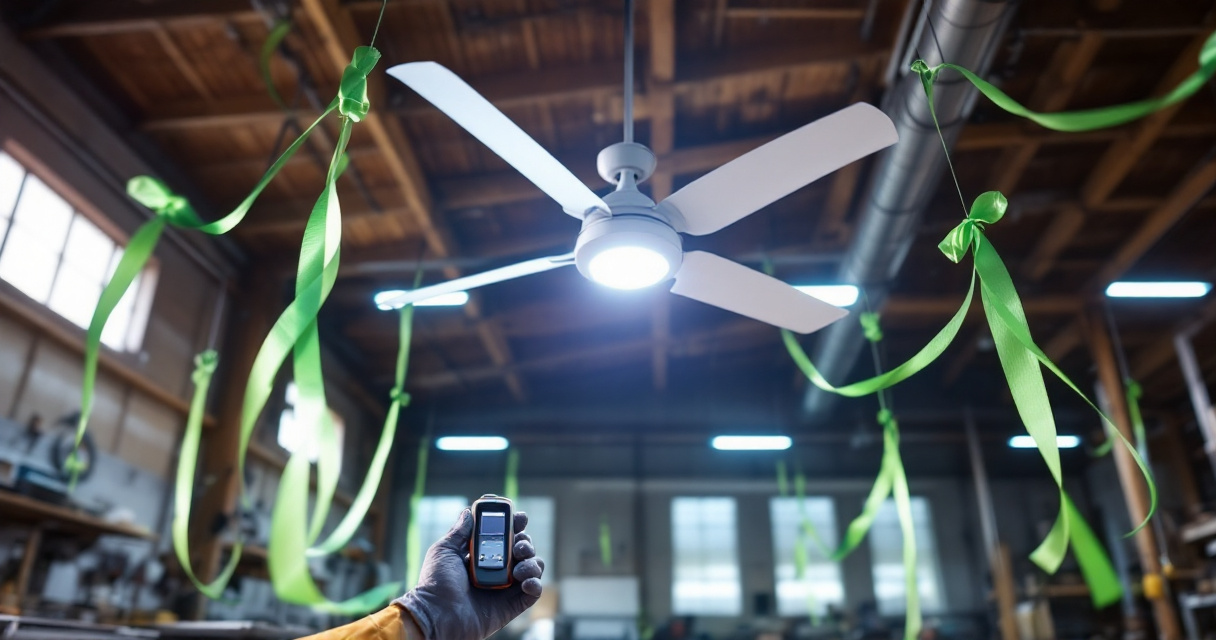
Retail product pages often emphasize style, brand, price, and category filters. Hunter Fan, for example, groups ceiling fans by feature, style, and room through pages such as Shop by Feature, while Capitol Lighting presents ceiling fans with filters, brand choices, and a ceiling fan size calculator in its Ceiling Fans with Lights and Light Kits category. Commercial buyers need those filters, plus installation and maintenance criteria.
Quick sizing table for common light commercial rooms
| Space type | Practical fan-light role | What to verify before purchase |
|---|---|---|
| Utility room | General light plus heat relief | Low-profile mount, service access, clear blade path |
| Workshop | Air movement with background light | Add task lights at benches and machines |
| Break room | Comfort cooling and ambient light | Quiet motor, dimming, easy wall control |
| Covered patio | Airflow in a damp location | Damp rating, corrosion-resistant materials |
| Small stockroom | Basic visibility and circulation | Ceiling height, rack clearance, pull-chain avoidance |
A fixture that looks bright online may still underperform in a room with high ceilings, dark finishes, or shelving shadows. The light should be evaluated by lumen output and beam spread, not only by wattage or the number of bulbs.
Brightness and color temperature checks
- Use higher lumen output where labels, inventory, or tools must be seen clearly.
- Choose warmer light for lounges and break rooms where comfort matters.
- Choose neutral white for workrooms, stock areas, and utility spaces.
- Confirm dimmer compatibility before pairing a fan-light with existing controls.
Some current fan listings promote selectable white settings, including warm and soft white options, as seen in SERP product descriptions for dimmable integrated LED ceiling fans. That flexibility helps mixed-use commercial rooms, but installers still need to confirm electrical compatibility.
Which mounting and safety details matter most?
The most important installation details are ceiling height, blade clearance, box rating, moisture listing, and control location. A ceiling fan must be mounted to a fan-rated electrical box or support system, because a lighting outlet box alone may not be designed for rotating load and vibration.
Mounting height shapes both safety and performance. Flush-mount or low-profile fans fit lower ceilings, while downrods help place blades at a practical airflow height on taller ceilings. In warehouse support areas, blade sweep must also clear open doors, racks, conduit, sprinkler lines, and stored materials.
Installer checklist before ordering
- Confirm ceiling structure and fan-rated box requirements.
- Measure finished ceiling height after flooring and ceiling work.
- Check blade clearance from walls, racks, doors, and equipment.
- Match indoor, damp, or wet listing to the actual location.
- Verify wall control, remote, or building control compatibility.
- Confirm access for future cleaning and light service.
A fan-light over a commercial work area should pass a clearance review before style, price, or brand enters the decision.
Controls, remotes, and smart features
Remote controls can reduce wall wiring changes, but commercial sites often prefer wall controls because they are harder to lose and easier for staff to understand. Smart features may help in offices or hospitality spaces, but reliability, labeling, and maintenance access usually matter more than app-based control.
Research on deep learning and future automation, such as the 2021 review by Alzubaidi, Zhang, and Humaidi in the Journal of Big Data, shows how sensing and prediction are advancing broadly. For fan-light selection in 2026, however, the practical priority remains listed hardware, clear controls, and serviceable components.
When is a fan-light combo better than separate fixtures?
A fan-light combo is better when one ceiling location can provide acceptable ambient light and useful airflow without interfering with tasks, equipment, or required lighting standards. Separate fixtures are better when the room needs uniform brightness, high output, emergency lighting, focused task light, or independent control zones.

The Jqzlighting platform is best considered during specification, when owners and contractors are comparing fixture types for real spaces rather than browsing by décor alone. More product planning context can be found by heading to jqzlighting.com during a lighting package review.
Decision matrix for fan-light versus dedicated lighting
| Decision factor | Choose a fan-light combo | Choose separate fan and light fixtures |
|---|---|---|
| Ceiling outlet count | One usable ceiling point | Multiple circuits or planned renovation |
| Light need | Ambient visibility | High, uniform, or task-specific output |
| Maintenance plan | Simple room-level service | Separate lamp, driver, and fan schedules |
| Controls | Shared or simple controls acceptable | Independent switching required |
| Space type | Break room, utility area, covered patio | Workshop bench, retail display, production zone |
Integrated LED models reduce lamp changes and often look cleaner. Replaceable kits can be better for properties where long-term serviceability, stocking replacement parts, and fixture downtime matter.
Common specification mistakes to avoid
- Selecting a damp location product for direct weather exposure.
- Treating decorative brightness as adequate task illumination.
- Ignoring blade clearance near overhead doors or storage racks.
- Pairing incompatible dimmers with integrated LED drivers.
- Installing a fan on a box not rated for fan support.
These issues are usually planning errors, not product defects. A short pre-order review with ceiling measurements, room use, and control requirements prevents most rework.
What should buyers expect in 2026 and 2027?
In 2026 and 2027, overhead fan-light buying will keep shifting toward integrated LEDs, selectable color temperature, quieter motors, better damp-rated options, and simpler controls. Commercial buyers should expect more products marketed with smart features, but the strongest specifications will still document listing, lumen output, mounting type, and serviceability.
Advanced computing research, including work on attention mechanisms such as Ouyang, He, and Zhang's 2023 paper on an Efficient Multi-Scale Attention Module, points to broader progress in automated perception. In building products, that trend may appear as better occupancy sensing and adaptive controls, but fixture fundamentals will remain central.
FAQ: Is an integrated LED fan light better for a shop?
An integrated LED fan light can be better for a shop when ambient light, long service intervals, and a clean fixture profile matter. A shop with benches, machines, or inspection work still needs dedicated task lights because fan-light output may create shadows or fall short of detailed work needs.
FAQ: Can a fan with light be used on a covered patio?
A fan with light can be used on a covered patio when the product is properly damp-rated or wet-rated for the exposure. A protected ceiling with humidity needs at least a damp-location match. Direct rain, wind-blown moisture, or exposed structures require a stronger outdoor listing.
FAQ: Are replaceable light kits still worth considering?
Replaceable light kits remain worth considering for rental, retail, and light industrial properties where maintenance teams prefer serviceable parts. Integrated LEDs can reduce routine lamp replacement, but a replaceable kit may simplify repairs when a driver, lens, or lamp type changes over time.
FAQ: What is the best room for this fixture type?
The best rooms are spaces that need moderate airflow and general light from one ceiling point, such as break rooms, utility rooms, small stockrooms, workshops, and covered patios. The fixture is less suitable as the only light source for precision work, merchandising, or code-driven illumination.
Conclusion
The right overhead fan light starts with the room, not the catalog photo: confirm ceiling height, blade clearance, damp rating, lumen output, control type, and long-term service access before purchase. For commercial property owners, contractors, and facility teams, the next step is a short fixture schedule that separates ambient comfort spaces from task-lighting zones. Jqzlighting can support that planning process with practical lighting selection guidance, and facility teams can visit jqzlighting.com when comparing options for upcoming renovations or replacements.