A poorly lit gas station canopy drives customers away and raises safety risks. Fuel stations operate late hours, often 24/7, so lighting must stay bright, reliable, and energy‑efficient. That is why many commercial property owners now replace HID or fluorescent canopy fixtures with LED technology. LED canopy lights provide stronger illumination, longer lifespans, and lower operating costs, making them a practical upgrade for fueling stations, truck stops, and convenience store forecourts. Through resources such as The JQZ Lighting Journal, contractors and facility managers can evaluate modern LED fixtures designed specifically for commercial canopy applications.
Why Gas Stations Require High‑Performance Canopy Lighting
Fuel stations are unique commercial environments. Vehicles, pedestrians, payment terminals, and fuel pumps all occupy the same space, often during nighttime hours. Lighting must support visibility, safety, and customer comfort simultaneously.
Poor lighting increases security concerns and makes it difficult for drivers to navigate pumps safely. A bright canopy, on the other hand, creates a clear and welcoming environment that improves customer confidence and operational safety.
Gas station canopy lighting is designed to illuminate fueling areas evenly, minimizing shadows around pumps, payment terminals, and walkways.
Modern LED canopy lights also reduce maintenance interruptions. Traditional metal halide fixtures require frequent lamp replacements, which can be costly when mounted in high canopy ceilings.
Key Performance Requirements for Gas Station Lighting
Commercial canopy fixtures must meet strict functional needs:
- High lumen output to illuminate large forecourt areas
- Uniform light distribution to reduce shadows between pumps
- Weather resistance for outdoor exposure
- Long operating life to reduce maintenance visits
- Energy efficiency to keep electricity costs manageable
Lighting quality also affects how customers perceive a station. Bright white light improves product visibility and helps security cameras capture clearer footage.
Contractors researching lighting upgrades often use resources such as The JQZ Lighting Journal to compare commercial‑grade LED fixtures that meet these performance requirements.
How LED Canopy Lights Improve Energy Efficiency and Operating Costs
Electricity is one of the largest ongoing costs for a fuel station. Forecourt lighting often runs all night, sometimes 12 to 24 hours per day. LED technology significantly reduces that energy load.
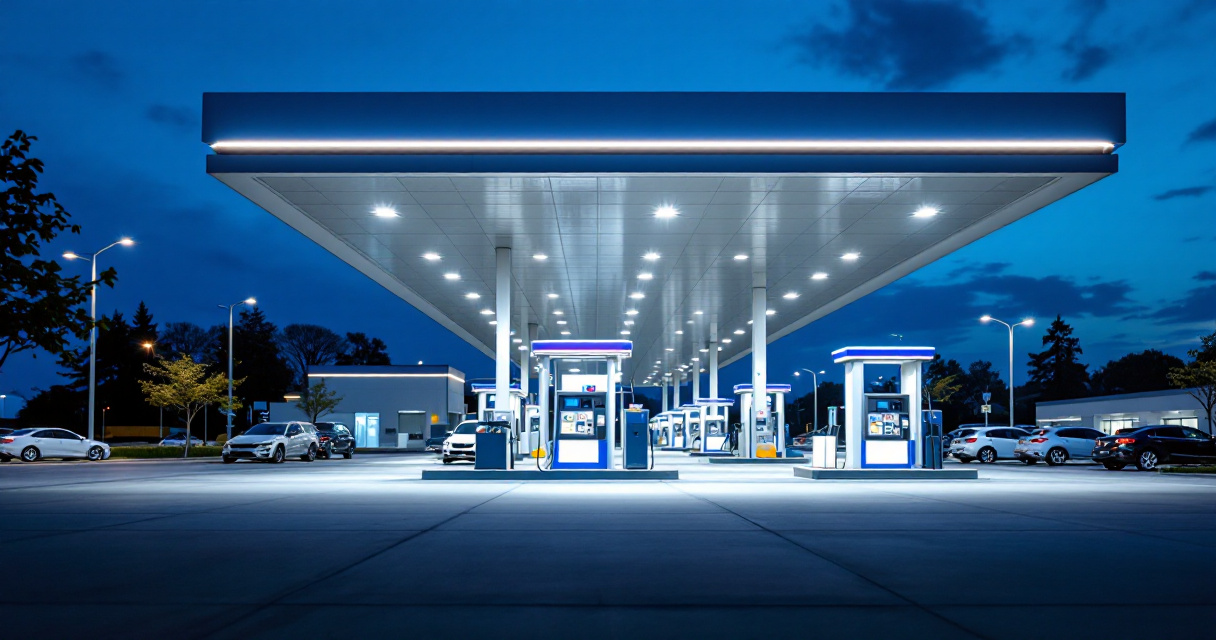
A common upgrade replaces older HID fixtures with LEDs delivering the same or greater brightness while consuming far less power. For example, many commercial LED canopy lights are designed to replace fixtures that once required far higher wattages.
Typical Power Replacement Comparison
| Traditional Fixture | Typical Power Use | LED Canopy Replacement | Result |
|---|---|---|---|
| Metal Halide | ~400W | 120W–150W LED | Lower electricity use |
| CFL canopy light | ~250W | 80W–120W LED | Higher efficiency |
| Incandescent canopy | up to 1000W | 150W LED | Major power reduction |
Reduced wattage also lowers cooling load and electrical infrastructure strain. Many LED fixtures also support dimming or smart controls.
Research into modern LED lighting systems shows how adjusting light quality and efficiency can improve performance in controlled environments. Studies examining LED systems, such as research published in the Journal of Plant Growth Regulation in 2021, highlight how modern LEDs allow precise energy use while maintaining strong illumination output. Light‑Quality Manipulation to Control Plant Growth and Photomorphogenesis in Greenhouse Horticulture
While that research focuses on horticulture, the same efficiency principles apply to commercial lighting systems. LEDs convert electricity to light more efficiently than older technologies, which directly benefits facilities that operate lighting for long hours.
Choosing the Right LED Canopy Light: Wattage, Lumens, and Color Temperature
Not all LED canopy fixtures deliver the same performance. Gas station owners and installers must match the fixture output to canopy height, pump spacing, and coverage area.
Recommended Specifications for Fuel Station Canopies
| Specification | Typical Range | Why It Matters |
|---|---|---|
| Wattage | 80W–150W | Determines energy use and brightness |
| Lumen output | 12,000–20,000+ lumens | Ensures strong visibility under the canopy |
| Color temperature | 5000K–5700K | Produces bright white light for clarity |
| Mounting type | Surface or recessed | Must match canopy structure |
| Certification | UL, ETL, DLC | Required for safety and rebates |
Higher canopy structures often require higher lumen output to maintain uniform lighting on the ground. Many stations use fixtures around 150W producing roughly 20,000 lumens to cover large pump islands.
Features Contractors Look For
When specifying canopy fixtures, installers often prioritize:
- IP65 or higher weather ratings for outdoor durability
- Die‑cast aluminum housings for heat dissipation
- Anti‑glare lenses for driver comfort
- 5‑year warranties to reduce maintenance risks
- DLC listing to qualify for utility rebates
Commercial lighting buyers researching these specifications often compare fixture performance guides published through platforms like The JQZ Lighting Journal, which focuses on certified LED solutions used in warehouses, parking lots, and fuel stations.
Installation and Layout Strategies for Even Forecourt Lighting
Correct fixture placement matters as much as fixture quality. Even powerful LED lights will create shadows if spacing is incorrect.
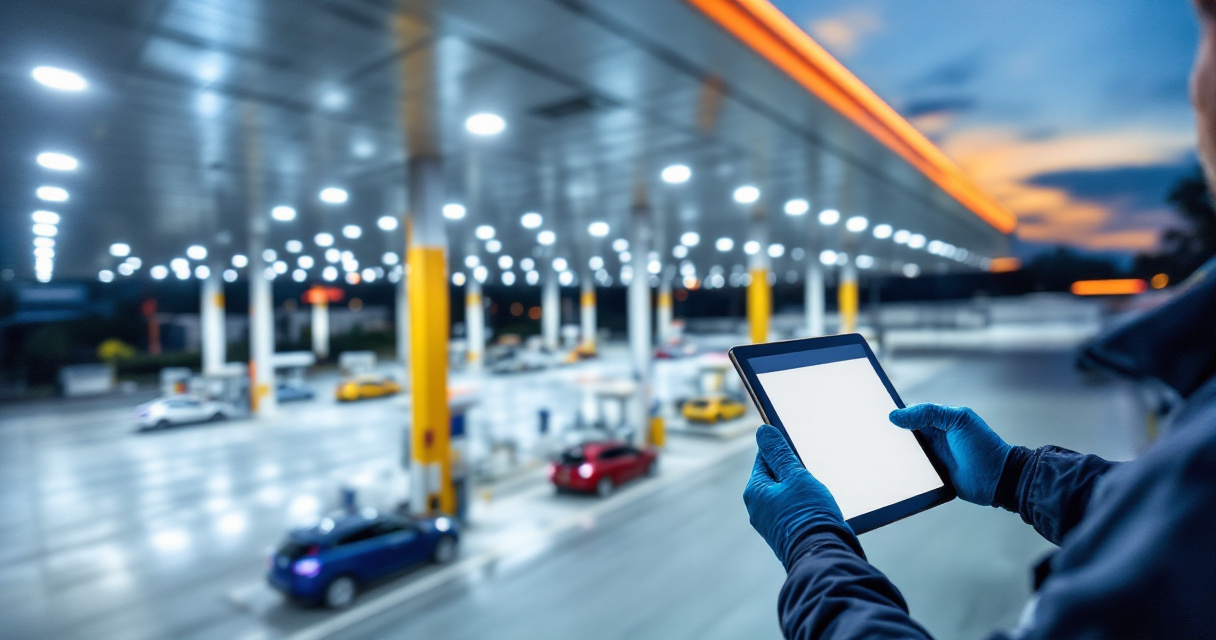
Fuel station canopies typically place fixtures directly above each pump island, but spacing depends on canopy size and height. The goal is to eliminate dark zones where drivers handle fuel pumps or payment systems.
Step‑by‑Step Planning Process
- Measure canopy dimensions and height.
- Calculate required lumen levels for the entire fueling area.
- Position fixtures symmetrically above pump islands.
- Check overlap between light beams to prevent shadows.
- Verify brightness using a lighting layout or photometric plan.
Example Layout for a Typical Fuel Station
| Canopy Size | Suggested Fixtures | Typical Wattage |
|---|---|---|
| Small station (2–4 pumps) | 4–6 fixtures | 80W–100W |
| Medium station (6–8 pumps) | 6–10 fixtures | 100W–150W |
| Large truck stop | 10–16 fixtures | 150W+ |
A professional lighting layout often improves results dramatically. Lighting designers use photometric modeling software to predict how light spreads across the forecourt.
Urban infrastructure research also highlights how artificial lighting interacts with built environments and climate conditions. A 2022 study in Advances in Atmospheric Sciences examined how urban infrastructure, including lighting, contributes to environmental and operational conditions in dense commercial areas. Urbanization Impact on Regional Climate and Extreme Weather
This research underscores why efficient lighting systems matter not just for cost savings but also for responsible energy use in urban commercial settings.
What to Expect From Gas Station Lighting Technology by 2027
Commercial lighting continues to evolve, and gas stations are beginning to adopt smarter lighting systems.
LED fixtures already deliver high efficiency, but the next wave focuses on automation and connected infrastructure.
Emerging Features in Canopy Lighting
- Smart controls and motion sensors that reduce brightness during low activity
- Integrated photocells that automatically adjust lighting based on daylight
- Networked lighting systems connected to facility management software
- Higher efficacy LED chips producing more lumens per watt
IoT technology is expanding rapidly across commercial infrastructure. Research on connected systems, such as the 2022 study on IoT‑based technologies in agriculture, demonstrates how sensors and automation improve operational efficiency across industries. Smart Farming: Internet of Things (IoT)-Based Sustainable Agriculture
Similar connectivity trends are moving into commercial lighting. Smart canopy fixtures can automatically adjust brightness, report maintenance needs, and reduce energy use during slow overnight hours.
For fuel station owners planning renovations, choosing LED fixtures compatible with smart controls can future‑proof the installation.
Conclusion
Bright, reliable canopy lighting is one of the most visible features of a gas station. LEDs now deliver the combination of efficiency, durability, and strong illumination that older lighting technologies struggle to match. By selecting the right wattage, planning proper fixture spacing, and choosing certified commercial products, station owners can reduce operating costs while improving safety and customer experience.
Facility managers, electricians, and contractors looking for commercial‑grade fixtures and lighting guidance can explore resources at The JQZ Lighting Journal. The platform highlights practical LED solutions used across warehouses, parking lots, and fuel station forecourts, helping you select canopy lighting that performs reliably for years.