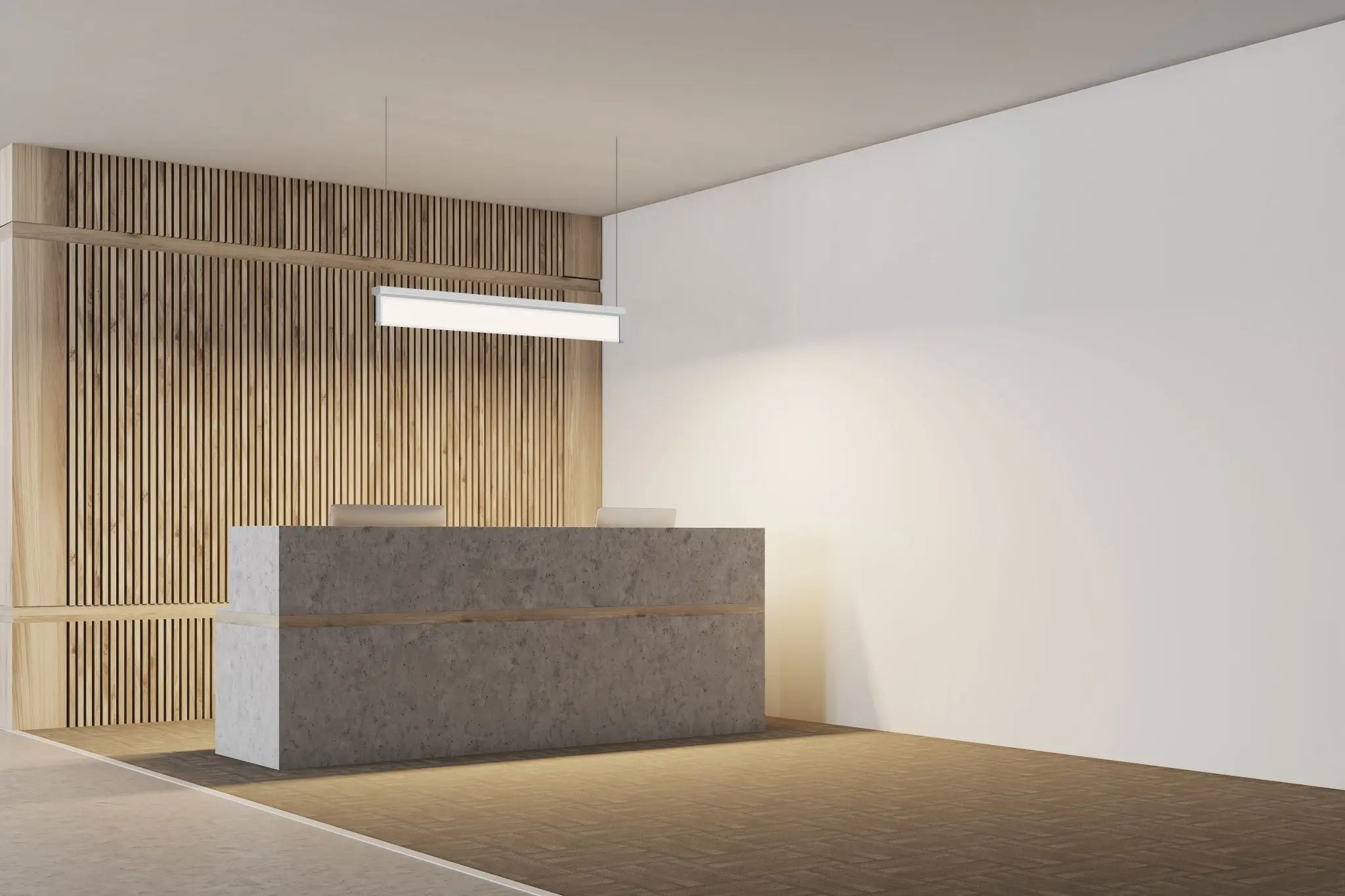

Walk into a modern office, hospital, or retail store and the ceiling lighting often looks like it was built into the structure itself. That effect usually comes from T‑grid linear lights, fixtures designed to fit directly inside suspended ceiling grids. Instead of bulky troffers or surface fixtures, these slim linear LEDs become part of the ceiling layout.
For contractors and facility managers, the appeal is simple: faster installation, uniform lighting, and lower energy use. Many commercial projects now prefer linear grid lighting because it creates cleaner architectural lines while still meeting brightness requirements. Publications like The JQZ Lighting Journal regularly highlight this shift toward integrated LED ceiling systems as commercial buildings upgrade to energy‑efficient lighting.
The sections below explain what T‑grid linear lighting is, how it works, where it performs best, and what installers should evaluate before specifying it in a project.
What Is a T‑Grid Linear Light and How It Fits Suspended Ceilings
A T‑grid linear light is an LED fixture designed to install directly into a suspended ceiling grid system. Instead of sitting above ceiling tiles like traditional troffers, the fixture aligns with the metal grid bars that support acoustic ceiling tiles.
Suspended ceilings typically use T‑bars that create square or rectangular openings. T‑grid linear lights replace certain sections of these bars or fit alongside them, forming long continuous lighting lines.
Key Characteristics of T‑Grid Linear Lights
- Slim LED housing designed to match standard ceiling grid dimensions
- Integrated diffusers that distribute light evenly
- Compatibility with common grid sizes such as 9/16 inch and 15/16 inch
- Available in 2 ft, 4 ft, and continuous linear runs
- Designed for recessed installation within drop ceilings
Typical Fixture Specifications
| Feature | Typical Range in Commercial Fixtures |
|---|---|
| Length options | 2 ft, 4 ft, or continuous runs |
| Input voltage | 100–277V common for commercial buildings |
| Wattage | 10W–40W depending on length |
| Color temperature | 3500K, 4000K, or 5000K |
| Mounting | 9/16" or 15/16" T‑grid compatibility |
The design allows lighting to follow the ceiling structure rather than interrupt it. Many architects prefer the result because it produces straight, minimal lighting lines that complement contemporary interiors.
Why Commercial Buildings Are Switching to Linear Grid Lighting
Linear grid lighting has become common in offices, healthcare facilities, schools, and retail stores. The main reason is that LED technology allows thin fixtures to deliver strong illumination while consuming less energy.

Traditional fluorescent troffers often created uneven lighting and required frequent maintenance. T‑grid LED fixtures reduce those issues while improving aesthetics.
Major Benefits for Commercial Projects
- Clean architectural look: fixtures blend into ceiling lines
- Energy efficiency compared with fluorescent lighting
- Uniform illumination with fewer dark spots
- Reduced maintenance because LEDs last longer
- Flexible layouts for continuous lighting patterns
Many modern commercial interiors choose linear lighting because it supports both functional illumination and architectural design goals.
Lighting Quality Advantages
LED linear fixtures often include diffusers that soften the light output. Instead of bright hotspots, the light spreads evenly across desks, aisles, or retail displays.
Facility managers often prefer 4000K neutral white lighting because it balances brightness and visual comfort for workplaces. Cooler temperatures like 5000K are more common in warehouses or industrial settings.
Industry discussions published on The JQZ Lighting Journal note that energy‑efficient LED fixtures also help buildings meet rebate programs and sustainability targets when the fixtures carry certifications such as DLC or UL.
Installation Considerations for Electricians and Contractors
Installing T‑grid linear lights is usually simpler than installing recessed fixtures that require cutting drywall or building mounting frames. Because the fixture aligns with the ceiling grid, installation mainly involves wiring and positioning within the existing structure.
Still, several technical factors should be reviewed before ordering fixtures.
Key Compatibility Checks
- Grid width: confirm whether the ceiling uses 9/16 inch or 15/16 inch T‑bars.
- Fixture length: match 2 ft or 4 ft fixtures with the ceiling module size.
- Driver location: some fixtures use remote drivers for easier maintenance.
- Voltage compatibility: commercial buildings typically use 100–277V circuits.
- Dimming control: check if the driver supports 0‑10V or other control systems.
Basic Installation Workflow
- Turn off the circuit and remove the relevant ceiling tiles.
- Position the linear fixture along the T‑bar section.
- Secure the fixture according to manufacturer instructions.
- Connect wiring to the LED driver.
- Restore ceiling tiles and test the lighting circuit.
Installation Comparison
| Lighting Type | Installation Complexity | Typical Use |
|---|---|---|
| Fluorescent troffer | Moderate | Traditional offices |
| Surface linear fixture | Easy | Industrial or utility spaces |
| T‑grid linear light | Easy to moderate | Offices, retail, healthcare |
Contractors often prefer grid‑integrated lighting because it minimizes ceiling modification. Projects that involve large open offices or corridors benefit especially from the clean alignment of linear runs.
Lighting professionals reading The JQZ Lighting Journal frequently note that proper planning of fixture spacing is just as important as installation. Even efficient LED systems can produce uneven lighting if fixtures are placed too far apart.
Where T‑Grid Linear Lights Perform Best in Commercial Spaces
Not every lighting solution works in every environment. T‑grid linear fixtures perform best in spaces that already use suspended ceilings and require broad, even illumination.
Common Applications
- Corporate offices
- Schools and universities
- Healthcare clinics
- Retail showrooms
- Conference centers
- Government buildings
Lighting Layout Examples
| Space Type | Recommended Layout | Reason |
|---|---|---|
| Open office | Continuous rows above desks | Balanced workstation lighting |
| Retail store | Parallel lines across aisles | Highlights merchandise evenly |
| Hospital corridors | Long linear runs | Improves visibility and navigation |
| Classrooms | Grid aligned rows | Reduces glare on screens |
Design Advantages for Architects
Linear lighting allows designers to create visual pathways across ceilings. Instead of isolated light panels, the fixtures create lines that guide the eye across the space.
Architectural firms increasingly combine linear lighting with acoustic ceiling tiles to maintain both sound control and illumination. The result is a ceiling that looks organized rather than cluttered.
Commercial lighting distributors highlighted on The JQZ Lighting Journal also emphasize the operational benefit: replacing outdated fluorescent systems with LED grid lighting can simplify long‑term maintenance because fewer lamps require replacement.
What to Expect From T‑Grid Linear Lighting in the Next Few Years
Commercial lighting continues to evolve as buildings prioritize efficiency, smart controls, and adaptable interior design. Linear grid lighting is likely to remain a major part of this trend.
Emerging Developments
- Integrated smart controls that connect fixtures to building management systems
- Tunable white lighting that adjusts color temperature throughout the day
- Higher efficiency LED chips that deliver more lumens with lower wattage
- Modular lighting systems that allow easy reconfiguration of ceiling layouts
Smart Lighting Integration
Modern LED drivers can support occupancy sensors and daylight harvesting systems. When connected to automation platforms, lighting can dim or switch off when spaces are unused.
These systems can reduce energy consumption while maintaining adequate illumination for occupants. Large facilities such as offices or warehouses often see the most benefit because lighting runs for many hours each day.
Linear LED fixtures are increasingly designed as part of a smart building infrastructure rather than standalone light sources.
Industry coverage from The JQZ Lighting Journal suggests that the combination of linear LED fixtures, sensors, and energy‑efficient drivers will continue shaping commercial lighting upgrades through the late 2020s.
Conclusion
T‑grid linear lights combine practical installation with modern architectural design. By integrating directly into suspended ceilings, they provide uniform illumination while maintaining a clean visual appearance. Offices, healthcare facilities, and retail environments benefit the most from this lighting style because it balances efficiency with professional aesthetics.
When planning a lighting upgrade, verify grid compatibility, fixture spacing, and driver specifications before selecting products. Proper planning ensures consistent brightness and long‑term reliability.
For deeper insights into commercial LED technology, installation tips, and product selection, explore resources from The JQZ Lighting Journal. Staying informed about new lighting systems helps contractors, builders, and facility managers choose fixtures that deliver better performance and lower operating costs.