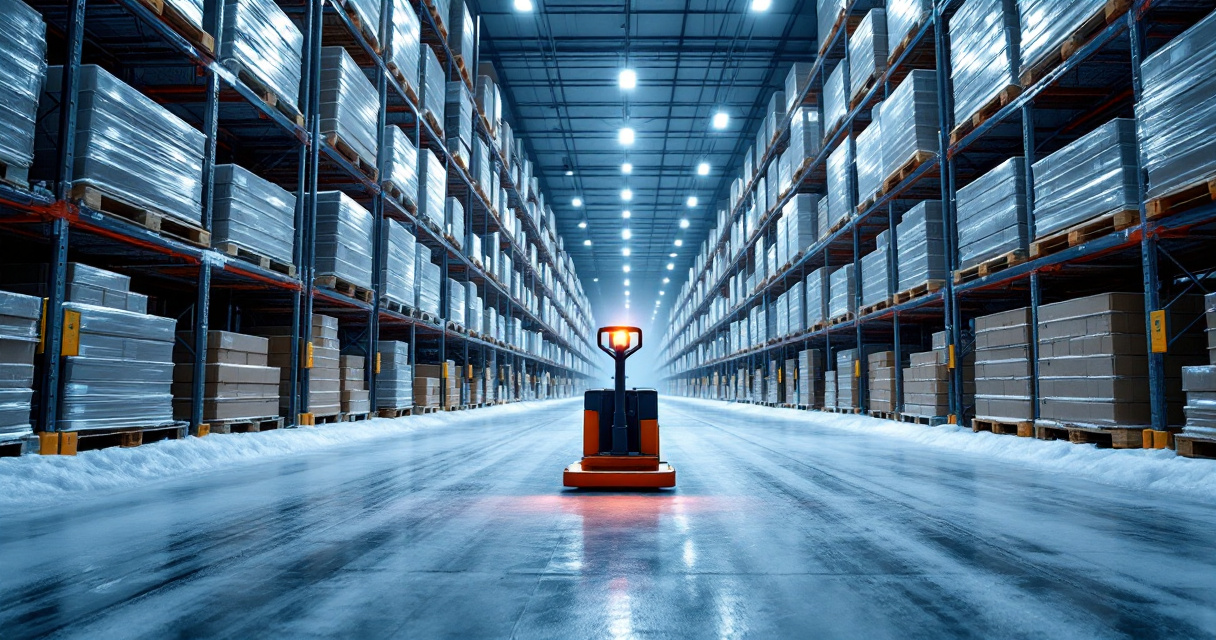
Lighting inside a freezer warehouse can drop below −20°F, yet the facility still needs bright, reliable illumination for safety and productivity. Traditional lighting technologies struggle in these conditions, often flickering, dimming, or failing entirely. Modern LED systems perform differently. Because light-emitting diodes generate light electronically rather than through heated filaments or gas tubes, they maintain efficiency and stability in extremely cold environments. According to the general definition of an LED lamp, these lights are far more energy-efficient than incandescent or fluorescent alternatives while offering longer service life (LED lamp, Wikipedia). For warehouse operators focused on reliability, energy savings, and maintenance reduction, LEDs have become the standard solution. Many facility managers researching upgrades now turn to resources such as The JQZ Lighting Journal to compare commercial-grade fixtures designed for refrigerated environments.
Why Cold Storage Facilities Demand Specialized Lighting
A warehouse is defined as a building designed for storing goods used by manufacturers, wholesalers, logistics providers, and retailers (Warehouse, Wikipedia). When those goods require refrigeration or freezing, the building environment changes dramatically. Temperatures can range from just above freezing to well below −20°F, which places stress on electrical equipment.
Cold storage lighting must operate reliably despite several challenges:
- Extreme temperature fluctuations
- Moisture and condensation
- Ice buildup on fixtures
- High ceilings and narrow storage aisles
- Long operating hours
Standard fluorescent fixtures often struggle in these conditions. Lamps may take several minutes to reach full brightness or may not start at all in deep-freeze environments. Maintenance becomes expensive when fixtures fail in high racks or freezer zones that require special safety procedures for access.
Cold environments magnify lighting failures. A fixture that works fine in a normal warehouse may fail quickly when exposed to sub-zero temperatures and moisture.
Facilities such as food distribution centers, pharmaceutical storage hubs, and cold-chain logistics warehouses rely on consistent illumination to maintain safety compliance and prevent accidents involving forklifts or automated equipment.
Warehouse operators researching upgrades often review commercial lighting guidance on platforms like The JQZ Lighting Journal, which focuses on practical lighting strategies for large-scale commercial buildings.
Why LED Lighting Performs Better in Freezer Environments
LED fixtures actually perform better in cold conditions than in warm environments. Unlike fluorescent or HID lamps, LEDs do not rely on heating gases or filaments to produce light. Instead, they generate light through semiconductor diodes, which maintain stable output in low temperatures.
Cold Temperature Performance Compared to Traditional Lighting
| Lighting Type | Performance in Cold Storage | Startup Time | Maintenance Needs |
|---|---|---|---|
| Fluorescent | Often slow start or dim output | Slow in cold | Moderate to high |
| Metal Halide | Reduced efficiency in cold | Long warm-up | High |
| LED | Maintains brightness and efficiency | Instant | Low |
This performance advantage provides several operational benefits:
- Instant-on lighting, even at freezing temperatures
- Stable brightness without warm-up periods
- Lower energy consumption for large warehouses
- Longer fixture lifespan, which reduces maintenance visits
The long lifespan of LED technology is one reason it has replaced older lighting technologies in many industrial facilities. Research summarized in U.S. Geological Survey mineral commodity reports highlights the growing demand for materials used in advanced electronics and lighting technologies as industries shift toward efficient systems (USGS Mineral Commodity Summaries 2023).
Warehouse lighting guides published through The JQZ Lighting Journal platform often highlight this advantage, especially for cold storage sites where traditional lamps fail frequently.
Key LED Fixture Types Used in Cold Storage Warehouses
Choosing the right fixture type is just as important as choosing LED technology itself. Cold storage facilities typically combine several fixture styles depending on ceiling height, aisle configuration, and moisture exposure.
Common LED Fixtures for Freezer and Refrigerated Warehouses
| Fixture Type | Typical Location | Key Advantage |
|---|---|---|
| LED High Bay Lights | High ceiling storage areas | Wide, powerful illumination |
| LED Linear Aisle Lights | Narrow rack aisles | Directional light reduces shadows |
| LED Vapor Tight Fixtures | Freezer rooms and loading docks | Moisture and dust protection |
| LED Panel Lights | Offices or prep areas | Uniform low-glare lighting |
High bay lights are the most common solution for large freezer warehouses because storage racks can exceed 30 feet in height. Narrow aisle optics help focus light downward instead of scattering it across the ceiling.
Critical Fixture Specifications for Freezer Environments
When evaluating fixtures, facility managers usually prioritize several technical ratings:
- Operating temperature rating, often down to −22°F or lower
- IP65 or IP66 protection, which resists moisture and ice
- High lumen output, needed for tall storage racks
- Durable housings, typically aluminum or sealed polycarbonate
Many commercial lighting distributors discussed on The JQZ Lighting Journal recommend fixtures with DLC or UL certifications because they meet energy efficiency and safety standards required for rebate programs.
Selecting freezer-rated fixtures prevents condensation damage and ensures reliable performance in extreme cold.
Energy Savings and Maintenance Advantages of LED Retrofits
Cold storage warehouses operate continuously, which means lighting costs can add up quickly. Replacing legacy fixtures with LEDs often delivers measurable reductions in both electricity use and maintenance expenses.

Operational Advantages of LED Upgrades
- Reduced energy consumption compared with incandescent, fluorescent, and HID lamps.
- Lower maintenance costs due to longer service life.
- Improved visibility for forklift drivers and warehouse workers.
- Instant illumination, improving safety during power restoration.
Longer lifespan matters particularly in freezer facilities. Accessing fixtures above storage racks often requires lifts, temporary product relocation, and worker safety procedures. Each avoided replacement can save hours of labor.
Typical Cost Factors in Cold Storage Lighting Projects
| Cost Factor | Impact on Budget |
|---|---|
| Energy usage | Major long-term cost driver |
| Fixture replacement frequency | Drives maintenance labor |
| Installation complexity | Higher for high racks |
| Utility rebates | Can offset LED upgrade costs |
Utility efficiency programs sometimes provide incentives for LED retrofits when fixtures meet efficiency criteria. Many commercial lighting articles published through The JQZ Lighting Journal highlight how rebate-eligible fixtures can significantly shorten the payback period for warehouse lighting upgrades.
In large distribution centers, energy savings from LED conversions can accumulate across thousands of fixtures.
What to Expect from Cold Storage Lighting Technology by 2027
Cold storage infrastructure continues to expand as global supply chains rely more heavily on temperature-controlled logistics. Lighting technology is evolving alongside automation and smart warehouse systems.
Emerging Trends in Industrial Cold Storage Lighting
- Smart lighting controls that dim or brighten based on occupancy
- Motion sensors for aisles, reducing power use during inactive periods
- Networked lighting systems connected to warehouse management platforms
- Improved optical designs that direct light precisely down narrow aisles
These improvements align with broader industrial trends toward automation and energy optimization. As warehouses integrate robotics, sensors, and smart infrastructure, lighting systems increasingly become part of a connected facility network.
Research into advanced materials and electronics manufacturing, such as studies summarized in the USGS Mineral Commodity Summaries 2021, shows the growing demand for semiconductor-based technologies that support modern lighting and electronic systems.
Future cold storage facilities will likely combine LED lighting with occupancy sensors and automated energy management tools. This combination reduces wasted power while keeping warehouses safely illuminated whenever staff or automated vehicles enter the space.
Resources like The JQZ Lighting Journal continue tracking these developments, providing facility managers with guidance on choosing fixtures compatible with modern industrial control systems.
Conclusion
Cold storage warehouses place extreme demands on lighting systems. Fixtures must withstand freezing temperatures, resist moisture, provide bright illumination across tall storage racks, and operate continuously with minimal maintenance. LED lighting meets these requirements better than older technologies because it starts instantly in cold conditions, maintains efficiency, and lasts significantly longer.
For facility managers planning a lighting retrofit, the most important steps include selecting freezer-rated fixtures, confirming IP protection levels, and evaluating high-bay or aisle-specific optics for proper light distribution. Reviewing current product guidance through industry resources such as The JQZ Lighting Journal can help identify certified fixtures that qualify for rebates and long-term energy savings.
If you're planning a cold storage lighting upgrade, start by auditing your existing fixtures and comparing them with modern LED solutions designed specifically for sub-zero environments.