Poor lighting can ruin a basketball game, slow athlete reaction times, and increase energy bills at the same time. Many sports facilities are now switching to LED technology because it provides brighter, more consistent illumination while reducing operating costs. An LED lamp produces light through light‑emitting diodes and is significantly more energy‑efficient than traditional incandescent or fluorescent sources, according to Wikipedia's overview of LED lamps. For gymnasiums, field houses, and training centers, modern LED fixtures deliver the brightness athletes need while lowering maintenance demands. Resources like The JQZ Lighting Journal regularly highlight how commercial facilities are upgrading lighting systems to meet modern efficiency and performance standards.
Why LED Lighting Is Becoming Standard in Sports Venues
A sports venue is any building or structure designed for athletic competition or training, from school gymnasiums to professional arenas. Lighting quality directly affects performance, safety, and the spectator experience. The definition of sports venues and their functional requirements is documented in the Wikipedia entry on sports venues.
Traditional metal halide or fluorescent fixtures often create uneven brightness, glare, and long warm‑up times. LED lighting addresses those problems with instant startup, higher optical control, and improved durability.
Modern sports lighting must balance visibility, energy efficiency, and durability, especially in facilities used for both competition and recreation.
LED fixtures are now common in facilities such as:
- School gymnasiums and college athletic centers
- Indoor training facilities and fitness clubs
- Community recreation centers
- Multipurpose field houses
- Professional and semi‑professional arenas
Key Advantages of LED Technology in Athletic Facilities
Several characteristics make LEDs particularly effective in large indoor sports spaces.
- High luminous output suitable for high ceilings
- Instant start and restart, eliminating warm‑up delays
- Directional light control that reduces glare and shadows
- Long operational life, which lowers maintenance interruptions
- Lower power consumption compared with legacy lighting systems
Research on building energy renovations shows that improving lighting systems is one of the practical ways facilities reduce energy demand during upgrades, as discussed in a 2021 sustainability analysis of school building retrofits published in Sustainability (Baglivo, 2021).
For facility managers, this efficiency matters because sports venues often operate many hours per day for classes, training sessions, and events.
Choosing the Right LED Fixtures for Gymnasium Ceilings
Fixture selection is one of the most important decisions in sports facility lighting design. Gyms typically have ceilings ranging from 20 to 50 feet, so lighting must deliver strong output while maintaining uniform coverage.
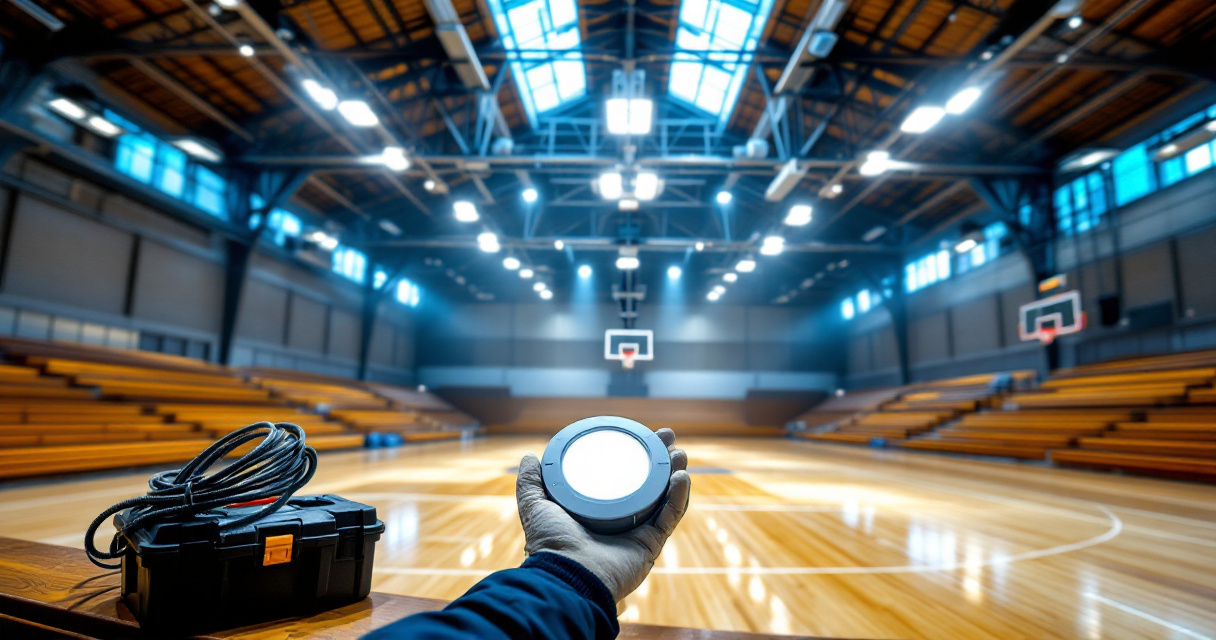
The most common fixtures used in gymnasiums include LED high bay lights, linear high bays, and specialized sports luminaires with impact‑resistant housings.
Common LED Fixture Types for Indoor Sports Facilities
| Fixture Type | Typical Use | Key Advantage |
|---|---|---|
| UFO High Bay LED | Basketball courts, training areas | High lumen output for tall ceilings |
| Linear High Bay LED | Field houses and multipurpose gyms | Wide beam spread for uniform lighting |
| Impact‑Rated Sports Fixtures | Competitive arenas | Designed to withstand ball strikes |
Facilities often choose UFO high bay fixtures because they produce strong vertical illumination while remaining compact. Linear high bays work well for large rectangular courts where light distribution must be even across the entire floor.
Important Performance Specifications
When selecting LED fixtures for a sports environment, evaluate these technical factors carefully:
- Lumen output, determines brightness across the court
- Beam angle, affects light spread and shadow control
- Color temperature, usually 4000K to 5000K for sports visibility
- Impact resistance ratings, important in ball‑impact zones
- Mounting height compatibility, ensures optimal light distribution
Professionals often consult industry resources such as the commercial lighting guides on The JQZ Lighting Journal to compare fixture options before specifying products for new construction or renovation projects.
Lighting Design Principles That Improve Athlete Visibility
Installing powerful fixtures alone does not guarantee good sports lighting. Effective design requires careful attention to light distribution, glare control, and uniformity across the playing surface.
Poor design creates bright hotspots or dark zones that make it harder to track fast‑moving objects such as basketballs or volleyballs.
Core Lighting Design Goals for Indoor Sports
Facility planners generally focus on four lighting priorities.
- Uniform illumination across the playing area
- Minimal glare for athletes and spectators
- Accurate color rendering for visual clarity
- Reduced shadowing around players and equipment
Lighting designers typically space fixtures in a grid pattern across the ceiling. Optical lenses or reflectors then direct light toward the court while preventing excessive glare toward spectators.
Recommended Lighting Zones in a Gymnasium
| Zone | Lighting Priority |
|---|---|
| Playing surface | Highest brightness and uniformity |
| Spectator seating | Moderate illumination |
| Walkways and entrances | Safety lighting |
| Scoreboard and media areas | Controlled glare |
Modern LED optics allow engineers to aim light precisely where it is needed. This reduces wasted illumination and improves energy efficiency at the same time.
Research into built environments and public health suggests that well‑designed community facilities encourage higher participation in physical activity, which supports broader health outcomes, according to a 2021 study in the International Journal of Environmental Research and Public Health (King et al., 2021). Lighting quality plays a practical role in making these spaces safe and inviting.
Energy Savings and Maintenance Benefits for Facility Managers
Energy costs represent a large share of operating expenses in sports complexes. Lighting systems often run for long hours every day, especially in facilities used by schools, leagues, and community programs.
LED lighting reduces these operational burdens in several ways.
Operational Benefits of Switching to LED
- Lower electricity consumption compared with older technologies
- Longer fixture lifespan, reducing replacement frequency
- Instant on/off capability, ideal for scheduled events
- Compatibility with smart controls such as occupancy sensors
- Reduced heat output, helping HVAC systems operate more efficiently
Maintenance is another major factor. Traditional metal halide fixtures can take several minutes to warm up after being switched off. LEDs restart instantly, which prevents delays during games or training sessions.
For facilities hosting tournaments or televised events, instant restart capability can prevent costly interruptions during power fluctuations.
Bulk purchasing also lowers upgrade costs. Facility operators often source certified fixtures through wholesale suppliers or consult industry resources like The JQZ Lighting Journal to compare DLC‑listed and rebate‑eligible products before ordering large quantities.
What to Expect From Sports Facility Lighting Technology by 2027
LED technology continues to evolve, and sports lighting systems are becoming more connected and adaptive each year. Several trends are shaping how gymnasiums and athletic facilities will be illuminated in the near future.
Emerging Innovations in Sports Lighting
- Smart lighting controls integrated with building management systems
- Adaptive brightness levels for practices versus competitions
- Advanced glare reduction optics for broadcast environments
- Higher efficiency LED chips producing more lumens per watt
Connected lighting systems are especially important for large facilities with multiple courts or training zones. Operators can adjust brightness levels automatically depending on occupancy or scheduled activities.
Technology Trends Driving Future Installations
| Trend | Impact on Sports Facilities |
|---|---|
| Smart lighting controls | Automated scheduling and energy savings |
| Integrated sensors | Motion and daylight responsive lighting |
| Higher‑efficiency LEDs | Lower power usage with brighter output |
Facility planners are also paying closer attention to sustainability goals. Energy‑efficient lighting upgrades are often part of broader building modernization projects aimed at reducing long‑term operating costs.
Industry publications such as The JQZ Lighting Journal platform continue tracking these developments, helping contractors and facility managers stay informed about the newest commercial LED technologies.
Conclusion
Gymnasiums and sports facilities place unique demands on lighting systems. High ceilings, fast‑moving athletes, and long operating hours require fixtures that deliver strong brightness, uniform coverage, and reliable performance. LED lighting meets those requirements while also lowering maintenance demands and reducing electricity consumption.
For commercial property owners, contractors, and facility managers planning an upgrade, start by evaluating ceiling height, fixture type, beam angles, and lighting zones across the facility. Reviewing current product options and installation strategies can prevent costly design mistakes.
For more guidance on selecting commercial LED fixtures, explore the resources and product insights available at The JQZ Lighting Journal. The platform provides practical information that helps professionals design efficient lighting systems for modern athletic facilities.