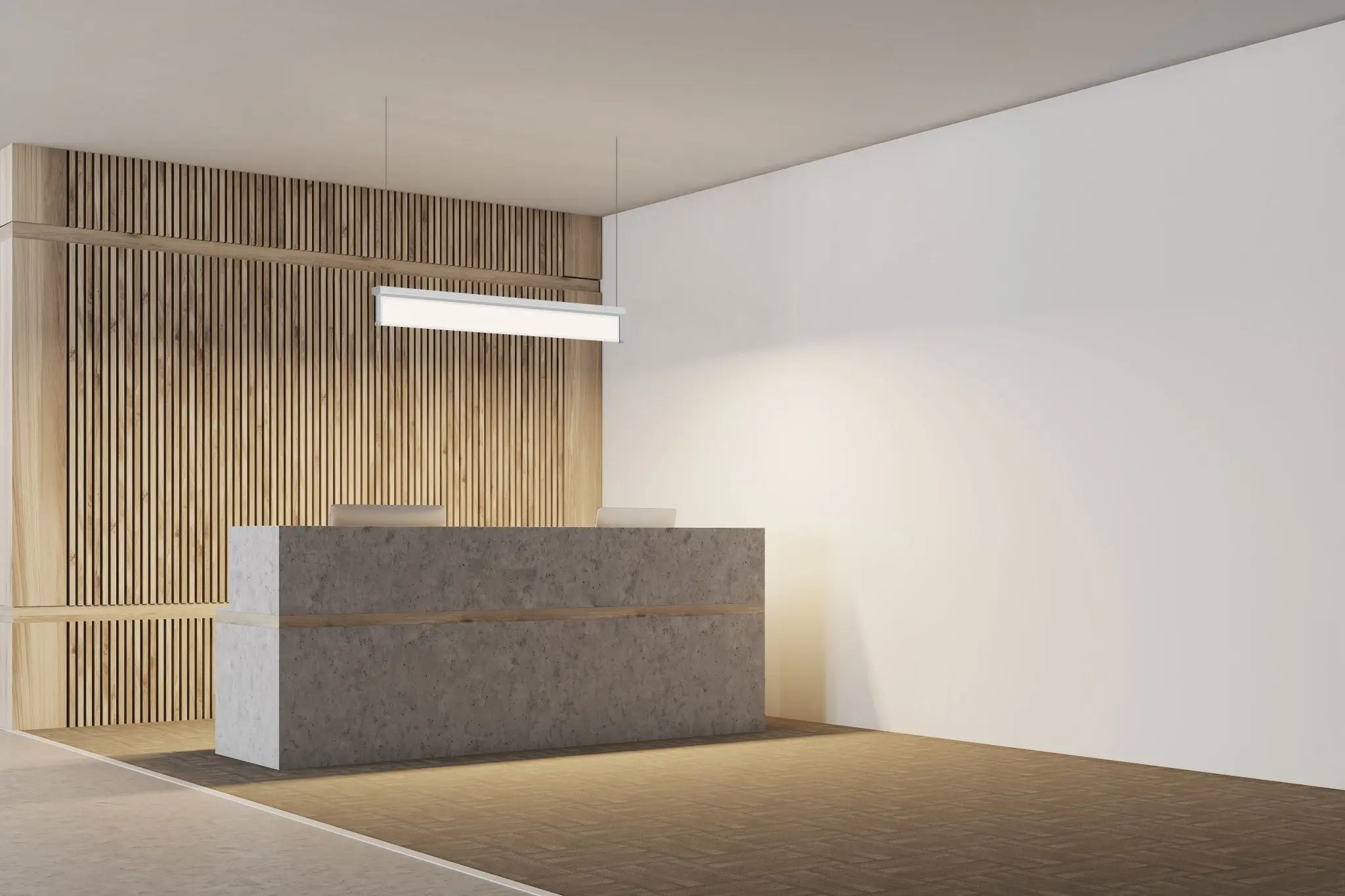
Lighting affects everything inside an office building, energy bills, employee comfort, and long‑term maintenance costs. Traditional fluorescent systems are steadily disappearing as businesses switch to LED fixtures that run longer and consume less power. An LED lamp, defined as a light source that produces illumination using light‑emitting diodes, delivers higher efficiency than incandescent and fluorescent technologies according to the overview on Wikipedia's LED lamp page. For commercial property owners and contractors, the shift is not just about replacing bulbs. It involves choosing the right fixture types, meeting safety standards, and designing lighting that supports productivity. Resources like The JQZ Lighting Journal help professionals compare fixtures, certifications, and installation strategies before committing to large‑scale upgrades.
Why Commercial Offices Are Switching to LED Lighting
Office buildings consume a large portion of their electricity on lighting alone, especially in facilities that operate for 10 to 16 hours per day. LEDs address this issue by converting more electrical energy into visible light and less into heat. That efficiency reduces both electricity demand and cooling loads inside commercial buildings.
Another driver is sustainability. A global analysis of greenhouse gas emissions across sectors found that energy use in buildings remains a major contributor to emissions, which increases pressure on businesses to adopt more efficient technologies (Environmental Research Letters study). Switching to LED lighting is one of the fastest upgrades that property owners can make to reduce energy use without major structural renovation.
Operational advantages facility managers notice quickly
- Lower electricity consumption compared with fluorescent or incandescent fixtures
- Long operating life, which reduces replacement labor in large offices
- Instant full brightness with no warm‑up time
- Better compatibility with smart controls and occupancy sensors
Long‑term benefits for commercial properties
- Lower maintenance budgets
- Improved lighting consistency across floors
- Easier compliance with energy codes and rebate programs
- Increased property value due to efficiency upgrades
LED retrofits are often one of the fastest return‑on‑investment projects in commercial buildings because they reduce both power use and maintenance calls.
Facility managers often consult guides from industry resources like The JQZ Lighting Journal when planning these upgrades, especially when comparing panel lights, troffers, and linear fixtures for large office spaces.
Best LED Fixtures for Commercial Office Buildings
Not every LED fixture suits an office environment. Workspaces require balanced illumination, low glare, and consistent color temperature across large areas. Most commercial projects combine several fixture types depending on ceiling structure and layout.
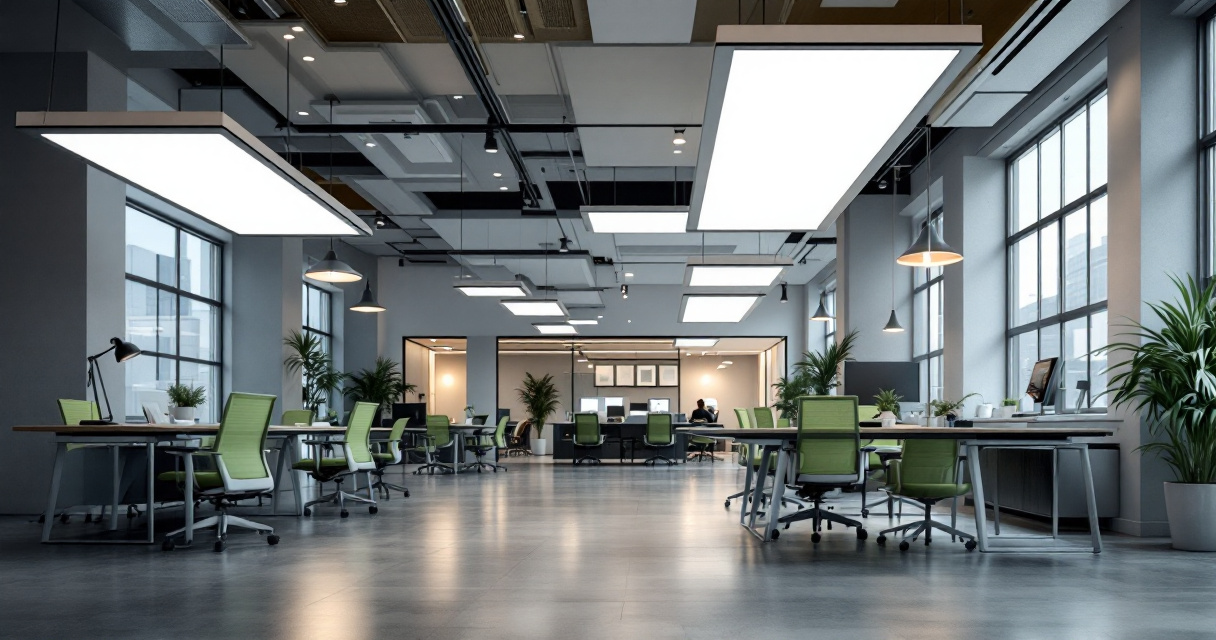
Common LED fixture types used in offices
- LED panel lights for drop ceilings in open offices
- LED troffer lights for recessed grid ceilings
- Linear suspended fixtures for collaborative workspaces
- LED downlights for meeting rooms and reception areas
- Task lighting for desks or focused work zones
Typical commercial office LED fixtures
| Fixture Type | Typical Application | Key Advantage |
|---|---|---|
| LED Panel Light | Drop ceilings and open offices | Uniform light distribution |
| LED Troffer | Retrofit for fluorescent troffers | Easy upgrade in existing grids |
| Linear Suspended | Modern architectural offices | Even lighting across large desks |
| Downlight | Lobbies or conference rooms | Focused illumination |
Many contractors sourcing fixtures review product breakdowns from platforms like The JQZ Lighting Journal, which covers commercial fixtures such as panel lights, high bays, and other LED solutions designed for professional installations.
Choosing the right color temperature
Color temperature influences productivity and comfort. Office projects typically use:
- 3500K for warmer professional environments
- 4000K as the most common neutral office lighting
- 5000K for task‑focused environments requiring higher clarity
Selecting a consistent temperature across departments helps avoid visual fatigue, especially in large open workspaces.
Meeting Office Lighting Standards and Safety Certifications
Lighting upgrades in commercial buildings must meet safety and performance requirements. Contractors and facility managers usually look for fixtures that comply with widely recognized certification programs.
Key certifications for commercial LED lighting
- UL or ETL listing confirming electrical safety compliance
- DLC listing for energy‑efficient commercial lighting products
- Energy rebate eligibility through regional utility programs
These certifications confirm that a fixture has been tested for electrical safety and performance. They also help building owners qualify for efficiency incentives offered by local utilities.
Example compliance checklist for office installations
| Requirement | Why It Matters | What to Verify |
|---|---|---|
| Electrical Safety Certification | Prevents electrical hazards | UL or ETL listed fixtures |
| Efficiency Certification | Supports rebates and energy codes | DLC listing |
| Emergency Lighting Options | Maintains illumination during outages | Battery backup or emergency drivers |
Commercial contractors also consider warranty support. Many professional LED fixtures include five‑year warranties, which reduce risk when installing hundreds of lights across multiple floors.
Certified fixtures with long warranties typically cost more upfront but reduce maintenance risks in large commercial installations.
Industry resources, including guidance articles on The JQZ Lighting Journal, often recommend prioritizing certification and warranty coverage when evaluating suppliers.
Designing an Efficient LED Layout for Office Workspaces
Lighting design determines whether an office feels bright and productive or uncomfortable and uneven. Simply replacing fluorescent lamps with LEDs rarely produces the best results. Contractors often redesign fixture spacing and output levels during upgrades.

Steps for planning an LED office layout
- Measure the workspace and ceiling height.
- Determine the illumination level required for workstations and corridors.
- Choose fixture types that match the ceiling structure.
- Add controls such as motion sensors or daylight dimming.
- Test light distribution before large‑scale installation.
Lighting zones commonly used in offices
- Open office zones using evenly spaced panel or troffer lights
- Meeting rooms with dimmable fixtures for presentations
- Corridors and support areas using lower output fixtures
- Reception and collaboration spaces using architectural lighting
Smart lighting controls can improve efficiency even further. Motion sensors automatically reduce lighting in unused conference rooms, while daylight sensors adjust brightness near windows.
Combining LED fixtures with occupancy sensors and dimming controls can significantly reduce unnecessary lighting hours in commercial buildings.
Contractors often review planning examples and installation case studies from sources such as The JQZ Lighting Journal when mapping out large office lighting projects.
What to Expect from Commercial Office Lighting Through 2027
LED technology continues to evolve as buildings become more connected and energy conscious. Office lighting systems are gradually shifting from static fixtures toward networked infrastructure that integrates with building management platforms.
Emerging trends in office LED lighting
- Smart lighting controls integrated with building automation
- Color‑tunable LEDs that adjust brightness throughout the day
- Sensor‑driven lighting that reacts to occupancy patterns
- Integrated emergency lighting and monitoring systems
These systems connect lighting with HVAC and energy management platforms. Research exploring future communication technologies also highlights how connected infrastructure will become increasingly important in smart buildings (IEEE Communications Surveys & Tutorials). Lighting networks are likely to play a role in that broader connectivity.
How commercial property owners can prepare
- Choose fixtures compatible with dimming or smart controls
- Install lighting circuits that allow zoned automation
- Work with suppliers offering certified, upgrade‑ready products
LED systems installed today should still support control upgrades in the coming years. Selecting flexible fixtures now prevents costly replacements later.
Conclusion
Commercial office lighting has shifted rapidly toward LED technology because it reduces energy use, lowers maintenance demands, and supports modern building automation. Property owners upgrading from fluorescent systems often discover additional benefits, better lighting quality, easier compliance with efficiency programs, and improved workplace comfort.
Successful projects start with the right fixtures and certified equipment. Contractors also benefit from comparing options before committing to large installations. Resources such as The JQZ Lighting Journal provide product insights and commercial lighting guidance that help buyers select reliable fixtures with strong warranties and certification support.
If you are planning a lighting retrofit or designing a new office space, review fixture comparisons and sourcing guidance on The JQZ Lighting Journal to identify commercial LED solutions that fit your project requirements and budget.