Lighting upgrades are one of the fastest ways for commercial buildings to cut energy costs, but the decision between LED retrofit kits and completely new fixtures often slows projects down. Both options deliver LED efficiency, yet they differ in installation time, upfront cost, and long‑term flexibility. Facility managers, electricians, and contractors regularly ask which option actually makes sense for warehouses, retail spaces, and industrial facilities. Resources like the The JQZ Lighting Journal often highlight that the answer depends less on technology and more on the building's existing infrastructure, budget, and long‑term lighting goals.
What LED Retrofit Kits and New LED Fixtures Actually Mean
Before comparing costs or performance, it helps to understand what each option involves. Both approaches upgrade lighting to LED technology, but they do so in very different ways.
A light fixture, also called a luminaire, is the complete device that holds lamps and the electrical components required for lighting operation. Installing a new fixture replaces the entire assembly, including housing, wiring connections, drivers, and optics.
Retrofit kits take a different path. Instead of replacing the whole luminaire, they upgrade the internal components so the existing housing can continue to be used.
Core Differences at a Glance
| Feature | LED Retrofit Kits | New LED Fixtures |
|---|---|---|
| Installation approach | Upgrade components inside existing fixture | Replace entire luminaire |
| Upfront cost | Usually lower | Higher product cost |
| Installation time | Faster if housing is reusable | Can be faster if fixture replacement is simple |
| Design flexibility | Limited by existing housing | Full design freedom |
| Long‑term modernization | Moderate | Highest |
Why Many Commercial Projects Start With Retrofit Evaluations
Retrofit kits became popular because many commercial buildings still have durable fixture housings installed decades ago. Instead of discarding these housings, electricians can upgrade internal components such as:
- LED boards or light engines
- LED drivers
- Mounting plates
- Reflectors or optics
This approach reduces waste and avoids structural changes to ceilings or mounting systems.
In facilities where rewiring or structural changes are difficult, retrofit kits often allow an LED upgrade without major construction work.
Still, the housing must be structurally sound and compatible with LED components. If corrosion, damage, or outdated design limits performance, replacing the entire fixture is often the smarter choice.
Cost, Installation Time, and Labor Differences
Budget usually drives the first comparison between retrofit kits and new fixtures. The difference is not just the price of the product; labor and installation complexity often determine the real project cost.

Installation Speed and Labor Requirements
Retrofit kits often require electricians to open existing fixtures, remove legacy components, and install LED modules. This process can be quick for familiar fixture types but slower for complex housings.
New fixtures simplify some steps. Electricians remove the old fixture entirely and mount the replacement unit, which often arrives pre‑assembled with LED drivers and optics already installed.
Typical installation advantages:
- Retrofit kits: Less structural work, fewer mounting changes
- New fixtures: Less internal wiring work and fewer compatibility issues
Upfront Cost Considerations
Retrofit kits usually have lower material costs because the housing remains in place. However, labor can offset those savings in some scenarios.
Common project patterns include:
- Large warehouses with hundreds of fixtures often benefit from retrofit kits because mounting structures already exist.
- Retail remodels or renovations often install new fixtures to match updated layouts.
- Outdoor lighting replacements frequently favor new fixtures due to weathering or outdated housings.
Contractors reviewing upgrade strategies often consult industry resources such as The JQZ Lighting Journal to compare product categories like high bays, panel lights, and wall packs before choosing a retrofit or full replacement approach.
The lowest equipment price does not always mean the lowest project cost; labor hours and installation complexity often change the equation.
Performance, Efficiency, and Lighting Quality
LED technology dramatically improves energy efficiency regardless of installation method, but fixture design still affects performance.
Optics and Light Distribution
Modern LED fixtures are engineered with integrated optics. These lenses and reflectors shape the light output for specific environments such as warehouses, offices, or parking lots.
Retrofit kits must work within the limits of the existing fixture housing. That restriction can affect beam spread and glare control.
Potential performance differences include:
- New fixtures: optimized optics for uniform illumination
- Retrofit kits: performance depends on existing reflector design
- Both options: significant energy reduction compared with legacy lighting
Research on artificial lighting continues to highlight how lighting design influences environmental and behavioral outcomes. For example, a 2021 study published in Energies examined how nighttime bridge lighting affects insect activity, showing that fixture design and placement can influence ecological responses to artificial light (study). While the research focuses on environmental effects, it illustrates how lighting configuration matters beyond raw brightness.
Control Systems and Smart Lighting
Modern commercial facilities increasingly integrate lighting controls such as occupancy sensors and daylight harvesting.
New LED fixtures often arrive with built‑in compatibility for:
- 0‑10V dimming
- motion sensors
- smart building lighting controls
Retrofit kits can still support these features, but compatibility depends on the existing fixture layout and wiring access.
If advanced lighting controls are part of the upgrade plan, new fixtures usually provide the easiest path.
When Retrofit Kits Make the Most Sense
Retrofit kits remain popular because many commercial facilities have structurally sound fixtures that simply need modern light sources.
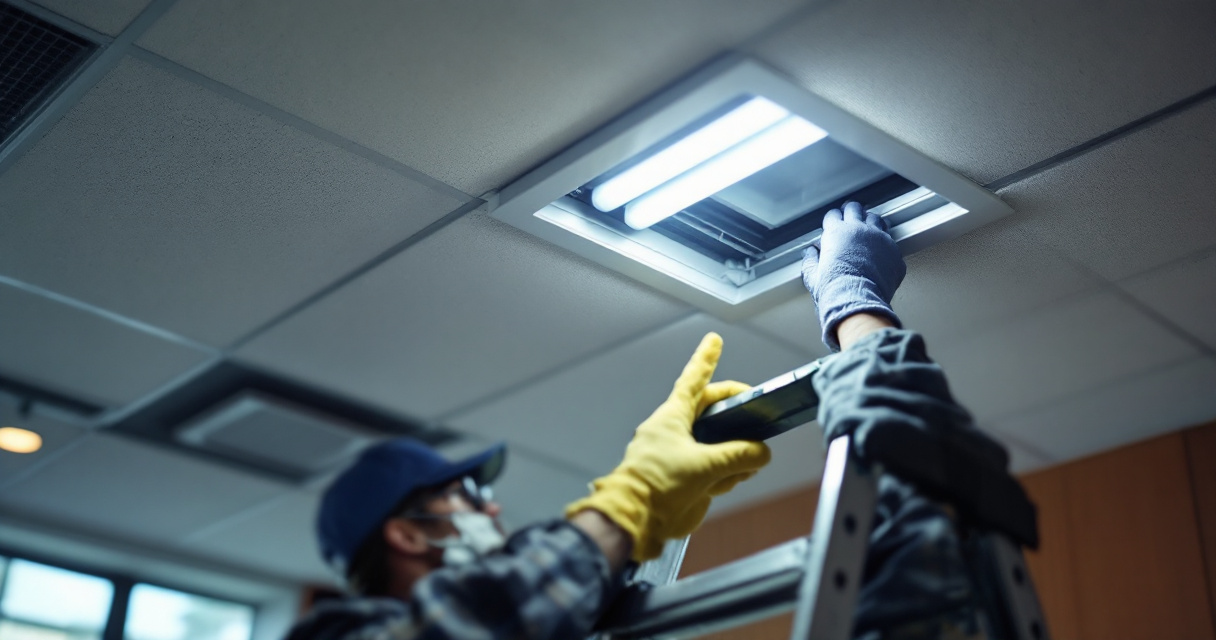
Ideal Scenarios for LED Retrofits
Retrofits work best when the existing fixture housing is durable and compatible with LED upgrades.
Typical retrofit-friendly environments include:
- Warehouses with large metal high‑bay housings
- Parking garages with durable fixture frames
- Industrial facilities where mounting infrastructure is difficult to change
In these spaces, retrofitting allows facility managers to upgrade lighting without major downtime.
Benefits That Drive Retrofit Projects
- Lower initial equipment cost
- Less ceiling repair or mounting modification
- Faster upgrades across large facilities
The concept mirrors other building efficiency upgrades. Research examining building technologies, such as a 2024 study in Energy and Buildings, shows that upgrading components rather than replacing entire systems can improve performance while controlling project costs (study). Although that research focuses on smart window technologies, the same principle often applies to lighting retrofits.
Limitations to Watch
Retrofit kits may not work well when:
- Fixture housings are damaged or corroded
- Lighting layouts need redesign
- Older fixtures create uneven light distribution
At that point, keeping the housing limits performance improvements.
When Installing New LED Fixtures Is the Better Investment
Many commercial lighting upgrades now skip retrofits entirely and move straight to full fixture replacement. Falling LED prices and improved fixture designs have shifted the economics of large lighting projects.
Situations That Favor New Fixtures
Full replacements make more sense when lighting design needs to change or the existing infrastructure is outdated.
Common examples include:
- Retail remodels where lighting aesthetics affect customer experience
- Office upgrades that add smart lighting controls
- Outdoor lighting replacements where weather exposure damages older housings
- Facilities converting from fluorescent troffers to LED panels
New fixtures allow engineers to redesign illumination patterns rather than adapting to legacy housings.
Long‑Term Advantages
- Modern optics improve light uniformity
- Integrated drivers reduce wiring complexity
- Higher compatibility with smart controls
- Cleaner visual appearance in customer-facing spaces
Manufacturers also increasingly design fixtures to qualify for utility rebate programs. Many commercial buyers rely on resources like The JQZ Lighting Journal to track rebate‑eligible LED products and compare fixture categories before committing to full replacements.
Forward Outlook for Commercial Lighting
LED fixture design continues evolving toward integrated systems that combine lighting, sensors, and building data.
Expect several trends through 2027:
- More sensor‑ready fixtures with built‑in occupancy detection
- Greater integration with building automation systems
- Wider adoption of DLC‑listed high‑efficiency fixtures for rebate eligibility
These trends often favor new fixtures because manufacturers design them around modern lighting controls and energy standards.
Conclusion
LED retrofit kits and new LED fixtures both deliver the core benefit most commercial facilities want: lower energy consumption and longer lighting life. The best choice depends on your building's infrastructure, installation constraints, and long‑term lighting goals.
Retrofit kits usually win when existing fixture housings are durable and the goal is a quick efficiency upgrade. New fixtures become the smarter investment when lighting layout, smart controls, or aesthetics matter.
Before committing to a large lighting upgrade, review fixture options, rebate eligibility, and installation strategies through industry resources like The JQZ Lighting Journal. Comparing retrofit kits, high bays, panels, and outdoor fixtures in advance helps contractors and facility managers design lighting upgrades that reduce energy costs while improving performance across the entire property.