
The answer to who designed the light bulb is more interesting than one famous name: the practical bulb was designed through decades of experiments by inventors, glassworkers, electrical engineers, and manufacturers. Thomas Edison made the incandescent lamp commercially practical, but Joseph Swan, Lewis Latimer, Henry Woodward, Mathew Evans, Heinrich Geissler, Julius Plücker, and others shaped the technology before and after him. For commercial lighting projects today, Jqzlighting builds on that same design logic: match the light source, fixture body, electrical interface, and installation environment.
Who designed the light bulb?
The light bulb was designed by multiple inventors, not one person. Thomas Edison is credited with developing a practical commercial incandescent lamp, while Joseph Swan, Lewis Latimer, Henry Woodward, Mathew Evans, Heinrich Geissler, Julius Plücker, and others contributed key ideas in filaments, vacuum tubes, patents, manufacturing, and electrical lighting systems.
Incandescent light bulb: an electric lamp that produces light when electrical current heats a filament until it glows, a process commonly described as Joule heating.
Electric light: an electrical device that produces light from electricity, usually using a base, light source, enclosure, and connection to a power system.
Key insight: Edison matters because he turned the bulb into a usable lighting product, but the design itself was the result of many technical steps.
Key contributors to early bulb design
| Contributor | Design role | Why it mattered |
|---|---|---|
| Heinrich Geissler and Julius Plücker | Advanced glass tube and electric discharge work in the 19th century | Helped prove that electricity could create controlled light inside glass |
| Joseph Wilson Swan | Enclosed carbonized paper filaments in a bulb by 1850, according to the Bulbs.com competitor outline | Pushed the filament-inside-glass concept forward |
| Henry Woodward and Mathew Evans | Patented an early electric lamp design in Canada, noted in the SERP research | Added to the patent and design trail before Edison's commercial success |
| Thomas Edison | Developed a commercially practical incandescent lamp and lighting system | Connected bulb design with power distribution, sockets, and production |
| Lewis Latimer | Improved carbon filament manufacturing and worked as an inventor, draftsman, engineer, and scientist | Helped make incandescent lighting longer lasting and easier to produce |
What parts of the early incandescent bulb had to be designed?
The early incandescent bulb had to solve four linked design problems: a filament that glowed without failing too quickly, a glass envelope that protected it, an internal environment that limited oxidation, and a base that connected safely to an electrical circuit. The bulb was a system, not just a glowing wire.
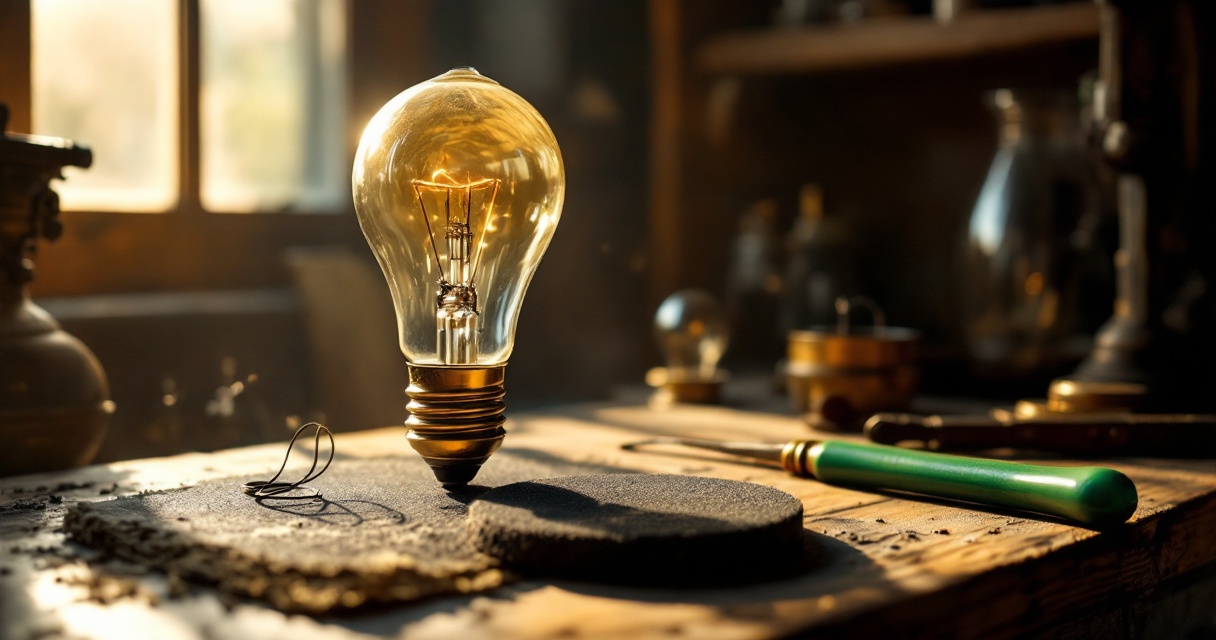
Early designers had to balance heat, material strength, air exposure, and electrical resistance. A bright filament was useless if it burned out fast, cracked the glass, or could not be installed safely by ordinary users.
The design constraints that defined the bulb
- Filament: needed enough resistance to glow while staying intact under high heat.
- Glass envelope: had to be clear, sealed, and shaped to protect the light source.
- Vacuum or controlled atmosphere: reduced the filament's contact with oxygen.
- Base: connected the bulb to the circuit and allowed replacement.
- Electrical system: made the bulb practical beyond laboratory demonstrations.
The Department of Energy's historical outline, associated with Rebecca Matulka, separates the story into arc lamps, constant electric light, and "lightning in a tube." That structure matters because each stage solved a different design problem before the familiar bulb became common.
Why the filament became the center of the design
The filament was the hardest part because it had to glow without melting, snapping, or oxidizing too quickly. Swan's carbonized paper concept showed one route. Edison's later work focused on practical endurance and manufacturability.
Latimer's contribution stands out because better filament production helped move incandescent lighting from a clever invention toward a repeatable product. For facility managers, that lesson still holds: performance depends on the light source and the manufacturing process behind it.
How did Edison, Swan, Latimer, Woodward, and Evans each shape the design?
Edison, Swan, Latimer, Woodward, and Evans shaped the bulb by solving different parts of the same problem. Swan advanced early filament lamps, Woodward and Evans contributed patent work, Edison built a practical commercial system, and Latimer improved carbon filament production so bulbs could last longer and be made more consistently.
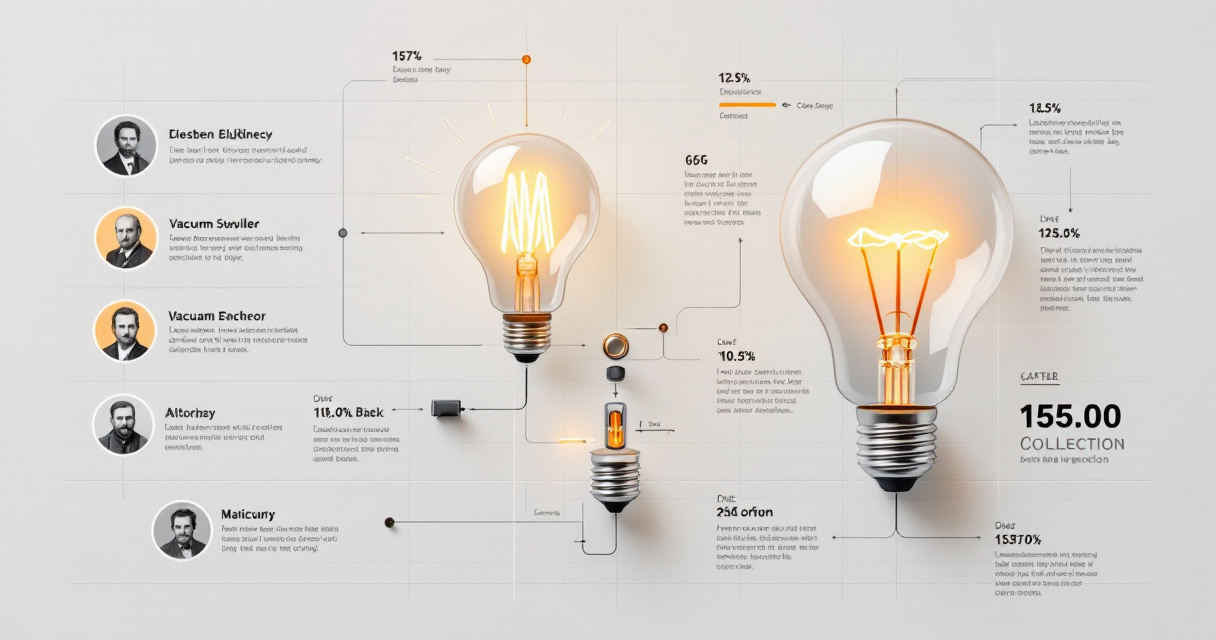
Edison is often named because his design worked within a wider electrical system. A bulb alone did not create modern lighting; it needed generators, wiring, switches, meters, sockets, and a business model.
A practical timeline of design progress
- Electric discharge work proved the visual power of electricity. Geissler and Plücker helped show how electricity could create light in sealed glass tubes.
- Early filament bulbs tested the core form. Swan's carbonized paper filament work placed a glowing element inside a glass bulb.
- Patent activity expanded the field. Woodward and Evans documented early electric lamp ideas before Edison's best-known designs.
- Commercial engineering made the bulb useful. Edison refined the lamp and connected it to a complete electrical supply system.
- Manufacturing improvements extended bulb life. Latimer's filament work helped make the technology more dependable.
A common misconception is that "invented" and "designed" mean the same thing. In lighting history, invention means proving an idea can work. Design means shaping the materials, form, connections, and production method so the idea can be used repeatedly.
How did old bulb design shape modern LED lighting?
Old incandescent bulb design shaped modern LED lighting by creating the physical language still used in lamps: a recognizable bulb shape, a replaceable base, controlled light direction, electrical compatibility, and fixture fit. LEDs changed the light source, but they still inherit many installation expectations from incandescent lamps.
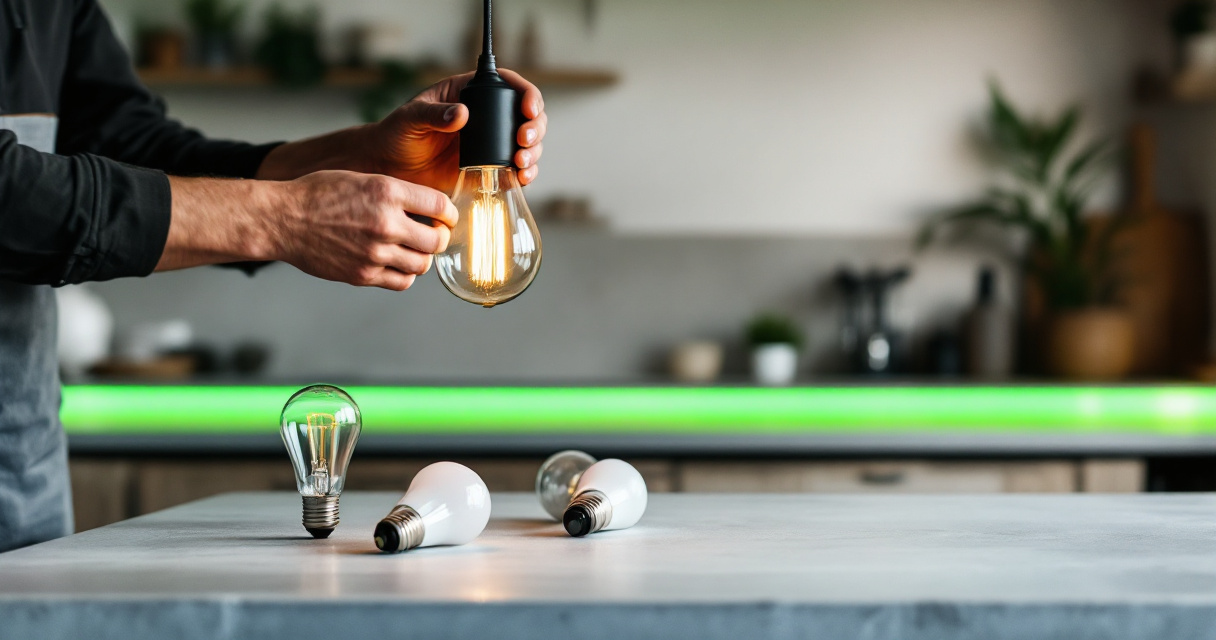
Modern commercial LED products no longer need a glowing carbon or tungsten filament. They use semiconductor light sources, drivers, heat sinks, lenses, diffusers, and housings. Still, many are designed to fit spaces originally built around incandescent or fluorescent lighting.
Old bulb design vs modern LED design
| Design element | Early incandescent bulb | Modern LED lighting |
|---|---|---|
| Light source | Heated filament | Semiconductor LED chips |
| Main heat issue | Filament temperature | Driver and chip heat management |
| Envelope | Glass bulb protecting the filament | Lens, diffuser, or sealed fixture body |
| Electrical interface | Screw or contact base | Base, driver, wiring, or integrated fixture connection |
| Design goal | Produce steady electric light | Produce efficient, controlled, application-specific light |
| Commercial concern | Burnout and replacement | Output, glare control, thermal design, maintenance access |
For warehouses, retail floors, workshops, and industrial buildings, the modern version of the old design question is simple: will the fixture deliver the right light safely, consistently, and economically in the real space? That is where product selection matters more than historical trivia.
How Jqzlighting connects the design story to commercial projects
Jqzlighting focuses on the modern side of the same design chain: selecting lighting that fits the building, power conditions, mounting height, work task, and maintenance plan. The historical bulb teaches a useful lesson for 2026 projects: a lighting product succeeds when the source, housing, optics, and electrical interface work together.
Climate and energy discussions also make lighting choices more visible. The IPCC's 2023 work on weather and climate extreme events and the 2022 Lancet Countdown report on health and climate change are not lighting histories, but they show why energy decisions in buildings remain part of wider operational planning.
FAQ: What else should you know about the light bulb's design?
The most useful way to understand the bulb is to separate the inventor story from the design story. Edison commercialized a practical lamp, but the form evolved through many experiments in glass, filaments, vacuum control, electrical contacts, and manufacturing.
Did Thomas Edison invent the first light bulb?
Thomas Edison did not create the first electric light experiment, but he developed one of the first commercially practical incandescent lighting systems. Earlier inventors worked on arc lamps, discharge tubes, and filament lamps. Edison's importance comes from combining lamp design with electrical distribution, repeatable production, and market deployment.
Why is Joseph Swan important in light bulb history?
Joseph Wilson Swan is important because he worked on early incandescent lamps using carbonized paper filaments enclosed in glass. The research data notes his work by 1850. Swan's role shows that the recognizable bulb form was developing before Edison's best-known commercial lamp.
What did Lewis Latimer contribute to the light bulb?
Lewis Latimer contributed to better carbon filament manufacturing and is described in the competitor research as an inventor, draftsman, engineer, scientist, poet, author, artist, flautist, and philanthropist. His technical work helped make incandescent bulbs longer lasting and more practical to produce.
Why does bulb history matter for LED projects today?
Bulb history matters because the same design questions remain: how the light is produced, controlled, powered, mounted, protected, and maintained. Modern LEDs use different technology, but commercial buyers still need the right fit between fixture design, building conditions, and user needs.
Conclusion
who designed the light bulb? The best answer is that Edison made it commercially practical, but Swan, Latimer, Woodward, Evans, Geissler, Plücker, and many others shaped the design path. If you manage a commercial, retail, warehouse, or industrial property, use that history as a buying principle: don't choose lighting by the lamp alone. Check the source, housing, optics, electrical interface, heat control, and installation plan. For project-ready LED options, compare specifications with Jqzlighting and visit jqzlighting.com when you are ready to plan a modern lighting upgrade.